Boeing Needs Just One More Day

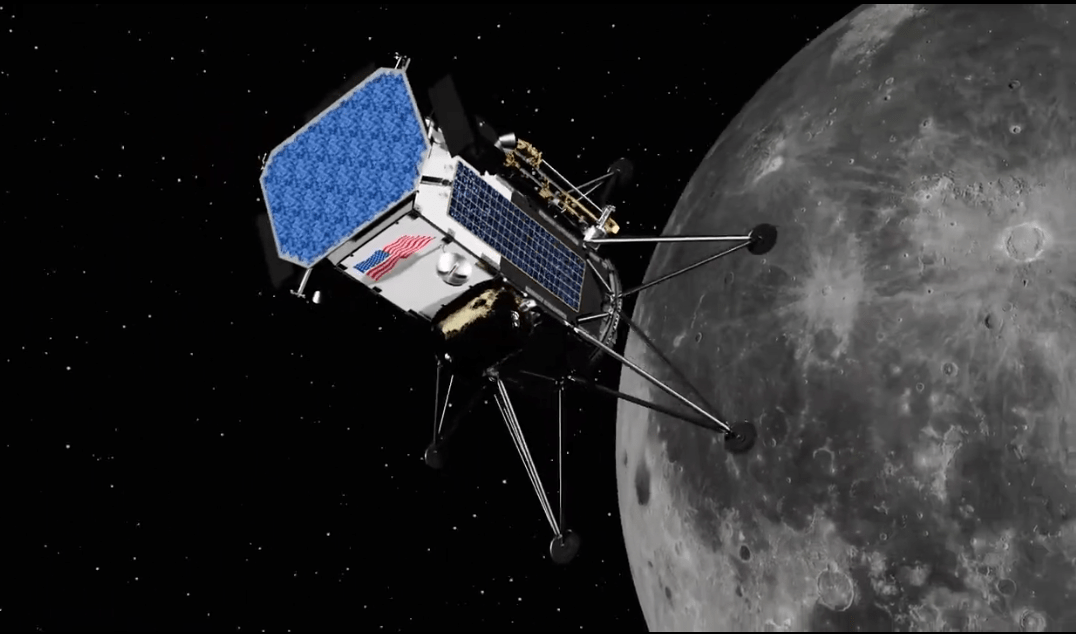
Image (Credit): Starliner autonomous uncrewed flight test to the ISS in May 2022. (NASA)

Today was supposed to be the day that Boeing launched a crewed capsule to the International Space Station (ISS), but things did not go according to plan (again). Two hours before the planned launch a valve issue on the Atlas V rocket’s second stage put everything on hold. A launch as early as tomorrow is still possible if the matter can be resolved.

The two astronauts aboard the Starliner capsule, Suni Williams and Butch Wilmore, will need to come back another day to lead this historic mission. The Starliner will be the second commercial vehicle contracted by NASA to bring and return astronauts from the station. SpaceX has been performing this task since its first successful crewed test flight in 2020.

Boeing needs this win after so many bad stories over the years, and not just the stories associated with the Starliner mission. Serious aircraft woes has put a spotlight on the company. A successful launch will not erase the past, but it would be much needed positive press.

Update: Okay, Boeing will need at least until May 17 to inspect the problem valve and prepare for a new launch. Not a great start, but at least the are still expecting a May launch.

China Returns to the Far Side of the Moon

Image (Credit): China’s Chang’e 6 lunar probe at the Wenchang Space Launch Site in Hainan province prior to the launch on Friday. (CNSA)

Last Friday, China launched the Chang’e-6 lunar probe towards the moon with the goal of returning the first lunar soil sample from the far side of the Moon. An earlier mission in 2020, Chang’e-5, successfully returned lunar soil samples from the near side of the Moon for the first time in 44 years. Before that, in 2019, China place a rover on the far side of the Moon via the Chang’e-4 mission.

China is making some bold strides in space with, it might be added, some help from the Europeans. While the US bans any cooperation with the Chinese, France, Italy and Sweden have contributed to the Chang’e-6 mission. For example, Sweden added the Negative Ions at the Lunar Surface (NILS) instrument to the lunar probe.

Maybe one day we can join the Chinese on some of these missions, but that day seems to be far away. That said, we were able to find a way with the Russians, which allowed for the ongoing success of the International Space Station.

Space Quote: Preparing for the Boeing Starliner’s Crewed Mission

Image (Credit): Boeing’s Starliner spacecraft being placed atop an Atlas 5 rocket at the Cape Canaveral Space Force Station. (United Launch Alliance)

“Today was a was a huge day for our Commercial Crew Program…All the (international) partners and then our whole team polled ‘go’ to proceed to the launch on May 6. Not only that, but we (signed) what we call an interim human rating for Starliner for this crewed flight test. … It was a was a huge deal for NASA and our entire team.”

-Statement by Steve Stich, manager of the Commercial Crew Program for NASA, as quoted by CBS News. After numerous delays, the Starliner’s first Crew Flight Test will take place on May 6. If successful, the Starliner will start bringing astronauts to the International Space Station (ISS) in 2025. This will provide NASA with greater redundancy in its ISS resupply runs.

New Crew will Help Strengthen the Chinese Space Station Against Space Debris

Image (Credit): China’s Tiangong space station captured by a returning Shenzhou spacecraft. (CMSA)

China is getting ready to send a new crew to its Tiangong space station tomorrow. The Shenzhou-18 spacecraft will carry three new crew members to the station, replacing the crew that has been on the station since last October.

The current crew had to deal with space debris that damaged its solar panels and led to a power loss. Two spacewalks were recently conducted to make the necessary repairs. The arriving crew is coming with additional repair material, including “space debris protection reinforcements for extravehicular piping, cables and critical equipment,” according to China Daily.

Unfortunately, space debris is a constant hazard in orbit. The International Space Station (ISS) has dodged debris as well as repairing damaged areas. Of course, the ISS is also dropping space debris on Florida, but that’s a different story.

Study Findings: Genomic, Functional, and Metabolic Enhancements in Multidrug-Resistant Enterobacter Bugandensis Facilitating its Persistence and Succession in the International Space Station

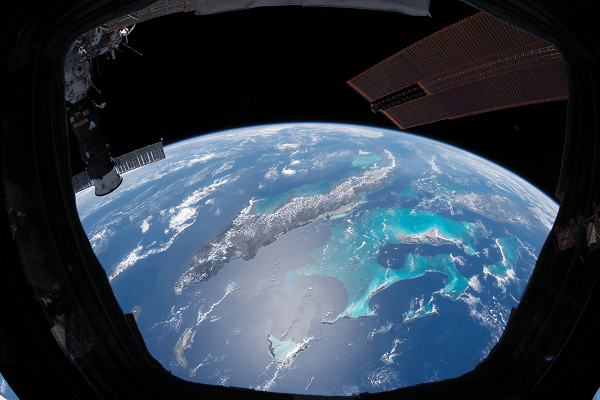
Image (Credit): The International Space Station. (NASA)

PubMed  abstract of the study findings:

Distinct from their Earth counterparts, ISS E. bugandensis strains have exhibited resistance mechanisms that categorise them within the ESKAPE pathogen group, a collection of pathogens recognised for their formidable resistance to antimicrobial treatments. During the 2-year Microbial Tracking 1 mission, 13 strains of multidrug-resistant E. bugandensis were isolated from various locations within the ISS. We have carried out a comprehensive study to understand the genomic intricacies of ISS-derived E. bugandensis in comparison to terrestrial strains, with a keen focus on those associated with clinical infections. We unravel the evolutionary trajectories of pivotal genes, especially those contributing to functional adaptations and potential antimicrobial resistance. A hypothesis central to our study was that the singular nature of the stresses of the space environment, distinct from any on Earth, could be driving these genomic adaptations. Extending our investigation, we meticulously mapped the prevalence and distribution of E. bugandensis across the ISS over time. This temporal analysis provided insights into the persistence, succession, and potential patterns of colonisation of E. bugandensis in space. Furthermore, by leveraging advanced analytical techniques, including metabolic modelling, we delved into the coexisting microbial communities alongside E. bugandensis in the ISS across multiple missions and spatial locations. This exploration revealed intricate microbial interactions, offering a window into the microbial ecosystem dynamics within the ISS.

Citation: Sengupta P, Muthamilselvi Sivabalan SK, Singh NK, et al. Genomic, functional, and metabolic enhancements in multidrug-resistant Enterobacter bugandensis facilitating its persistence and succession in the International Space Station. Microbiome 12(1):62 (2024).
https://doi.org/10.1186/s40168-024-01777-1

Study-related stories: