Russian Rockets No Longer an Option

Image (Credit): Antares rocket on the launch pad. (Northrop Grumman)

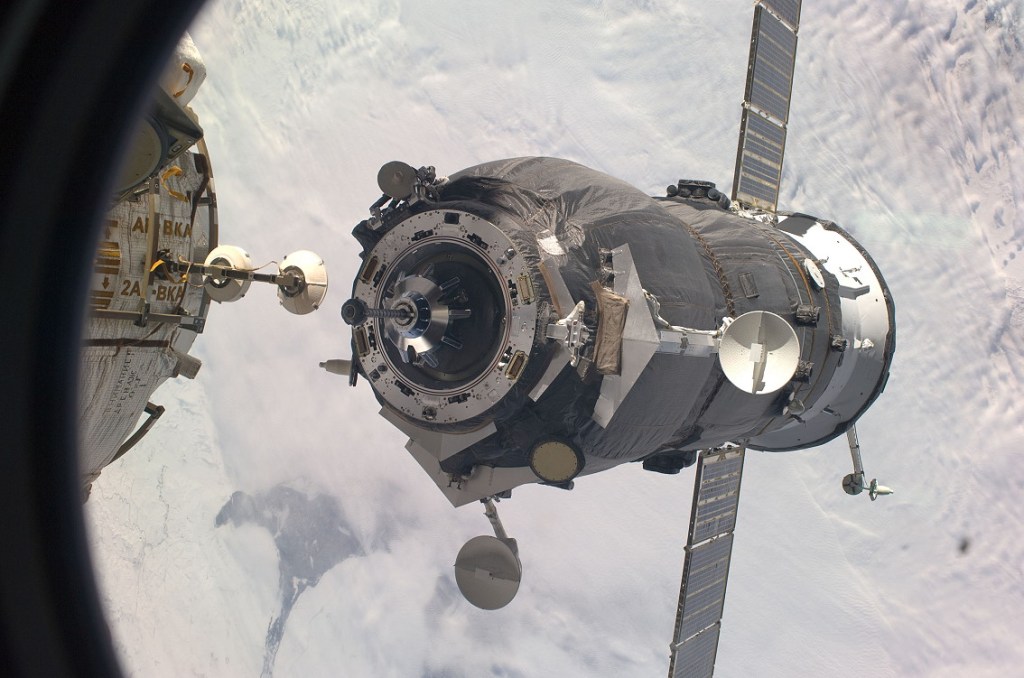
Northrop Grumman is switching from Russian-made rocket engines to U.S.-made rocket engines for its Antares rocket ships that bring supplies to the U.S. International Space Station (ISS). Russia has not shipped any engines since March following its invasion of Ukraine, so Northrop Grumman needs an alternative. It can fly two more missions with the Russian-made rockets in its inventory.

Firefly Aerospace in Texas will be able to meet these needs. In a press release, Northrop Grumman stated:

Firefly’s propulsion technology utilizes the same propellants as the current Antares rocket, which minimizes launch site upgrades. The Antares 330 will utilize seven of Firefly’s Miranda engines and leverage its composites technology for the first stage structures and tanks, while Northrop Grumman provides its proven avionics and software, upper-stage structures and Castor 30XL motor, as well as proven vehicle integration and launch pad operations. This new stage will also significantly increase Antares mass to orbit capability.

Fortunately, we have some redundancy in ISS cargo missions, with SpaceX able to pick up slack as necessary. In fact, Northrop Grumman will be contracting with SpaceX to handle three of its missions as it prepares for the new Antares system for mid-to-late 2024.

ISS Research Projects

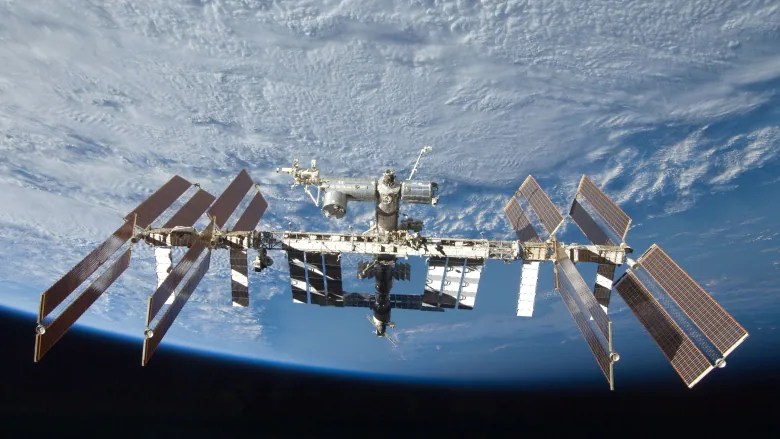
Image (Credit): International Space Station. (NASA)

Have you ever wondered about all of the scientific projects, past and present, on the International Space Station (ISS)? Quite a bit has happened onboard the station since it was first occupied back in November 2000.

Fortunately, NASA maintains an inventory of all of these projects. The Space Station Research Explorer provides information on all of the experiments, separated into six categories:

  • Biology and Biotechnology;
  • Earth and Space Science;
  • Educational Activities;
  • Human Research;
  • Physical science; and
  • Technology.

For instance, back in 2017 the station supported an experiment under “Earth and Space Science” titled ASTERIA:

The Arcsecond Space Telescope Enabling Research in Astrophysics (ASTERIA) is a six-unit (6U) CubeSat deployed from the International Space Station (ISS) that tests new technologies for astronomical observation, such as the detection of planets outside our solar system (a.k.a., exoplanets). Observing exoplanets requires repeated observation of stars over a long period of time from a dark environment, so that the small shadow of an orbiting planet can be detected passing through the star’s light. ASTERIA uses advanced pointing control technology, new thermal stabilization features, and the scalable CubeSat-platform to perform these complex measurements.

Some projects still lack information. These incomplete projects tend to be sponsored by ROSCOSMOS, though the Russian space agency has plenty of complete projects as well.

Poke around and see what you can find.

Space Quotes: Russia is Pulling Out of the ISS? Maybe Not

Image (Credit): Russian cosmonauts headed for the ISS get ready to board the Soyuz MS-21 spacecraft prior to its launch at the Baikonur cosmodrome in Kazakhstan on March 18, 2022. (Roscosmos)

“Of course, we will fulfill all our obligations to our partners, but the decision about withdrawing from the station after 2024 has been made.”

-Statement by Yuri Borisov regarding Russia’s participation in the International Space Station (ISS), as quoted by Reuters. Mr. Borisov was recently appointed director-general of Russia’s space agency Roscosmos. However, like his predecessor, he may have spoken without thinking through the consequences. Time magazine quoted Vladimir Solovyov, an ISS flight director, who stated, “We, of course, need to continue operating the ISS until we create a more or less tangible backlog for ROSS. We must take into account that if we stop manned flights for several years, then it will be very difficult to restore what has been achieved.” In other words, the withdrawal may not be anytime soon. Not a very good start for Mr. Borisov.

Pic of the Week: Orbital Sunrise

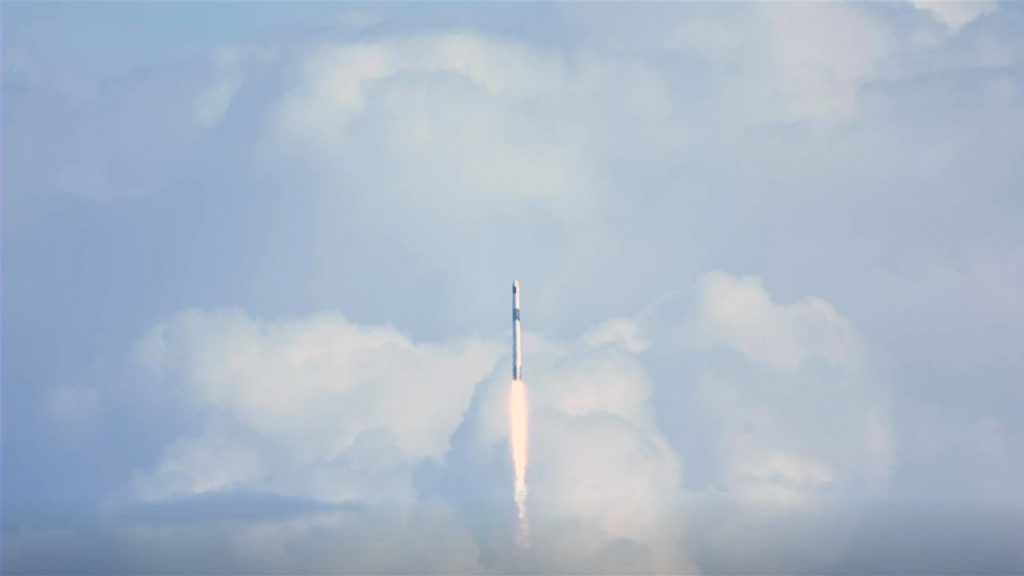
Image (Credit): SpaceX Dragon capsule approaching the ISS. (NASA)

This week’s image is from the International Space Station (ISS) as it awaits incoming cargo from an uncrewed SpaceX Dragon capsule approaching the station on July 16th. NASA noted that what we are seeing is an orbital sunrise above the Pacific Ocean.

NASA also highlighted the various experiments aboard the Dragon that will be added to the station, including one on extraterrestrial concrete:

Biopolymer Research for In-Situ Capabilities looks at how microgravity affects the process of creating a concrete alternative made with an organic material and on-site materials, such as lunar or Martian dust, known as a biopolymer soil composite. Using resources available where construction takes place makes it possible to increase the amount of shielding.

SpaceX and Russia: Shuttle Swaps

Image (Credit): Artist’s image of the Boeing Starliner space capsule. (Boeing)

It wasn’t that long ago U.S. astronauts were completely dependent on Russian rockets to get to the International Space Station (ISS). NASA was paying about $60 million per seat on the Soyuz spacecraft. Well, times have certainly changed with SpaceX now ferrying astronauts, Boeing working on its own crewed Starliner capsule, and Northrop Grumman already helping with cargo.

Now NASA is mixing it up. NASA and Russia’s Roscosmos agreed this weak to place astronauts on the Soyuz again and cosmonauts on the SpaceX Dragon spacecraft. Bloomberg reports NASA stated that such mixed crews “ensures there are appropriately trained crew members on board the station for essential maintenance and spacewalks.” In other words, with two launches to the ISS planned in September, a mixing of the crews will ensure some stability in space if only one makes it to the station. Not a bad idea.

Even with all the rhetoric and stunts taking place, it’s nice to see a little bit of common sense prevailing.