Image (Credit): The ISS’s Zarya module (in the image bottom to center). (NASA)
On this day in 1998, two modules, the Russian Zarya and American Unity, were joined in Earth orbit to create the International Space Station (ISS).
The ISS was built by five space agencies involving 15 nations. NASA notes that 273 people from 21 countries have visited the ISS over the years to assist with more than 3,300 research and educational investigations. The station has been busy, and pretty expensive at more than $150 billion to design and build.
Back in 2012, Astrophysicist Neil DeGrasse Tyson stated:
If the United States commits to the goal of reaching Mars, it will almost certainly do so in reaction to the progress of other nations – as was the case with NASA, the Apollo program, and the project that became the International Space Station.
Eleven years later, the ISS continues to orbit the Earth while plans are still being made to return to the Moon and visit Mars. Maybe Dr. Tyson was right given our current race with China to the Moon. We sometimes need that extra push to move towards the stars (as least in terms of crewed flights).
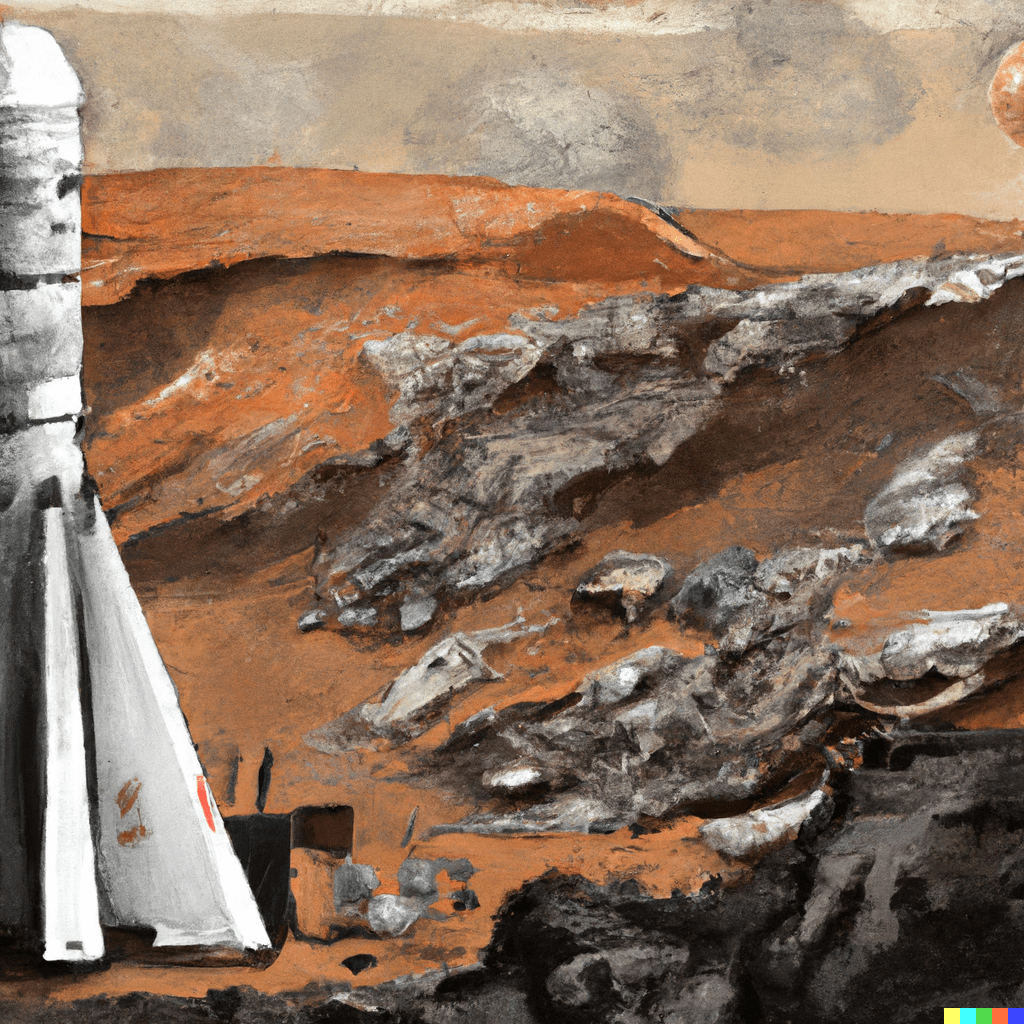
Image (Credit): Martian horizon courtesy of NASA’s Mars Odyssey orbiter. (NASA/JPL-Caltech/ASU)
The image this week is what the International Space Station might see if it were traveling over Mars. Instead, this is the view of NASA’s Mars Odyssey orbiter.
You can learn more about this image by watching this video with Laura Kerber, deputy project scientist for NASA’s Mars Odyssey orbiter. You can also read more about the orbiter’s mission and the video of Phobos by visiting this NASA site.
Okay, the plan is for Blue Origin to launch NASA satellites towards Mars, so don’t worry about Jeff Bezos and Elon Musk fighting it out on the Martian surface.
NASA has tapped Blue Origin to take two satellites worth about $79 into space, which will be the first use of the company’s New Glenn rocket. The launch is planned for next year, giving Blue Origin time to test the rocket and prepare for the mission.
The NASA mission, called the Escape and Plasma Acceleration and Dynamics Explorers (EscaPADE), involves two identical probes that were originally scheduled to fly with the Psyche mission.
The goals of the EscaPADE mission are to:
understand the processes controlling the structure of Mars’ hybrid magnetosphere and how it guides ion flows;
understand how energy and momentum are transported from the solar wind through Mars’ magnetosphere; and
understand the processes controlling the flow of energy and matter into and out of the collisional atmosphere.
Can Blue Origin be ready by next year when the window to Mars opens up? That is the big question given the continued delays with the New Glenn rocket.
It is good to see NASA spreading its launches into more hands. Now we just need the industry to meet the challenge.
While NASA seeks to maintain an uninterrupted human presence in low Earth orbit, an agency official said a short-term gap between the International Space Station and commercial successors would not be “the end of the world.” NASA’s current approach to its future in LEO counts on supporting development of commercial space stations with the goal of having at least one such station ready to support NASA astronauts and research by 2030, when the ISS is scheduled for retirement. A key question, though, will be whether any of the several companies working on such concepts will be ready by the end of the decade.
Hundreds of tech and science jobs will be lost in California if NASA moves forward with a plan to cut funding from the Mars Sample Return (MSR) mission, according to state lawmakers. U.S. Senator Alex Padilla (D-Calif.) and Representative Adam Schiff (D-Calif.-30), sent a letter on Wednesday to NASA Administrator Bill Nelson to reverse a decision to slash the mission’s funding. The funding cut would “result in the loss of hundreds of California jobs, prevent the Jet Propulsion Laboratory (JPL) from making its 2030 launch window, and lead to the cancellation of billions of dollars in contracts supporting American businesses,” the lawmakers wrote.
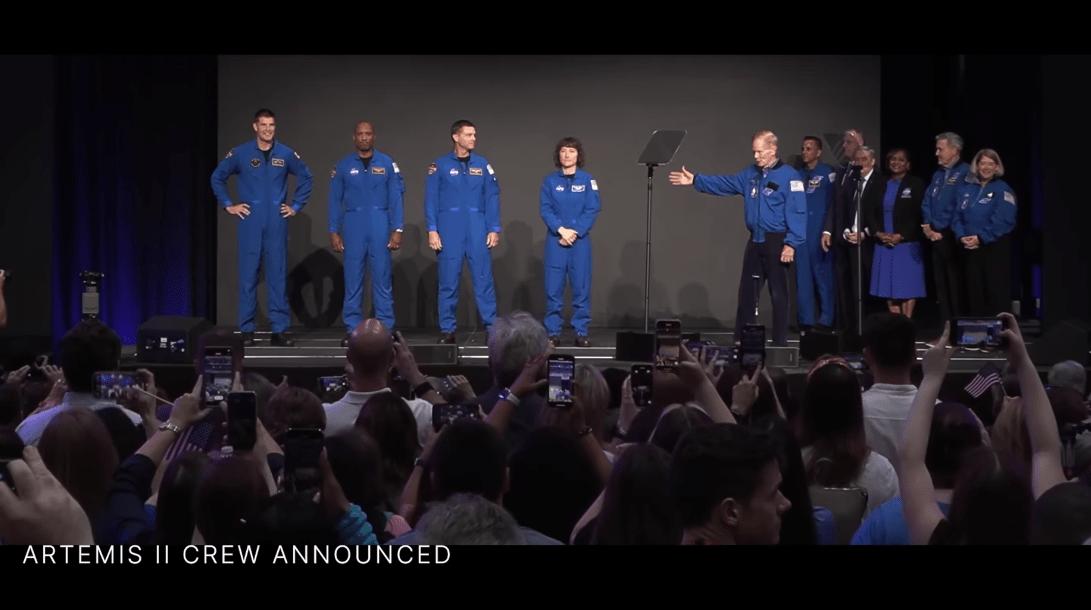
The Canadian Space Agency announced two astronauts will fly to space in the coming years on Wednesday (Nov. 22) as the country continues a historic ramp-up of its human space program in 2023. François-Philippe Champagne, the Minister of Innovation, Science and Industry of Canada, announced the assignments in front of a crowd of hundreds gathered in the lobby of Canadian Space Agency headquarters in Longueuil, Quebec.
The bottom line is that we should not rush towards permanent settlements at either location until we know more about the human body, the human mind, and human politics (good luck with the last one).
The conversation covers a variety of risks, including the effects of gravity on the human body, the ability to procreate in space, and the effectiveness of treaties as nations plan to settle and mine the Moon and Mars. The authors note that we have not had ample time to study all of these issues even with the International Space Station (ISS) in orbit because this has not been the focus of many space efforts to date. For instance, the ISS does not test the impact of radiation on humans because it is in low Earth orbit within the protection of the planet’s magnetic field.
Overall, the authors advise time and more study before jumping into a settlement. This may mean putting off permanent settlements for a few hundred years.
And what about Elon Musk’s plan to start shipping colonists to Mars in his lifetime? As with many things related to Mr. Musk, he does oversell ideas. His energy in the infrastructure realm is good, but his predictions related to humanity in general are usually unreliable.
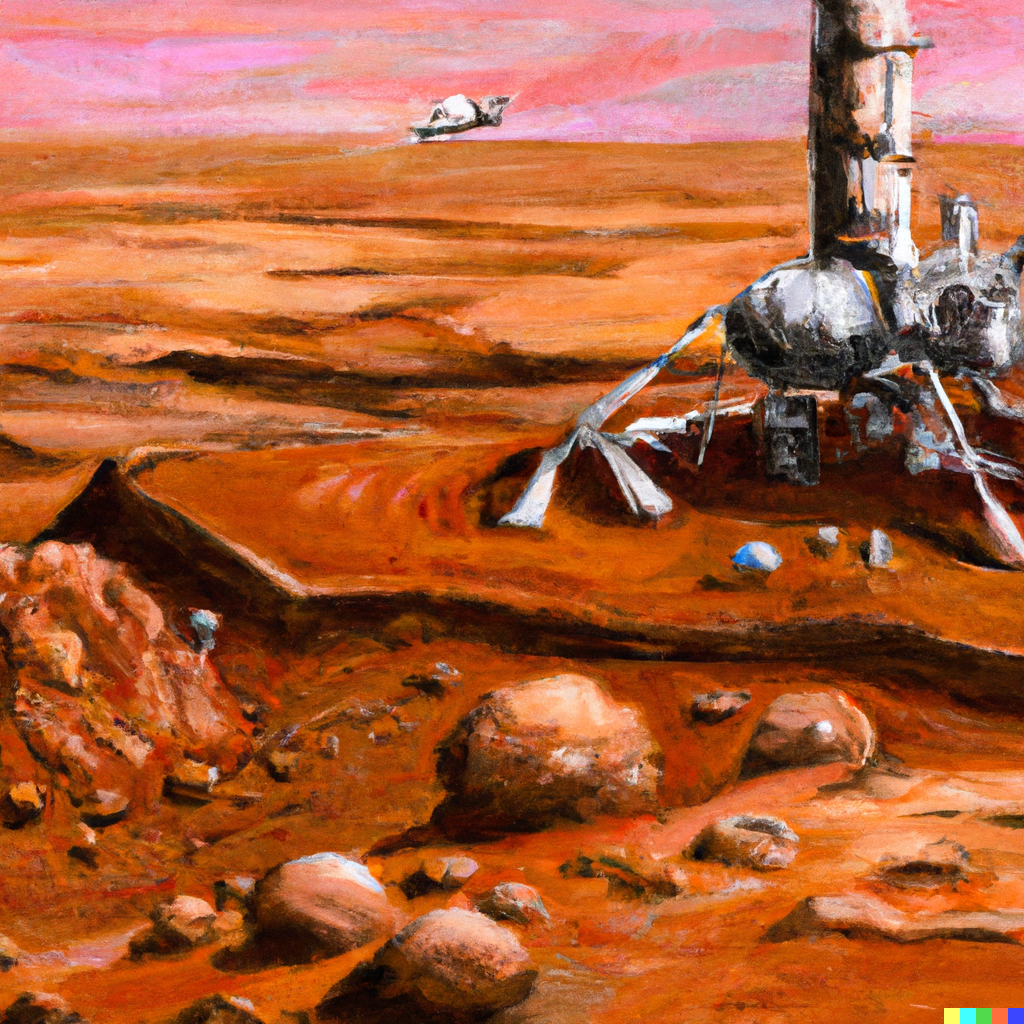
Image (Credit): Artist’s rendering of a Martian space city. (SpaceX)