If you are still looking around for holiday gifts, Popular Mechanics provided a nice gift guide for 2023. This includes the board game Space-opoly (above), the red Mars dust globe (below), and the Play Tent Galaxy Dome (also below).
Some other sources for helpful gift lists include:
Image (Credit): Artist’s rendering of NASA’s Perseverance rover on the surface of Mars. (NASA/JPL-Caltech)
“It was clear that upper management expected us to push through regardless of any challenges happening outside the lab because the robot was the first priority…It resulted in incredible burnout across all the teams. Many of us are honestly still recovering from it.”
-Statement by one of the NASA Jet Propulsion Laboratory employees working on the Mars Perseverence rover mission as quoted in a Scientific American article, “NASA Lab’s Workforce Woes Threaten Major Space Missions.” The article notes that JPL is dealing with employee shortages as overworked employees depart for better pay more more life balance at private space firms.
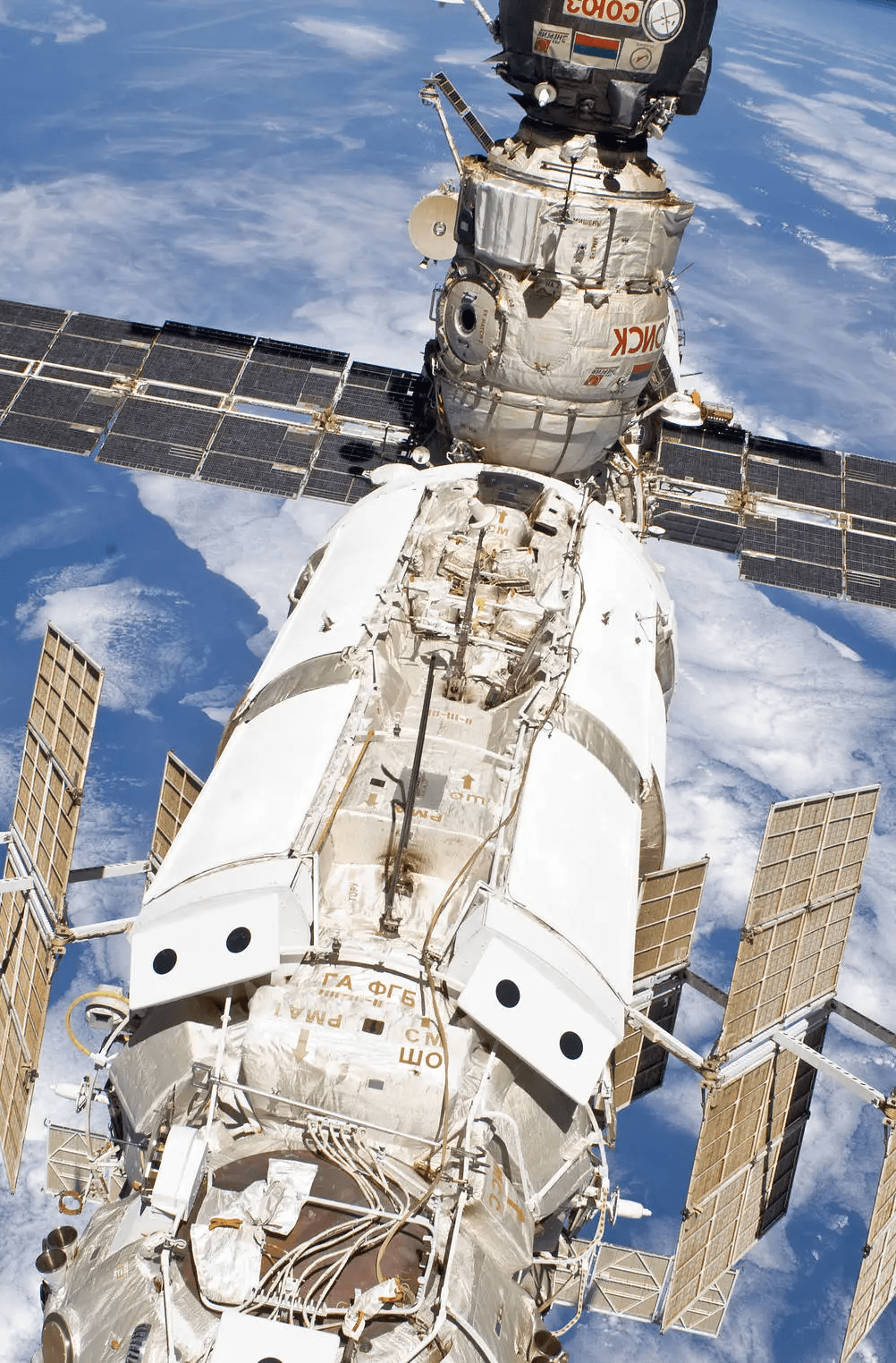
Image (Credit): The ISS’s Zarya module (in the image bottom to center). (NASA)
On this day in 1998, two modules, the Russian Zarya and American Unity, were joined in Earth orbit to create the International Space Station (ISS).
The ISS was built by five space agencies involving 15 nations. NASA notes that 273 people from 21 countries have visited the ISS over the years to assist with more than 3,300 research and educational investigations. The station has been busy, and pretty expensive at more than $150 billion to design and build.
Back in 2012, Astrophysicist Neil DeGrasse Tyson stated:
If the United States commits to the goal of reaching Mars, it will almost certainly do so in reaction to the progress of other nations – as was the case with NASA, the Apollo program, and the project that became the International Space Station.
Eleven years later, the ISS continues to orbit the Earth while plans are still being made to return to the Moon and visit Mars. Maybe Dr. Tyson was right given our current race with China to the Moon. We sometimes need that extra push to move towards the stars (as least in terms of crewed flights).
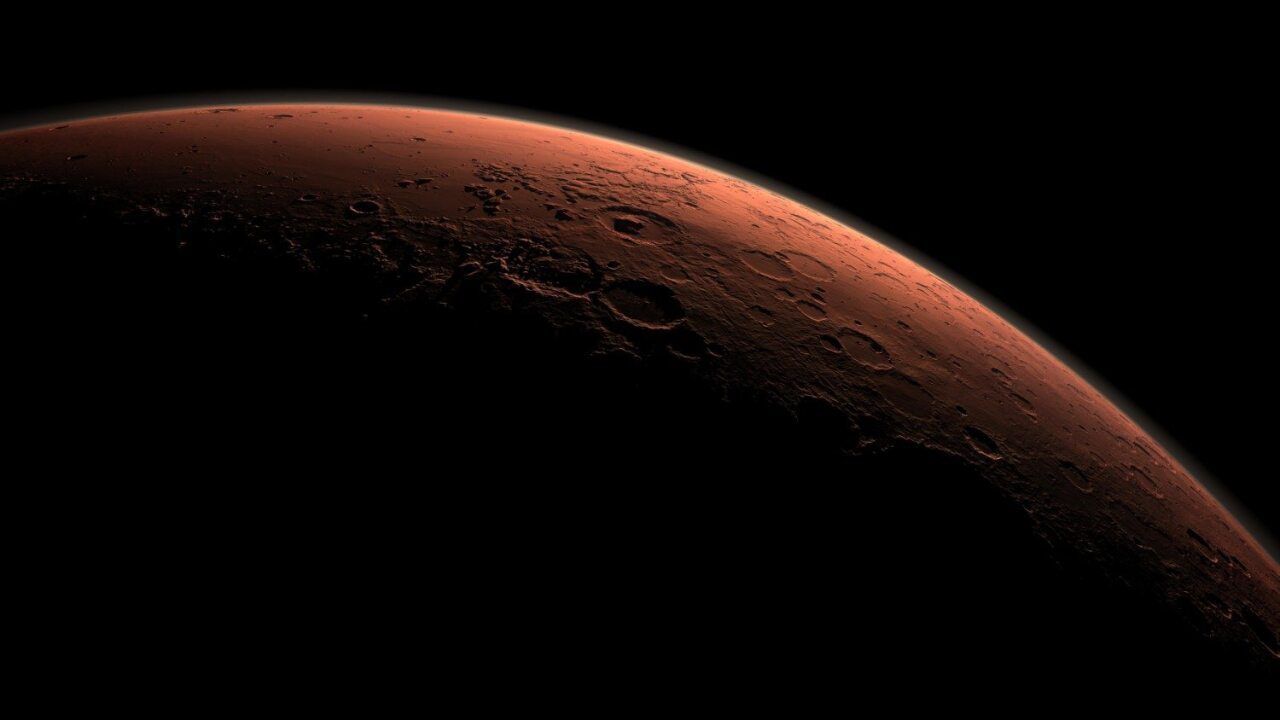
Image (Credit): Martian horizon courtesy of NASA’s Mars Odyssey orbiter. (NASA/JPL-Caltech/ASU)
The image this week is what the International Space Station might see if it were traveling over Mars. Instead, this is the view of NASA’s Mars Odyssey orbiter.
You can learn more about this image by watching this video with Laura Kerber, deputy project scientist for NASA’s Mars Odyssey orbiter. You can also read more about the orbiter’s mission and the video of Phobos by visiting this NASA site.
Okay, the plan is for Blue Origin to launch NASA satellites towards Mars, so don’t worry about Jeff Bezos and Elon Musk fighting it out on the Martian surface.
NASA has tapped Blue Origin to take two satellites worth about $79 into space, which will be the first use of the company’s New Glenn rocket. The launch is planned for next year, giving Blue Origin time to test the rocket and prepare for the mission.
The NASA mission, called the Escape and Plasma Acceleration and Dynamics Explorers (EscaPADE), involves two identical probes that were originally scheduled to fly with the Psyche mission.
The goals of the EscaPADE mission are to:
understand the processes controlling the structure of Mars’ hybrid magnetosphere and how it guides ion flows;
understand how energy and momentum are transported from the solar wind through Mars’ magnetosphere; and
understand the processes controlling the flow of energy and matter into and out of the collisional atmosphere.
Can Blue Origin be ready by next year when the window to Mars opens up? That is the big question given the continued delays with the New Glenn rocket.
It is good to see NASA spreading its launches into more hands. Now we just need the industry to meet the challenge.