Travel to the ISS May be Limited to the Russians

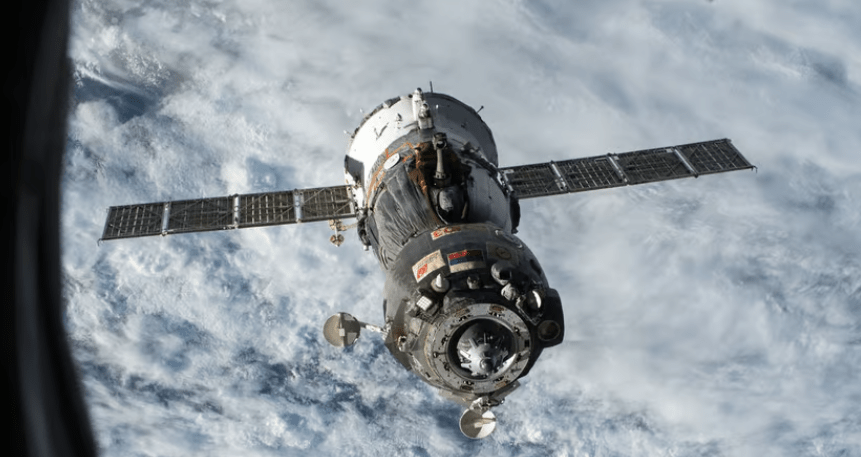
Image (Credit): A Russian Soyuz spacecraft outside the ISS. (NASA)

Well, the U.S. now has one space company with its manned spacecraft stranded at the International Space Station (ISS) while a second space company responsible for manned flights to the ISS has been grounded following a rocket mishap.

That’s right, while the Boeing Starliner awaits word on when it can return to Earth after it maiden flight, SpaceX just suffered a Falcon 9 rocket launch failure related to its Starlink program.

So where does this leave the ISS? Dependent on the Russians for manned flights to the ISS until the SpaceX problem can be investigated. Of course, SpaceX was also one solution for returning the Boeing crew to Earth if the Starliner problem could not be timely resolved. So much for that at the moment.

Both the Boeing and SpaceX issues could be resolved in the next few weeks, but this shows how quickly the situation can change on the ground and in space. While the Russians have certainly had their own issues with the Soyuz spacecraft as well, at least the men and women on the station have one option available to them.

Let’s hope Boeing gets its act together and the SpaceX mishap can be resolved quickly.
Space Quote: Europa Clipper Mission Faces New Radiation Risk

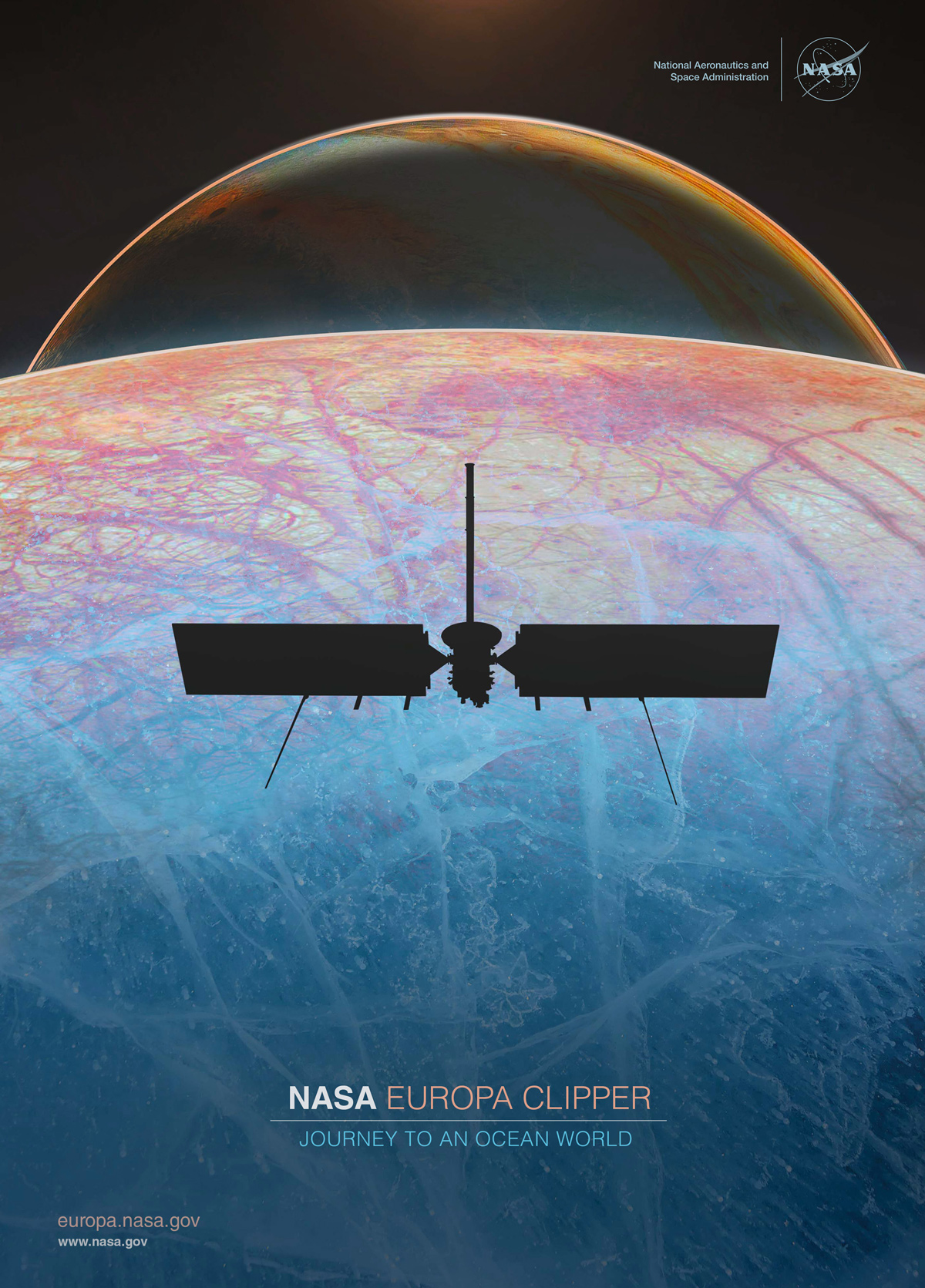
Image (Credit): NASA’s Europa Clipper poster. (NASA/ Jet Propulsion Laboratory-Caltech)

“Engineers with NASA’s Europa Clipper mission continue to conduct extensive testing of transistors that help control the flow of electricity on the spacecraft. NASA’s Jet Propulsion Laboratory in Southern California, which manages the mission, began the tests after learning that some of these parts may not withstand the radiation of the Jupiter system, which is the most intense radiation environment in the solar system.”

–NASA statement from yesterday regarding potential issues with electrical switches on the Europa Clipper spacecraft that is set to launch in October. Whether this leads to a delayed launch of the mission or a less nimble mission has yet to be determined. The preliminary findings from the current testing are expected to be released later this month.

Space Stories: Fewer Eyes on Asteroids, Volunteer Martians Released, and Russians Plans for a New Space Station

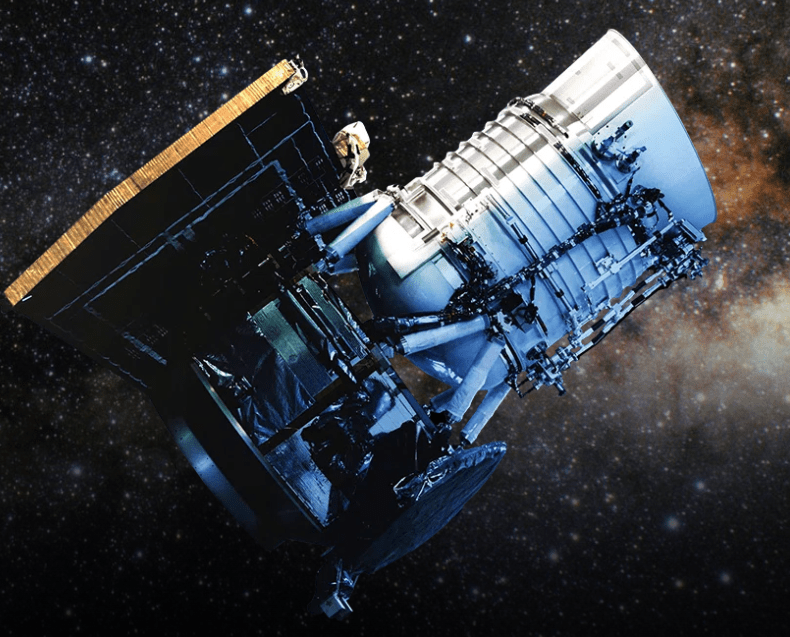
Image (Credit): NEOWISE space telescope. (NASA)

Here are some recent stories of interest.

—Flying Magazine: “NASA’s Asteroid, Comet Hunting Telescope Set to Retire at End of Month“

A NASA space telescope designed to “hunt” asteroids and comets that could pose a threat to life on Earth and orbiting spacecraft will soon burn up in orbit. In late 2024 or early 2025, the agency’s Near-Earth Object (NEO) Wide-field Infrared Survey Explorer—or NEOWISE—is expected to come home in pieces following the conclusion of its second mission later this month…However, NASA has a replacement lined up: the Near Earth Object Surveyor (NEO Surveyor), set for a 2027 launch. The infrared space telescope is the first to be designed specifically for hunting large numbers of NEOs in and around Earth orbit. It has a baseline development cost of $1.2 billion to which NASA committed in 2022.

—NPR: “Volunteers Who Lived in a NASA-created Mars Replica for Over a Year Have Emerged“

Four volunteers who spent more than a year living in a 1,700-square-foot space created by NASA to simulate the environment on Mars have emerged. The members of the Crew Health and Performance Exploration Analog mission — or CHAPEA — walked through the door of their habitat at NASA’s Johnson Space Center in Houston on Saturday to a round of applause…Haston and the other three crew members — Anca Selariu, Ross Brockwell and Nathan Jones — entered the 3D-printed Mars replica on June 25, 2023, as part of a NASA experiment to observe how humans would fare living on the Red Planet.

—Reuters: “Russia Plans to Create Core of New Space Station by 2030“

Russia is aiming to create the four-module core of its planned new orbital space station by 2030, its Roscosmos space agency said on Tuesday. The head of Roscosmos, Yuri Borisov, signed off on the timetable with the directors of 19 enterprises involved in creating the new station. The agency confirmed plans to launch an initial scientific and energy module in 2027. It said three more modules would be added by 2030 and a further two between 2031 and 2033.

More on the Recent Asteroid Flybys

Image (Credit): Asteroid 2024 MK captured by NASA’s Goldstone Solar System Radar. (NASA, JPL-Caltech)

Remember asteroid 2024 MK from last Saturday? Well, NASA has some nice shots (shown above) of the asteroid as it made it close approach to the Earth. It shows the 500 foot-wide asteroid in all of its scary glory. We were lucky to be nothing but observers that day.

Another asteroid that shot by the Earth on June 27th at a distance that was about 17 time the distance between the Earth and the Moon was asteroid UL21. This asteroid was not a surprise, having been spotted back in 2011. However, it had a surprise when viewed up close. The asteroid had its own moon (shown below).

I’m impressed we have these amazing images, but if they price for these images is a risky rendezvous then I can live without them.

Note: Another asteroid is coming our way next week – asteroid 2024 MT1. The asteroid is 260 feet in diameter and will be come much closer than UL21, or about four times the distance between the Earth and the Moon.

Image (Credit): Asteroid UL21 captured by NASA’s Goldstone Solar System Radar. You can see its moon as the small speck at the bottom of the image. (NASA, JPL-Caltech)

Space Quote: Turning the ISS into Very Expensive Space Junk

“Selecting a U.S. Deorbit Vehicle for the International Space Station will help NASA and its international partners ensure a safe and responsible transition in low Earth orbit at the end of station operations. This decision also supports NASA’s plans for future commercial destinations and allows for the continued use of space near Earth…The orbital laboratory remains a blueprint for science, exploration, and partnerships in space for the benefit of all.”

–Statement by Ken Bowersox, associate administrator for Space Operations Mission Directorate at NASA Headquarters in Washington, regarding NASA announcement that SpaceX has been selected to develop and deliver the U.S. Deorbit Vehicle under a contract worth $843 million. This expensive Deorbit Vehicle should help to avoid problems on the ground as well as orbiting debris impacting space missions, as was the case on the International Space Station (ISS) a few days ago. The ISS is expected to continue operation until 2030.