How Many Satellites Are Too Many?

You may have remembered my earlier post showing all of the items already in orbit around the Earth. Well, it appears Elon Musk believes we can handle billions of satellites in low Earth orbit (LEO). And while the current number of orbiting satellites is only in the thousands, Mr. Musk’s SpaceX has already placed 1,700 Starlink satellites in LEO, with plans for a total of 42,000 such satellites under the program.

Not everyone agrees with unchecked growth. Josef Aschbacher, the European Space Agency’s (ESA) director-general, stated, “You have one person owning half of the active satellites in the world. That’s quite amazing. De facto, he is making the rules.” I agree with the ESA about the need for some rules in this area given the rapid growth. And we may need to look a little deeper into that “billions” number. Mr. Musk has been known to overstate things.

Mr. Musk is part of the move fast and break things club. Yet that can lead to problems when the things breaking up are expensive satellites leaving debris in their wake. We may need to find a better way.
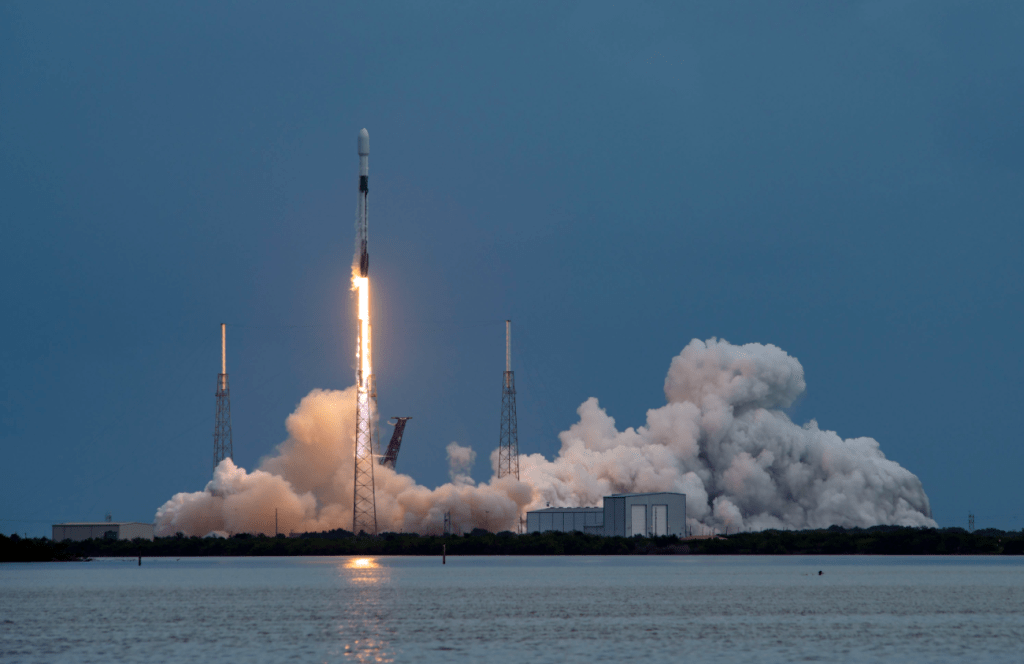
Source: October 24, 2021 launch of SpaceX’s Falcon 9 rocket carrying 60 Starlink satellites to orbit from Space Launch Complex 40 at Cape Canaveral Air Force Station in Florida. See the SpaceX press release, which contains this image.

Plenty of Stuff in Orbit

Source: Stuffin.space.

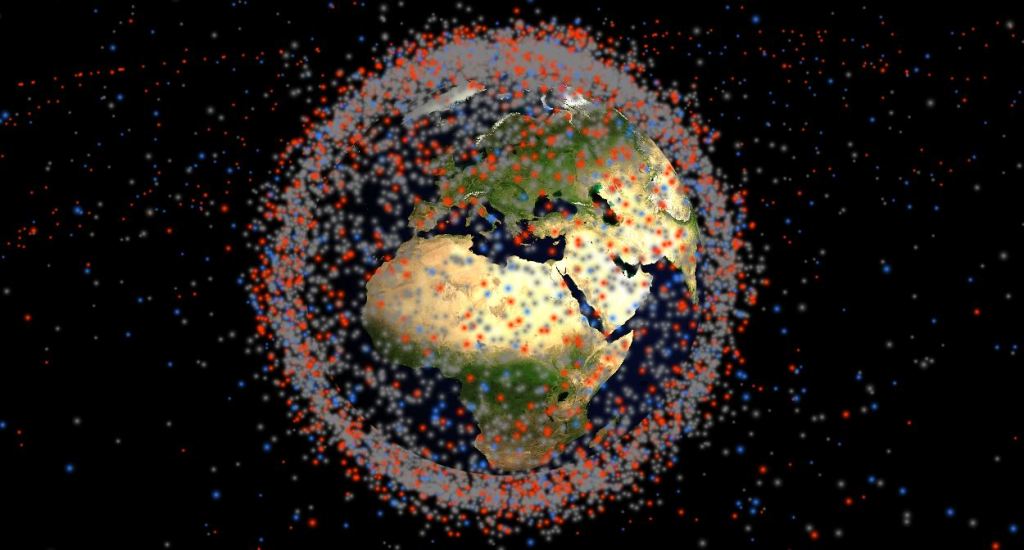
When you have a chance you should check out the volume of objects circling our planet on the stuffin.space webpage (shown above). The site provides a realtime 3D map these objects, with daily updates from the Space-Track.org.

You can select a single piece of debris and read all about it. I selected one point and had this readout:

LEMUR 2 MCCAFFERTY

Int’l Designator: 2018-004N

Type: PAYLOAD

Apogee: 487 km

Perigee: 476 km

Inclination: 97.39°

Altitude: 477.94 km

Velocity: 7.63 km/s

Period: 94.08 min

I then looked up “LEMUR 2 MCCAFFERTY” and was directed to this site with the following background on the objects sent into orbit:

Lemur-2 is the initial constellation of low-Earth orbiting satellites built by Spire. These satellites carry two payloads for meteorology and ship traffic tracking.

A total of 100 such satellites are expected to be placed into orbit, so there will be plenty more to track related to this one program.

It is getting pretty crowded up there. I remember a similar image of clutter around our Earth in the Disney movie WALL-E (shown below).

Source: From the film WALL-E.

Space Investments are No Guarantee

Source: Virgin Orbit.

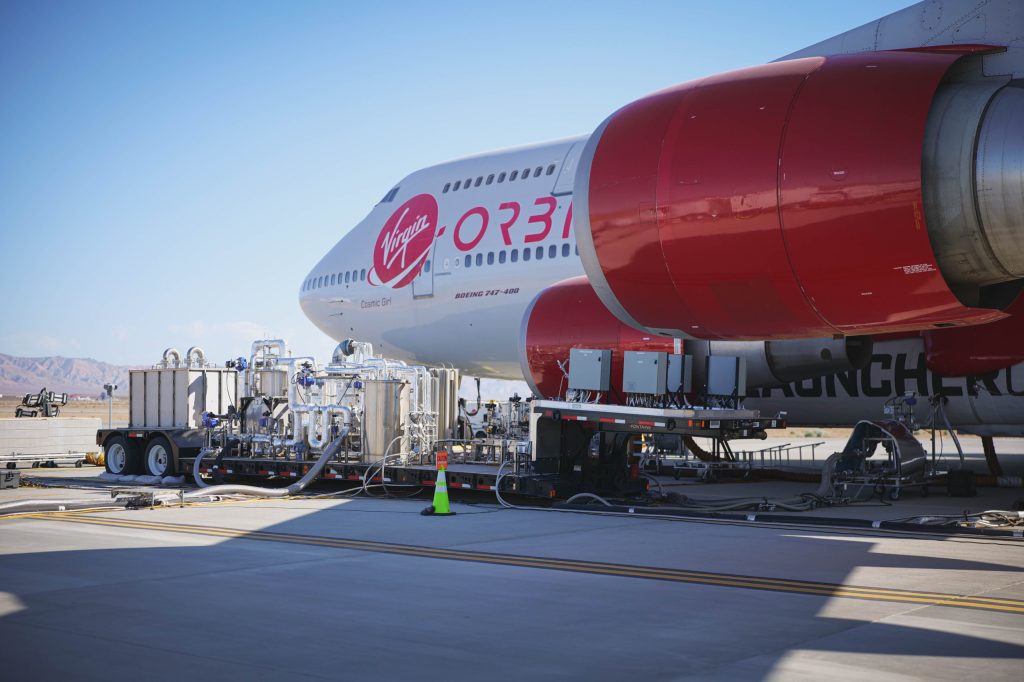
The recent initial public offering for Virgin Orbit, a commercial space launch company that spun-off from Richard Branson’s Virgin Galactic, did not go as well as planned. IG International reported that Virgin Orbit had hoped to raise $483 million as part of the public offering, but only raised $228 million. Moreover, the stock is down about 20 percent.

Virgin Orbit has already had some successfully launches from its modified Boeing 747, but the space launch industry is getting crowded and risky.

In June 2021, Virgin Orbit’s Tubular Bells: Part One mission for the US Department of Defense placed seven satellites to Low Earth Orbit – four R&D CubeSats for the US Department of Defense, two optical satellites for SatRevolution, and the Royal Netherlands Air Force’s first military satellite.  You can learn more about the past and planned US Department of Defense and NASA launches here.

Source: Virgin Orbit.