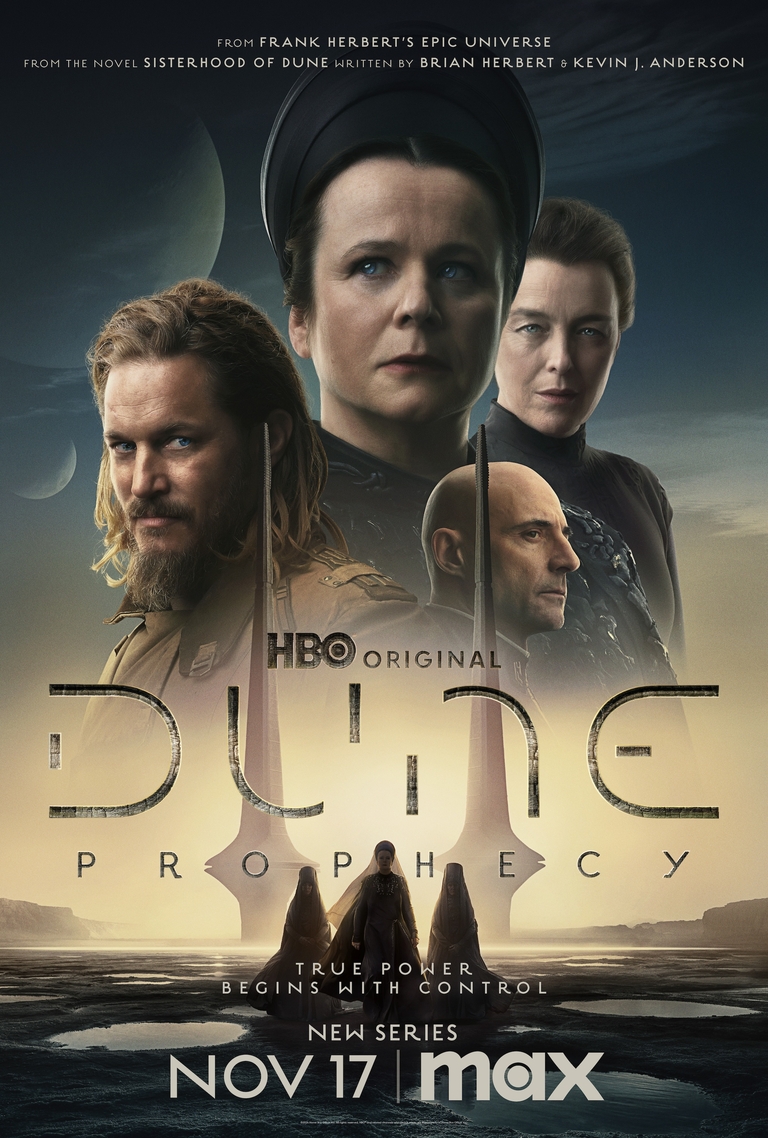
One more reminder to tune into HBO’s Dune: Prophecytomorrow night, with the final trailer gives you one last look at what’s in store. I for one look forward to anything that can take me away from this planet for a little while.
You might also enjoy the ScreenRant interview with series executive producer Jordan Goldberg and Travis Fimmel. You may remember Fimmel from the History Channel’ Vikings as well as the short-live HBO series Raised by Wolves.
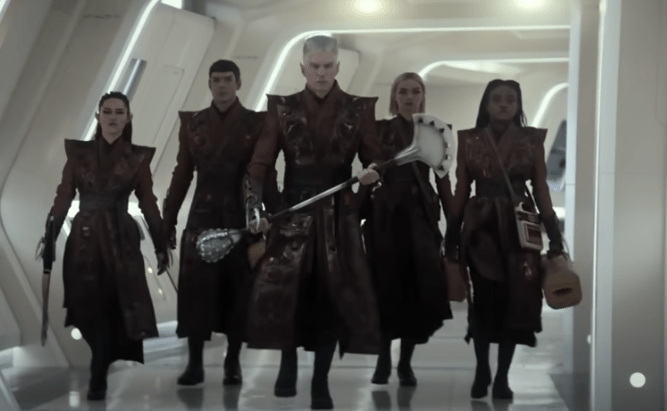
Image (Credit): Scene from season three of Star Trek: Strange New Worlds. (Paramount+)
I am eager for the third season of Star Trek: Strange New Worlds after season two ended back in August. In season two, we had a chance to meet Montgomery “Scotty” Scott, one more piece of the original Star Trek crew.
For a taste of what is to come, take a look at this preview clip of season three. Its shows a fun turn of events as members of the crew find themselves embracing the Vulcan ways for a mission. Of course, nothing is that easy. The interplay between human and Vulcan mindsets continues to entertain, much in the way The Next Generation enjoyed the interplay between human and android mindsets.
It is still unclear when season three will premiere in 2025, but the good news is that Paramount+ has already promised a fourth season, so the fun will continue. More importantly, Trekmovie.com reports that the series will eventually run into the first episode of the original series from 1966, so we can expect more original characters such as Scotty to populate the Strange New Worlds series.
With only one live action Star Trek series still on the air after the end of Star Trek: Discovery earlier this year, it is important for fans that the series continues to live long and prosper.
Fortunately, a few more Star Trek series are the in pipeline. More on that later.
If you have yet to see the latest trailer for the upcoming HBO Max series Dune: Prophesy, I recommend you take a look. It provides plenty of information on the battle to come starting November 17th.
The initial images are impressive, though it does not appear we will have the out-of-this-world music we experienced with the first two Dune movies.
Maybe I have seen too many of these series now, but this latest story seems to be a cross between HBO’s Game of Thrones and Apple TV+’s Foundation. Not that I am complaining.
See for yourself, and stay tuned for what looks to be another success from the world called Dune.
Note: For a breakdown of the trailer, visit Secrets of Dune on Youtube. The narrator does a nice job tying the the new series into the two earlier movies.
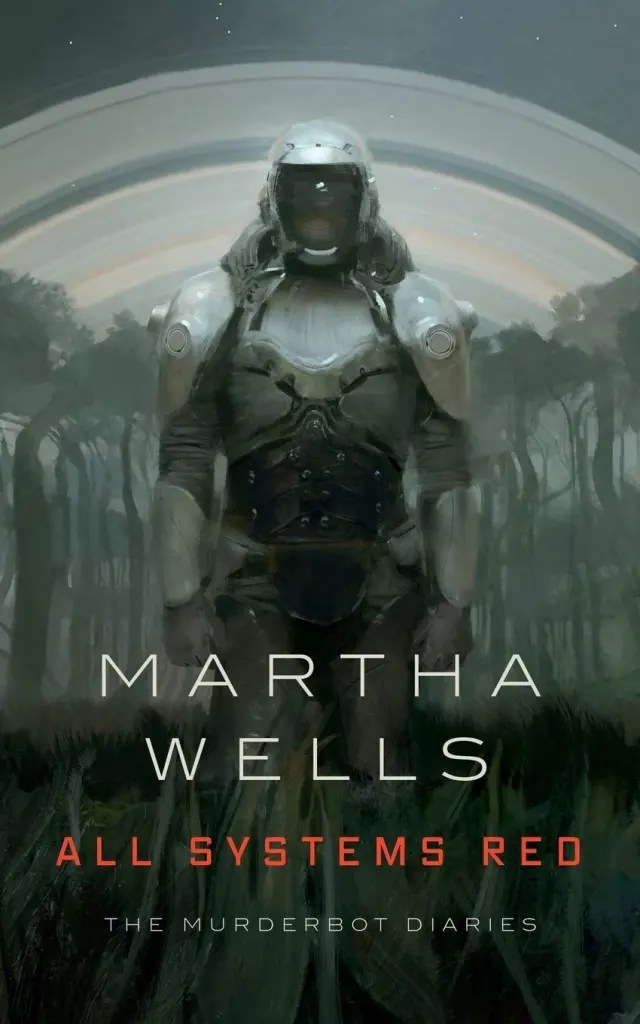
I am a big fan of Martha Wells’ The Murderbot Diaries, having read all seven in the series and looking forward to the eighth. So I was pleased to read late last year that the series will be coming to television.
If you are not familiar with the series, the best way to describe it is the tale of a security “construct” that has escaped its corporate tether and now needs to make its way in a human world. It starts its freedom acting like a petulant teenager more interested in old media adventures than humans, but it finds its way as the series continues, saving plenty of humans along the way from greedy corporations. It is just a fun read.
So in terms of television, Apple TV+ is working on a 10-episode first season, which includes Alexander Skarsgård (Succession) in the title role. Given that the main character, or Murderbot, is technically genderless and not interested in the topic of sex in the stories, I am surprised Skarsgårdis was given this type of role. You can read about some of the other actors in the series here.
Much of the story takes place within Murderbot’s head as it throws out sarcastic comments, so getting this onto the screen should prove interesting. Apple TV+ took great liberties with the Foundation series, but I hope that will not be necessary here.
I have yet to see a premiere date, so we are talking sometime in 2025.
Stay tuned.
Note: Apple TV+ is advertising a separate movie called Murderbot about a female robot gone crazy. You can ignore it.
On this day in 1929, Ursula K. Le Guin was born in Berkeley, California. She would gain her masters degree in French only to later become a well known author of many fantasy and science fiction stories, including the Earthsea series and stories set in a Hainish universe of her making. She would go on to win eight Hugo Awards and six Nebula Awards.
Her style was different from many other authors of her period, focusing more on planetary culture than spacecraft hardware. When asked about her style, she stated the following:
The “hard”–science fiction writers dismiss everything except, well, physics, astronomy, and maybe chemistry. Biology, sociology, anthropology—that’s not science to them, that’s soft stuff. They’re not that interested in what human beings do, really. But I am. I draw on the social sciences a great deal. I get a lot of ideas from them, particularly from anthropology. When I create another planet, another world, with a society on it, I try to hint at the complexity of the society I’m creating, instead of just referring to an empire or something like that.
Given that her mother an anthropologist, it is not surprising that she saw a different way of telling story.
Her books represented a unique part of the science fiction genre that has only expanded over time as the writing community has expanded.
If you need an entry point to her work, you cannot go wrong starting with the short story “The Ones Who Walk Away from Omelas.” However, one of my favorite short stories is “The Island of the Immortals,” which you can find here.
I doubt you will be able to stop with one short story.