Space Quote: China is Not Seizing the Moon

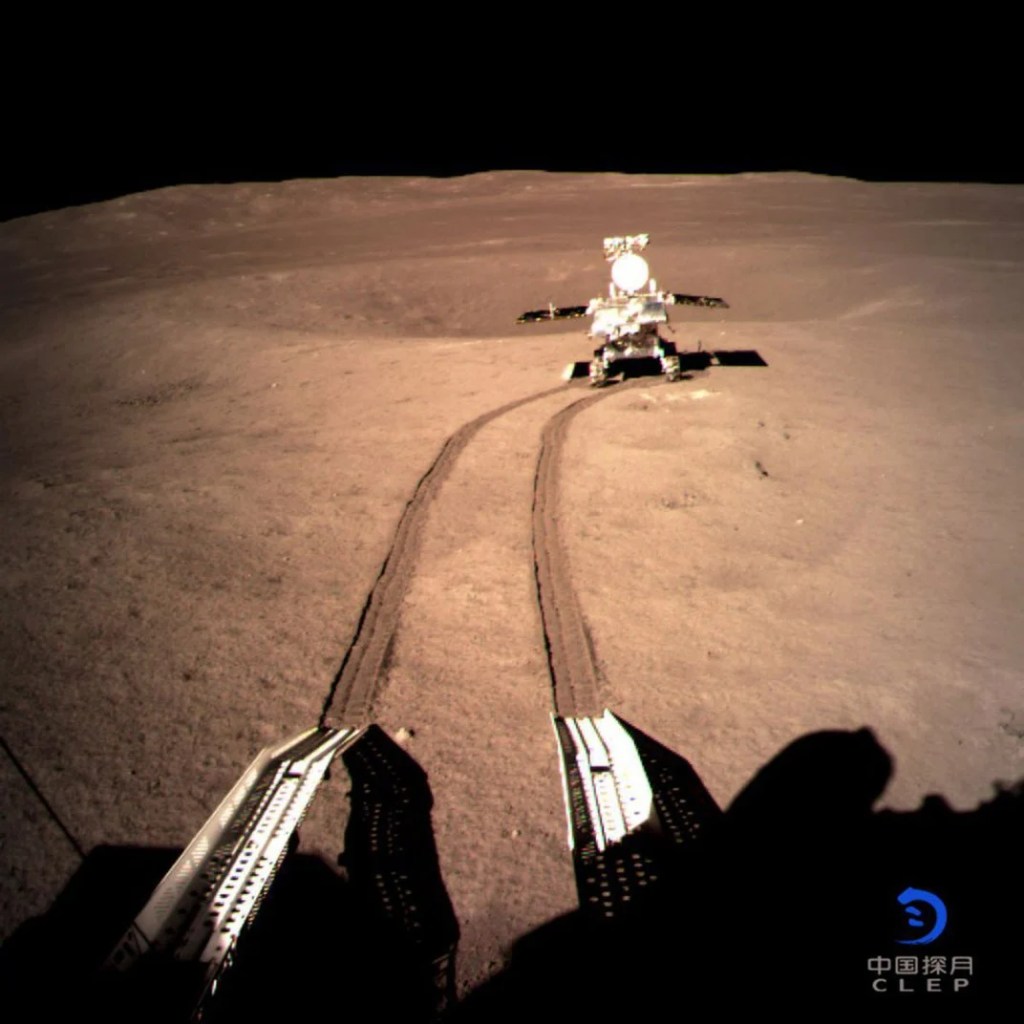
Image (Credit): China’s Yutu 2 rover explores the far side of the moon shortly after its Jan. 2, 2019, touchdown. (China National Space Administration)

“As two scholars who study space security and China’s space program, we believe that neither China nor any other nation is likely to take over the Moon in the near future. It is not only illegal, it is also technologically daunting – the costs of such an endeavor would be extremely high, while the potential payoffs would be uncertain.”

-Statement by Svetla Ben-Itzhak, Assistant Professor of Space and International Relations, Air University and R. Lincoln Hines, Assistant Professor, West Space Seminar, Air University in the Astronomy magazine article “Why China is unlikely to claim the Moon anytime soon.” It follows an earlier statement by NASA Administrator Bill Nelson, who said, “We must be very concerned that China is landing on the Moon and saying: ‘It’s ours now and you stay out.‘”

Space Quote: Elon, It’s All in Your Hands

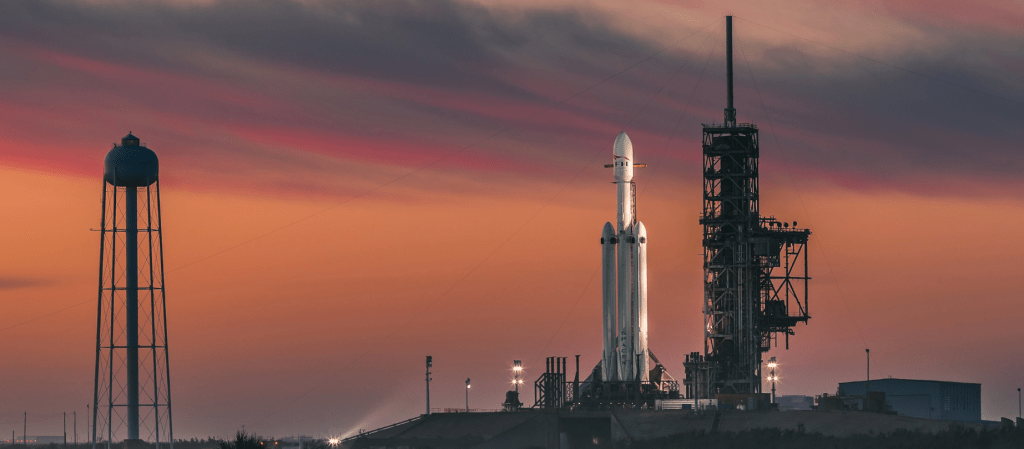
Image (Credit): Falcon Heavy rocket. (SpaceX)

“It would be nice to have a bit more free time on my hands, as opposed to just working day and night from when I wake up till when I go to sleep seven days a week. It’s pretty intense.”

-Statement by Elon Musk from last year, as quoted in yesterday’s Wall Street Journal story, “Twitter Suit Tests Musk as He Faces Tesla, SpaceX Hurdles.” The newspaper cites Tesla’s struggles with new car plants in Germany and Texas, which he calls “gigantic money furnaces,” as well as the billions in losses at SpaceX related to the Starship and Starlink programs. Musk can only blame himself for distracting himself and investors with the Twitter deal. He needs to decide what he wants to spend his time on. If it is not SpaceX, maybe he should sell the firm to others who believe in space. That way he has more money in his pocket for his other distracting hobbies.

Space Quote: Not Meeting Russia’s Space Goals

Credit: CNN

“Every penny should be spent for some purpose and some task…Therefore, we do not just check expenses, we also make sure that the results that were announced in state programs are achieved.”

-Statement by Alexei Kudrin, chairman of Russia’s Accounts Chamber, to Russia’s President Putin regarding the substandard performance of Russia’s space program, as reported in a Newsweek story, “Putin’s Space Chief Clashes With Top Economist Over Russian Space Program.” The invasion of Ukraine and related sanctions have hit the Russian economy and led to the cancellation of various space missions and contracts, and the situation is not expected to get better while Russia spends its time and resources attacking neighbors rather than focusing on its future in space.

Space Quote: Early View of the Cosmos

Image (Credit): James Webb Space Telescope mirrors. (NASA)

“It’s really hard to not look at the universe in a new light and not just have a moment that is deeply personal…It’s an emotional moment when you see nature suddenly releasing some of its secrets, and I would like you to imagine and look forward to that.”

-Statement by Thomas Zurbuchen, who leads NASA’s scientific programs, regarding the James Webb Space Telescope’s early images, which should be released to the public on July 12, 2022. He was quoted in an Arstechnica story, “NASA Scientists Say Images from the Webb Telescope Nearly Brought Them to Tears.”

Space Quotes: Worry about Asteroids, Not Aliens

Image (Credit): Image of a UFO. (SETI Institute)

“This paper attempts to provide an estimation of the prevalence of hostile extraterrestrial civilizations through an extrapolation of the probability that we, as the human civilization, would attack or invade an inhabited exoplanet once we become a Type-1 civilization in the Kardashev Scale capable of nearby interstellar travel. The estimation is based on the world’s history of invasions in the last century, the military capabilities of the countries involved, and the global growth rate of energy consumption. Upper limits of standard deviations are used in order to obtain the estimated probability of extraterrestrial invasion by a civilization whose planet we send a message to. Results show that such probability is two orders of magnitude lower than the impact probability of a planet-killer asteroid. These findings could serve as a starting point for an international debate about sending the first serious interstellar radio messages to nearby potentially habitable planets.”

-Abstract to a study, Estimating the prevalence of malicious extraterrestrial civilizations, by amateur astronomer Alberto Caballero. I suppose the results of this latest study is encouraging since we can expand to other planets in the solar system and beyond to reduce the impact of an asteroid on the human race, but trying to outrun another civilization could be somewhat more difficult. This gives us a green light for SETI as well as exploration on Mars.