Space Quote: A Return to the Space Race

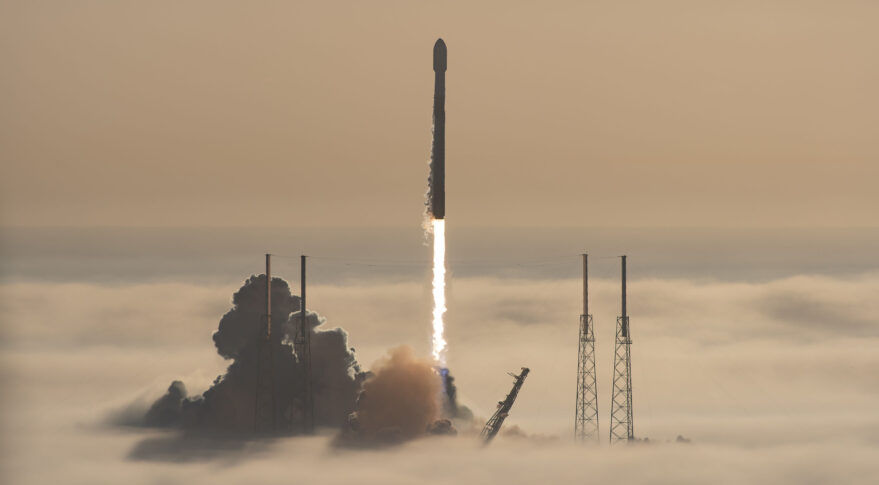
Image (Credit): Image from the earlier Space Race between the US and Soviet Union. (The Independent)

“Space will be the next great commons, a shared global resource like the oceans or cyberspace. History shows that these great commons are inevitably a source of competition and conflict, not voluntary cooperation. Whoever dominates space will determine the future of nations. We have to abandon the globalist fantasy that the U.S., China, and Russia will work together to keep space rules-based, free and open.”

-Arthur Herman, senior fellow at the Hudson Institute, in The Wall Street Journal editorial titled “How to Beat China in the New Space Race.” Mr. Herman is also author of To Rule the Waves: How the British Navy Shaped the Modern World.

Space Quote: Why the Moon?

Image (Credit): President John F. Kennedy addressing a crowd at Rice University’s stadium in Houston
reaffirming his support for America’s space program including landing a man on the Moon. (NASA)

“But why, some say the Moon? Why choose this as our goal? And they may well ask, why climb the highest mountain? Why – 35 years ago – why fly the Atlantic? Why does Rice play Texas? We choose to go to the Moon, we choose to go to the Moon in this decade and do the other things, not because they are easy, but because they are hard, because that goal will serve to organize and measure the best of our energies and skills, because that challenge is one that we are willing to accept, one we are unwilling to postpone, and one in which we intend to win, and the others too.“

-Statement by President John F. Kennedy at Rice University in Houston on September 12, 1962 discussing plans to send a man to the Moon. Next month, NASA and Rice University in Houston will host multiple events from September 10-12 celebrating the 60th anniversary of his historic speech.

Credit: NASA

Space Quote: Studying Exoplanets

Image (Credit): Artist’s rendering of 25 hot Jupiters captured by the NASA/ESA Hubble Space Telescope that have been analysed by an international team of astronomers, enabling them to answer five open questions important to our understanding of exoplanet atmospheres. (ESA/Hubble, N. Bartmann)

“We are interested in understanding the diversity and atmospheric compositions of planets between the size of Earth and Neptune…“‘Super-Earths’ and ‘mini-Neptunes’ are the most common types of planets in our galaxy. But we only have a few examples of atmospheric measurements from these types of planets.”

-Statement by Johanna Teske, a staff scientist at the Carnegie Institution of Washington who is co-leading a Webb observation team with Natasha Batalha at NASA’s Ames Research Center in Northern California. She was discussing the James Webb Space Telescope’s role to better understand exoplanets. Her comments and more are included in a NASA news article, “Exoplanets: What NASA Will See with the Webb Telescope.”

Space Quote: Finally Seeing the Individual Leaves

Image (Credit): The new James Webb Space Telescope Forever stamp. (U.S. Postal Service)

“It is like humanity just got a brand-new pair of eyeglasses for the distant universe…We are suddenly seeing that those green areas on the tops of trees are actually made of thousands of individual leaves. We suspected it, but we are now seeing it for the first time.”

-Statement by planetary astromomer Heidi Hammel in a Washington Post article, “The Webb telescope is astonishing. But the universe is even more so.”

Space Quotes: Russia is Pulling Out of the ISS? Maybe Not

Image (Credit): Russian cosmonauts headed for the ISS get ready to board the Soyuz MS-21 spacecraft prior to its launch at the Baikonur cosmodrome in Kazakhstan on March 18, 2022. (Roscosmos)

“Of course, we will fulfill all our obligations to our partners, but the decision about withdrawing from the station after 2024 has been made.”

-Statement by Yuri Borisov regarding Russia’s participation in the International Space Station (ISS), as quoted by Reuters. Mr. Borisov was recently appointed director-general of Russia’s space agency Roscosmos. However, like his predecessor, he may have spoken without thinking through the consequences. Time magazine quoted Vladimir Solovyov, an ISS flight director, who stated, “We, of course, need to continue operating the ISS until we create a more or less tangible backlog for ROSS. We must take into account that if we stop manned flights for several years, then it will be very difficult to restore what has been achieved.” In other words, the withdrawal may not be anytime soon. Not a very good start for Mr. Borisov.