Space Stories: James Webb’s Partner, the Big Bang Black Holes, and Green Energy on the Red Planet

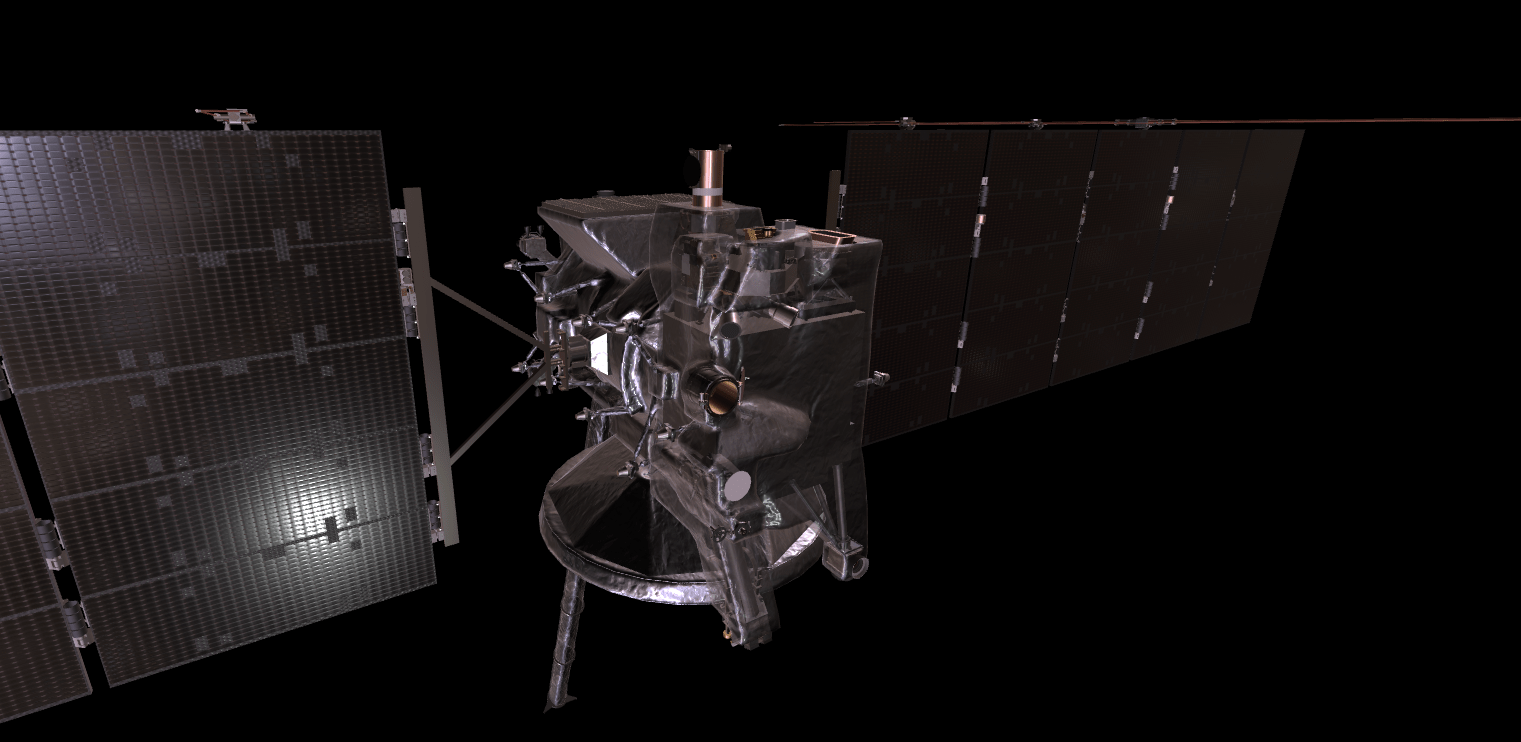
Image (Credit): James Webb Space Telescope. (NASA)

Here are some recent stories of interest.

Futurism: “NASA Sending Adorable Little Buddy to Hang Out Next to the James Webb

The space agency recently selected a toaster-sized cubesat that will become the much bigger telescope’s tiny, adorable “sidekick,” according to a statement. NASA chose the $8.5 million space mission, called the “Monitoring Activity from Nearby sTars with uv Imaging and Spectroscopy” (MANTIS), which will be designed and built by researchers at the University of Colorado Boulder. The diminutive but mighty spacecraft, scheduled to launch sometime in 2026, will make observations of the night sky in the full range of ultraviolet light, including extreme UV (EUV) light, a more energetic form.

Universe Today: “Why Didn’t the Big Bang Collapse in a Giant Black Hole?

Despite the enormous densities, the early universe didn’t collapse into a black hole because, simply put, there was nothing to collapse into…Even though the early universe was incredibly dense, it was also incredibly uniform. The average density throughout the universe was the same from place to place. There weren’t enough differences to trigger the formation of black holes.

University of Warwick: “Using Photosynthesis for Martian Occupation—While Making Space Travel More Sustainable

In a study published in Nature Communications, scientists assess a new technique which could convert renewable, green energy from outside the Earth’s atmosphere. They are taking advantage of photosynthesis—the chemical process plants undergo every day to create energy—to help the space industry become more sustainable. The research led by the University of Warwick evaluates the use of a special device known as semiconductor to absorb sunlight on moon and Mars. It is hoped that the devices could promote Martian life support systems.

Space Stories: Habitable Zone Planets, Satellite Interference, and Extraterrestrial Communication

Image (Credit): Artist’s rendering of the Milky Way Galaxy. (NASA JPL)

Here are some recent stories of interest.

ScienceDaily: “One-third of Galaxy’s Most Common Planets Could be in Habitable Zone

In a new analysis based on the latest telescope data, University of Florida astronomers have discovered that two-thirds of the planets around these ubiquitous small stars could be roasted by these tidal extremes, sterilizing them. But that leaves one-third of the planets — hundreds of millions across the galaxy — that could be in a goldilocks orbit close enough, and gentle enough, to hold onto liquid water and possibly harbor life.

Space Telescope Science Institute: “Astronomers are Reducing Satellite Interference in Hubble Images

When the Hubble Space Telescope was launched in 1990, there were about 470 artificial satellites orbiting Earth. By 2000, that number doubled. But by 2023, the rising number has grown almost exponentially to nearly 8,000 satellites. For Hubble this means that satellites photobomb about 10% of its exposures on celestial targets…Astronomers at the Space Telescope Science Institute in Baltimore, Maryland have developed tools for cleaning up this clutter. Hubble observations consist of more than just one exposure. And so, artifacts can be identified and subtracted between exposures because they are not in the same place on a detector.

BGR: “Aliens Might be Trying to Contact Us from Within the Milky Way, Study Claims

A new study seems to think alien signals could be emitting from the heart of the Milky Way, attempting to make contact with humankind. The study focuses on the use of data from a groundbreaking mission known as the Breakthrough Listen Investigation for Periodic Spectral Signals (BLIPSS), which looks for repeating patterns that could be key to unlocking connections with extraterrestrial intelligence in our galaxy.

Space Stories: Threats to Artemis, Two Saudis Visit the ISS, and Signs of the Japanese Lunar Crash

Image (Credit): The Moon and the Washington Monument. (NASA/Bill Ingalls)

Here are some recent stories of interest.

Axios: “NASA Return to the Moon Could be Imperiled by Politics

Efforts to insulate Artemis from possible cuts, delays and cancellation are facing a major test with the current budget fight on Capitol Hill. If NASA’s funding is stalled at the 2022 enacted level or reduced, agency administrator Bill Nelson has warned Artemis II and Artemis III could be delayed. The current launch dates are 2024 for Artemis II and 2025 for Artemis III.

Al Jazeera: “SpaceX Sends Saudi Astronauts, Including First Arab Woman, to ISS

A private rocket carrying the first Arab woman astronaut has blasted off on a mission to the International Space Station (ISS). Rayyanah Barnawi, a breast cancer researcher from Saudi Arabia, was joined on Sunday’s mission by fellow Saudi Ali al-Qarni, a fighter pilot. The pair are the first Saudi astronauts to voyage into space in decades.

Quartz: “NASA Found the Japanese Moon Lander that Crashed into the Moon

ispace’s attempt to become the first private company to safely land a robot on the Moon left a mark: A NASA space telescope orbiting Earth’s nearest neighbor in space spotted the impact of the vehicle on the lunar surface…NASA’s Lunar Reconnaissance Orbiter (LRO) has been circling the Moon since 2009, carefully mapping its surface. Today, it released the first images of the impact site, which required scientists at the Goddard Space Flight Center and Arizona State University to carefully hunt for changes to the lunar surface.

Space Stories: End of a Lunar Mission, Ancient Rivers on Mars, and the Second TROPICS Launch

Image (Credit): Launch of the Lunar Flashlight mission last December. (SpaceX)

Here are some recent stories of interest.

Engadget: “NASA Ends its Lunar Flashlight Mission

NASA has pulled the plug on its Lunar Flashlight project, which was designed to look for sources of ice on our nearest neighbor. The agency spent the last few months trying, and failing, to get the craft to generate the necessary amount of thrust to get the small satellite to its intended destination. Officials say that the issue was likely caused by debris buildup in the fuel lines, which prevented the CubeSat from working to its full potential. 

Insider:Photos from NASA’s Mars Rover Show the Red Planet’s Ancient Rivers were Much Wilder than Scientists First Thought

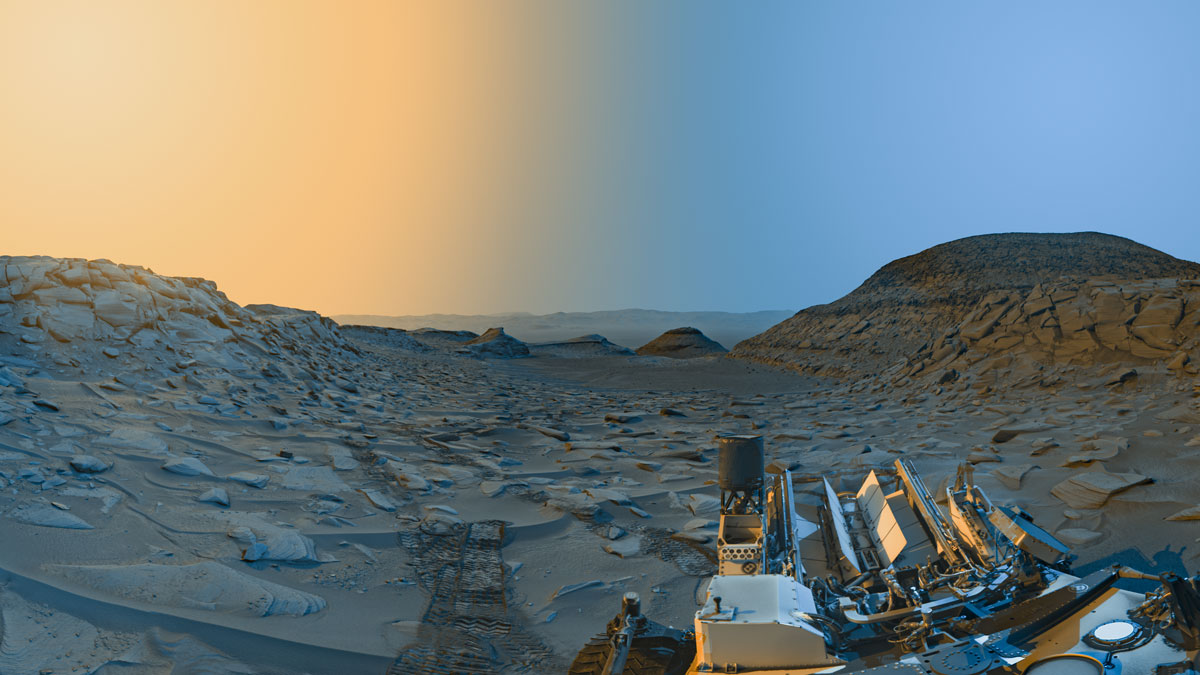
NASA’s Mars Perseverance rover has taken new images that reveal that some of the red planet’s ancient rivers were much wilder than scientists previously thought. “It’s the first time we’re seeing environments like this on Mars,” Katie Stack Morgan, Perseverance’s deputy project scientist, said in a NASA release. Scientists studying rock formations, features, and valleys on Mars, so far, have found evidence to suggest Mars was once covered by water. 

Businesswire:Rocket Lab Sets Date for Second NASA TROPICS Launch to Deploy Storm Monitoring Constellation

Rocket Lab USA, Inc., a leading launch and space systems company, is preparing for the second of two dedicated Electron launches to deploy a constellation of storm monitoring satellites for NASA. The launch, called ‘Coming To A Storm Near You,’ is scheduled for lift-off no earlier than 17:30 on May 22nd NZST from Rocket Lab Launch Complex 1 on New Zealand’s Mahia Peninsula. The launch follows on from the successful ‘Rocket Like a Hurricane’ Electron launch on May 8th 2023, which deployed the first two CubeSats of NASA’s TROPICS constellation. The ‘Coming To A Storm Near You’ launch will deploy the final two TROPICS CubeSats, completing the constellation.

Space Stories: A Private Space Station, Chinese Space Plane Returns, and Russia Doubts Moon Landing

Image (Credit): Vast Space Haven-1 Space Station. (Vast Space)

Here are some recent stories of interest.

Digital Trends:SpaceX and Vast Aim to be First to Deploy Private Space Station

As the International Space Station nears the end of its life, SpaceX and Los Angeles-based startup Vast have unveiled a plan to launch the first commercial space station. SpaceX will use a Falcon 9 rocket to send the station’s main module, Haven-1, into low-Earth orbit as early as August 2025.

Space.com: “China’s Mysterious Space Plane Returns to Earth after 9-month Orbital Mission

The second orbital mission of China’s robotic space plane has come to a close. The mysterious reusable vehicle touched down Monday (May 8) at the Jiuquan Satellite Launch Center in northwest China, wrapping up a 276-day mission to Earth orbit, according to China’s state-run Xinhua news agency.

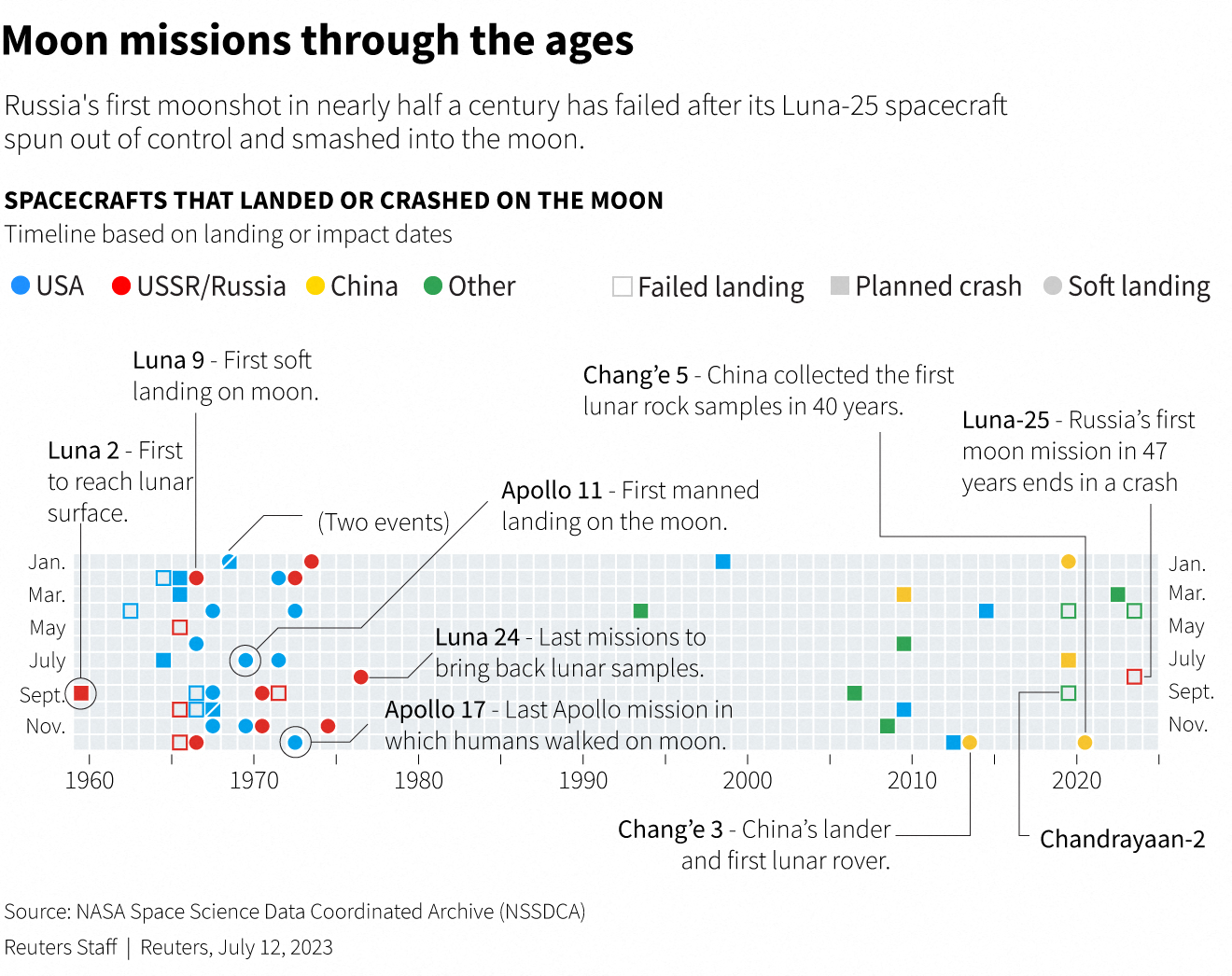
ARS Technica: “Former Head of Roscosmos Now Thinks NASA Did Not Land on the Moon

Dmitry Rogozin was fired as director general of Russia’s main space corporation, Roscosmos, nearly a year ago. He has spent much of the time since near the front lines of Russia’s invasion of Ukraine, sharing various hateful, threatening, and nationalistic sentiments on his Telegram account. Occasionally, however, the pugnacious politician still opines about space on his “Rogozin at the Front” social media account. He did so this weekend, calling into question whether the United States really did land astronauts on the Moon.