Space Stories: Artemis II to Launch February 2026, 10 New Astronauts Selected, and Plans to Destroy an Incoming Asteroid

Image (Credit): Artemis II mission map. (NASA)

Here are some recent space-related stories of interest.

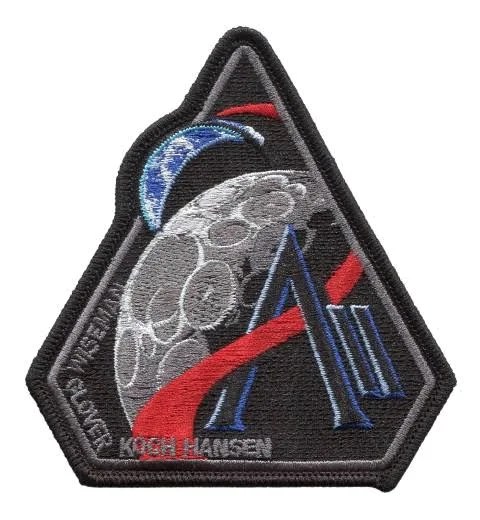
BBC News: Nasa Plans First Crewed Moon Mission in 50 years for February 2026

Nasa has said it hopes to send astronauts on a ten-day trip around the Moon as soon as February. The US space agency had previously committed to launching no later than the end of April but said it aims to bring the mission forward…Artemis Launch Director, Charlie Blackwell-Thompson explained that the powerful rocket system built to take the astronauts to the Moon, the Space Launch System (SLS) was “pretty much stacked and ready to go”. All that remained was to complete the crew capsule, called Orion, connected to SLS and to complete ground tests.

CNN: NASA Selects 10 New Astronauts as it Chases Bold Plans for the Moon and Mars

NASA on Monday introduced the 10 people — selected from a pool of 8,000 applicants — who will join the agency’s astronaut corps as it races to return to the moon before attempting an unprecedented crewed mission to Mars. The group includes six women and four men, whom acting NASA Administrator Sean Duffy called “America’s best and brightest.”…This astronaut class marks the first in which there are more women than men, according to NASA.

IFLScience: “Forget Saving Earth, NASA Wants Us To Save The Moon From Asteroid 2024 YR4

A large asteroid strike on the Moon could have negative consequences for the artificial satellites we now depend on. That being the case, a NASA-led team has looked into the options for preventing Asteroid 2024 YR4 from making such an impact in 2032. Contrary to the usual conclusions that asteroids should be diverted, not destroyed, they think this is a time for a Hollywood-approved demolition event.

Space Stories: Black Hole Stars, Globe-Trotting Student Astronomers, and Verifying Hawking’s Theorem

Credit: Image by Johnson Martin from Pixabay.

Here are some recent space-related stories of interest.

HotHardware: Astronomers Baffled, Universe Weirder Than Ever Imagined On Strange Red Dot Discovery

A team of Pennsylvania State University researchers has a unique take on mysterious red dots first observed by the James Webb Space Telescope. Initially thought to be tiny, crimson galaxies, the red dots are now proposed to be a new and exotic class of celestial object: a hybrid of a black hole and a star, which researchers have dubbed “black hole stars.”

University of Virginia: Astronomy Students Travel the World to Peer Deep into Space

The University of Virginia Occultation Group, astronomy undergraduates who observe and track asteroids and small planets, make most of their observations locally. But they also travel around the country and the world to catch glimpses of heavenly objects, from high-priority asteroid/minor planets and the dwarf planet Pluto to the distant Kuiper Belt object Arrokoth. They observe stellar occultations, which occur when asteroids and minor planets pass in front of distant stars, via telescope. The Group studies some asteroids that later will be studied by close spacecraft fly-bys, and seek out asteroids that may pose a threat to the planet.

Cornell University:On 10th Anniversary, LIGO Verifies Hawking’s Theorem

Since September 14, 2015, when the Laser Interferometer Gravitational-Wave Observatory (LIGO) made the first-ever direct detection of gravitational waves, the observatory has been making history. Cornell astrophysicists Saul Teukolsky and Larry Kidder earned a share in the 2016 Special Breakthrough Prize in Fundamental Physics – a $3 million award – for their contributions to the project. Now, on the 10th anniversary of LIGO’s first discovery, the LIGO-VIRGO-KAGRA team has announced a black hole merger similar to its first detection. However, thanks to a decade’s worth of technological advances improving the detector sensitivity, the signal is dramatically clearer, allowing unprecedented tests of General Relativity to be performed.

Space Stories: Planning Commercial Space Stations, Sloppy Black Holes, and Happy Birthday Voyager I

Image (Credit): Artist’s earlier rendering of a commercial space station called Orbital Reef envisioned by Blue Origin and  Sierra Space. (Blue Origin)

Here are some recent space-related stories of interest.

Space News: NASA Releases Details on Revised Next Phase of Commercial Space Station Development

NASA expects to spend up to $1.5 billion to support at least two companies to demonstrate crew-tended space stations as part of the agency’s revised approach to transition from the International Space Station. NASA released Sept. 5 a draft version of an announcement for partnership proposal, or AFPP, for the second phase of its Commercial Low Earth Orbit Development Program. NASA is seeking comments on the draft through Sept. 12. The draft reflects a new approach for supporting development of commercial space stations outlined in a July 31 policy directive by Acting Administrator Sean Duffy. Rather than award fixed-price contracts to cover certification of commercial space stations for use by NASA astronauts, it called for the use of funded Space Act Agreements for continued support of the design and development of such stations.

University of Michigan News: Small Black Holes are Surprisingly Sloppy Eaters

When stellar-mass black holes—”small” black holes that are still a few times more massive than the sun—are actively gobbling up matter, they’re even more of a hot mess than scientists expected. That’s according to an international research team, led by Jon Miller of the University of Michigan, that uncovered this surprise that could have galactic implications. What researchers learn from stellar-mass black holes can help them better understand supermassive black holes, the behemoths that steer the evolution of galaxies like our Milky Way.

USA Today: “Voyager 1 Marks 48 Years in Space. Here’s What to Know About Ramous NASA Mission

For nearly five decades, NASA’s twin Voyager probes have plumbed the cosmos in search of answers to some of astronomy’s most perplexing mysteries about our solar system and its place in the wider universe. And now, both of the pioneering spacecraft – which launched two weeks apart in the late-1970s into space – have officially turned 48 years old. Voyager 2 was the first to have its birthday in August, followed now by Voyager 1, which marked its anniversary early in September.

Space Stories: New Canadian Radio Telescope, Our Empty Corner of the Universe, and Fortunate Collisions with Earth

Image (Credit): The Canadian Hydrogen Observatory and Radio-transient Detector. (National Research Council of Canada)

Here are some recent space-related stories of interest.

McGill University: CHORD Will Be a Huge Leap Forward for Canadian Radio Astronomy

Construction is underway of CHORD, the most ambitious radio telescope project ever built on Canadian soil. Short for the Canadian Hydrogen Observatory and Radio-transient Detector, CHORD will give astronomers an unprecedented opportunity to explore some of the most exciting and mysterious questions in astrophysics and cosmology, from Fast Radio Bursts (FRBs) and dark energy to the measurements of fundamental particles, and beyond.

BBC Sky at Night Magazine: Earth Could Be Sitting in the Centre of a Giant Cosmic Void, According to Astronomers

It’s human to feel alarmed by the sheer emptiness of space. Now, astronomers from the University of Portsmouth in the UK suggest this unsettling vastness may be worse than we thought. They reckon Earth, our entire Solar System and even our entire Milky Way sits inside a mysterious giant hole. This void, they believe, may cause the cosmos to expand more quickly in our local environment than in other parts of the Universe.

University of Bern: “No Collision, No Life: Earth Probably Needed Supplies from Space

After the formation of the Solar System, it took a maximum of three million years for the chemical composition of the Earth’s precursor to be completed. This is shown by a new study by the Institute of Geological Sciences at the University of Bern. At this time, however, there were hardly any elements necessary for life such as water or carbon compounds on the young planet. Only a later planetary collision probably brought water to Earth, paving the way for life.

Space Stories: Dragon Docks with ISS, a Braille Astronomy Book, and an Exoplanet with No Atmosphere

Image (Credit): The Dragon cargo capsule approaching the ISS. (NASA)

Here are some recent space-related stories of interest.

NASA: SpaceX Dragon Docks to Station Delivering New Science, Supplies

At 7:05 a.m. EDT, the SpaceX Dragon spacecraft docked to the forward port of the International Space Station’s Harmony module.  The spacecraft carried over 5,000 pounds of scientific investigations and cargo to the orbiting laboratory on SpaceX’s 33rd commercial resupply services mission for NASA. The mission launched at 2:45 a.m. on Aug. 24 atop a SpaceX Falcon 9 rocket from Space Launch Complex 40 at Cape Canaveral Space Force Station in Florida. 

Cincinnati Enquirer: New Braille Book from Cincinnati Astronomer Lets You See Constellations Without Your Eyes

Longtime readers will recognize the name Dean Regas, astronomy contributor to The Enquirer and former cohost of the PBS series “Star Gazers,” but they may not know that Regas is also the author of seven books about astronomy. His latest foray into the world of writing, “All About Orion,” is a children’s book focused on its namesake, Orion, with a twist: the book features braille writing and textile constellations as well as large print for blind and visually impaired children.

Universe Today: “Another Earth-like Exoplanet Crossed Off the List: JWST Shows that GJ 3929b Has No Atmosphere

The JWST’s latest exoplanet atmosphere target is GJ 3929 b. Astronomers discovered it in TESS data in 2022. “Our analysis confirms the planetary nature of the transiting planet GJ 3929 b,” the authors of the 2022 paper wrote. “Its mass and radius (~ 0.43 Earth masses and ~1.15 Earth radii) put it into the regime of small Earth-sized planets.” Earth-like planets attract attention for obvious reasons. Now the JWST’s results are in, and the once-promising planet appears to be barren.