For the second time in two months, a SpaceX Falcon 9 rocket launch has had problems, leading to a temporary grounding of the rocket by the Federal Aviation Administration. In the latest case, a rocket booster crashed into the Atlantic Ocean after a successful launch of Starlink satellites.
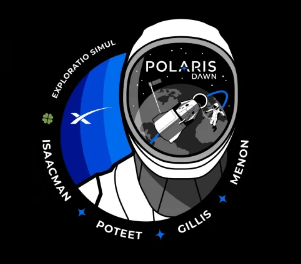
As a result of the malfunction, the privately-funded Polaris Dawn mission scheduled for this Friday will most likely need to be delayed. One of the goals for the Polaris Dawn mission is a spacewalk, which will be the first private space walk to date.
Of greater concern is the role of the Falcon 9 in upcoming International Space Station launches, be it crewed or uncrewed. With the Boeing capsule stuck at the station, SpaceX is currently the one game in town for NASA’s station needs.
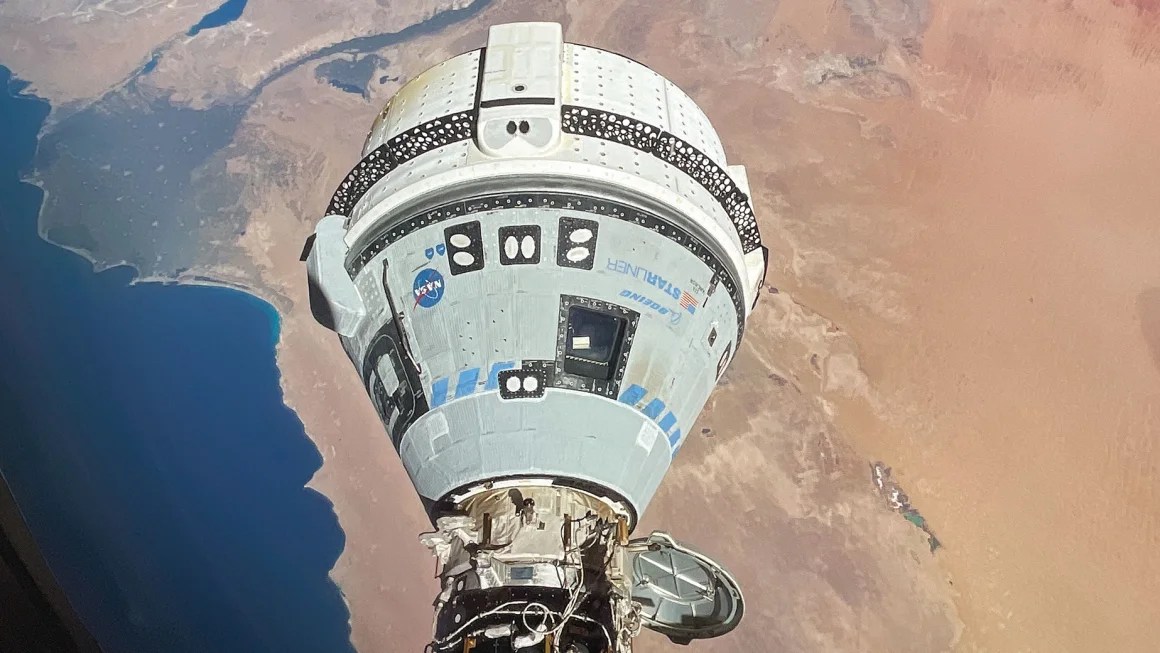
Image (Credit): Boeing Starliner attached to the ISS. (NASA)
“Spaceflight is risky, even at its safest and most routine. A test flight, by nature, is neither safe, nor routine. The decision to keep Butch and Suni aboard the International Space Station and bring Boeing’s Starliner home uncrewed is the result of our commitment to safety: our core value and our North Star…I’m grateful to both the NASA and Boeing teams for all their incredible and detailed work.“
–Statement by NASA Administrator Bill Nelson regarding NASA’s decision to return Boeing’s Starliner to Earth without astronauts Butch Wilmore and Suni Williams aboard the spacecraft. Instead the two astronauts will remain on the International Space Station (ISS) until February 2025 when they will return to Earth aboard a SpaceX Dragon capsule.
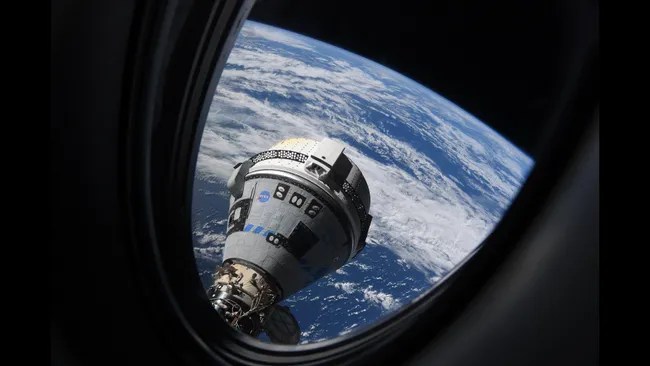
Image (Credit): Boeing’s Starliner capsule viewed from the ISS. (ESA)
I did not think it could get worse, but it has. NASA has announced that Boeing’s Starliner capsule attached to the International Space Station (ISS) might not return until next year, making it an unwanted appendage on a busy space station.
At a press conference today, NASA discussed leaving the two Boeing astronauts on the ISS until February 2025 and cutting in half the planned crew for the September 24 SpaceX Dragon mission. This would keep the number of astronauts on the space station to its normal number. There was also discussion about bringing the Boeing astronauts back on another capsule if the Starliner was not ready.
This looks bad for Boeing and NASA’s commercial space efforts. Boeing does not agree with NASA’s assessment, stating in an August 2 mission update:
Boeing remains confident in the Starliner spacecraft and its ability to return safely with crew. We continue to support NASA’s requests for additional testing, data, analysis and reviews to affirm the spacecraft’s safe undocking and landing capabilities. Our confidence is based on this abundance of valuable testing from Boeing and NASA. The testing has confirmed 27 of 28 RCS thrusters are healthy and back to full operational capability. Starliner’s propulsion system also maintains redundancy and the helium levels remain stable. The data also supports root cause assessments for the helium and thruster issues and flight rationale for Starliner and its crew’s return to Earth.
All of this is happening while the ISS crew are unloading supplies from a recently arrived Northrop Grumman Cygnus cargo capsule launched over the weekend. It does make you wonder whether Grumman should be the next best hope for a crewed capsule rather than Boeing. Grumman has a proven track record of more than 20 resupply runs. Clearly, crewed capsule are different, but it is something to consider.
Sierra Space is also testing its Dream Chaser next month, which is also expected to make cargo runs to the ISS. It this another potential crew option down the road?
The purpose of commercial involvement was greater options. Let’s work on expanding those options as quickly as possible. Placing all of our eggs in the Elon Musk SpaceX basket makes me nervous as he calls for civil war in the United Kingdom.
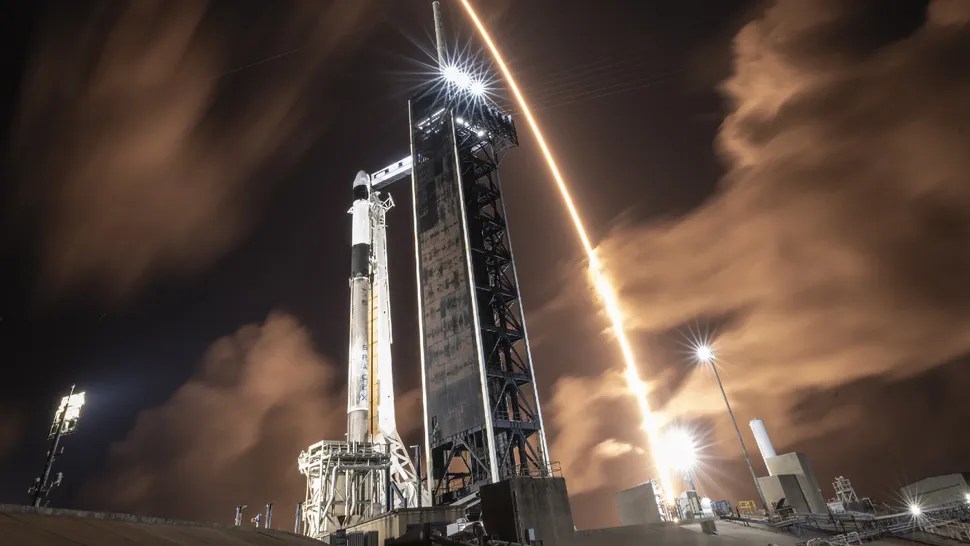
Image (Credit): Successful launch of a SpaceX Falcon 9 on August 4, 2024 sending supplies to the ISS. (SpaceX)
The weather cleared enough in Florida on Sunday for the SpaceX launch to take place, sending the Northrop Grumman Cygnus cargo spacecraft towards the International Space Station (ISS) after some earlier delays.
At 11:02 am ET, SpaceX’s Falcon 9 launched Northrop Grumman’s 21st Commercial Resupply Services mission (NG-21) to the ISS from Space Complex 40 (SLC-40) at Cape Canaveral Space Force Station in Florida.
The spacecraft will intercept the ISS on Tuesday, August 6. With the extra Starliner astronauts on board awaiting permission from Boeing to return to Earth, it is likely that the supplies will be very welcome.
Another three astronauts will be launched to the ISS on August 18 as part of the normal crew rotation. Hence, it will get even more crowded at the station by mid-August.
Update: The next crewed mission to the ISS was moved to “no earlier than” September 24 to give the Starliner more time to return to Earth.
Image (Credit): Northrop Grumman’s Cygnus cargo spacecraft as seen from the ISS. (Northrop Grumman)
The weather in Florida has delayed today’s Northrop Grumman resupply mission to the International Space Station (ISS). In fact, SpaceX is launching the payload for Grumman from the Cape Canaveral Space Force Station rather than the typical launch facility in Virginia. The Northrop Grumman Cygnus cargo spacecraft with its 8,200 pounds of supplies will probably need to sit on the launch pad for a few more days until the weather clears.
Why is SpaceX launching a Grumman resupply mission, you might ask? Doesn’t Grumman have its own rocket? Yes, and no. It has launches most of its resupply missions on its own Antares rocket, but the newest version of the rocket, the Antares 330, is still being finalized and is not expected to be ready until next year. As a result, Grumman procured three flights from SpaceX.
The ability of the commercial parties to support one another’s missions is encouraging, just as the European Space Agency dependied on SpaceX while it developed a new generation of its Ariane rocket.
SpaceX is always there to help (at a cost, of course) as other rocket companies prepare for the challenges ahead. In the case of Northrop Grumman, it needed to move away from its reliance on Ukrainian/Russian rockets and create a more reliable supply chain.