Top Astronomy Stories in 2022

Image (Credit): The stellar nursery 30 Doradus, nickname of the Tarantula Nebula, captured by the James Webb Space Telescope. (webb.nasa.gov)

Given that 2022 was a busy year, I thought I would highlight the top astronomy stories on the site – the good and the bad covering space missions to TV shows. Unlike other websites, I waited until the new year to create the list just in case we were visited by extraterrestrials. In this way, we now have a full catalog of the 2022 happenings.

Here is the list in no particular order other than science first, politics and commercial space second, and entertainment third.

  1. James Webb Space Telescope begins operation – see site link here;
  2. Double Asteroid Redirection Test (DART) successfully shifts the course of an asteroid pair – see site link here;
  3. Artemis I Orion capsule successfully orbits the Moon – see site link here;
  4. Commercial satellites become an increasing threat to Earth-based telescopes – see site link here;
  5. China completes its first space station – see site link here;
  6. Boeing is closer to being the second U.S. company to send astronauts to the International Space Station – see site link here;
  7. Ukraine invasion derails the Russian space program – see site link here;
  8. Russia reconfirms support for International Space Station – see site link here;
  9. Star Trek gets it right by returning to the past with Strange New Worlds – see site link here; and
  10. Star Wars gets it right with its new Andor series. – see site link here.

I cannot wait to see what 2023 will bring.
A Day in Astronomy: Visit to Asteroid Gaspra

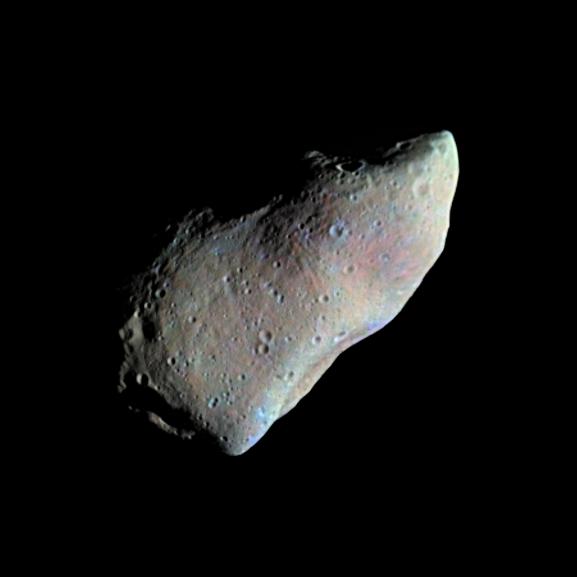
Image (Credit): Asteroid Gaspra in the asteroid belt, visited by the Galileo spacecraft on its way to Jupiter. (NASA/JPL/USGS)

On this day in 1991, NASA’s Galileo spacecraft flew by asteroid Gaspra, which is located in the asteroid belt between Mars and Jupiter. Galileo conducted a quick fly-by while flying towards Jupiter and its moons. The spacecraft also visited the asteroid Ida.

Asteroid Gasprawas first discovered back in 1916 by Russian astronomer G. N. Neujmin, who decided to name it after the Black Sea retreat of Gaspra, a Ukrainian spa town currently occupied by the Russians.

Here is some additional information from NASA about the asteroid, which has similar features to the asteroids now serving as moons to Mars (Phobos and Deimos):

A striking feature of Gaspra’s surface is the abundance of small craters. More than 600 craters, 100-500 meters (330-1650 feet) in diameter are visible here. The number of such small craters compared to larger ones is much greater for Gaspra than for previously studied bodies of comparable size such as the satellites of Mars. Gaspra’s very irregular shape suggests that the asteroid was derived from a larger body by nearly catastrophic collisions. Consistent with such a history is the prominence of groove-like linear features, believed to be related to fractures. These linear depressions, 100-300 meters wide and tens of meters deep, are in two crossing groups with slightly different morphology, one group wider and more pitted than the other. Grooves had previously been seen only on Mars’s moon Phobos, but were predicted for asteroids as well.

You car read more about the overall Galileo mission here.

Image (Credit): Artist’s rendering of the Galileo spacecraft arriving at Jupiter. (NASA)

Space Quote: Starlink Threatened by the Russians

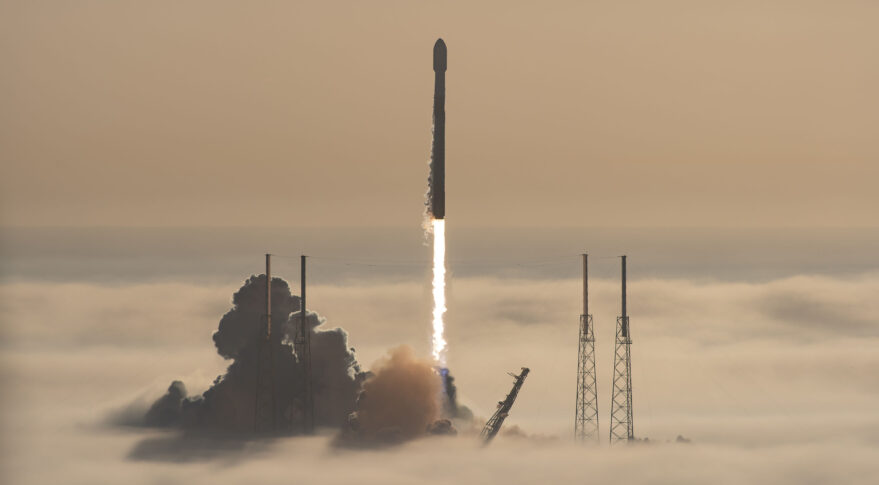
Image (Credit): November 13, 2021 SpaceX launch of 53 Starlink satellites. (SpaceX)

“Quasi-civilian infrastructure may be a legitimate target for a retaliatory strike.”

-Statement to the United Nations by Russian senior foreign ministry official Konstantin Vorontsov in reference to attacking SpaceX’s Starlink satellites being used by the Ukrainian military as it pushes back the Russian invasion. In a Reuters article, “Russia’s Anti-satellite Threat Tests Laws of War in Space,” Iridium chief executive Matt Desch stated, “If somebody starts shooting satellites in space, I’d imagine it would quickly make space unusable.”

Iranian Astronomy Collaboration, Anyone?

Image (Credit): The Iranian National Observatory at night. (Shia News Association)

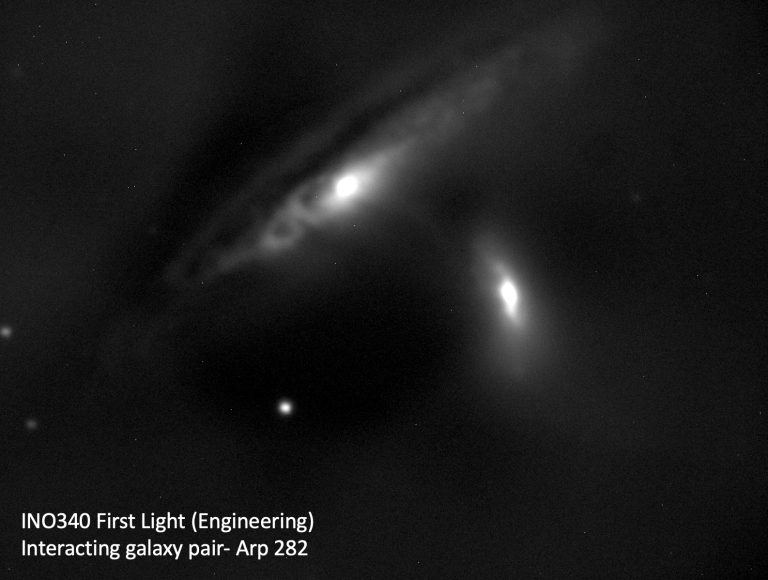
The Iranian National Observatory (INO) is now operational, with its first images now available (see sample below). After 20 years and $25 million, Iranian astronomers now have their own view of the heavens. Fine tuning of the telescope is underway, but it should soon be ready for its initial focus on the evolution of galaxies and stars as well as the study of exoplanets.

Sadly, this positive scientific news is overshadowed by international sanctions, riots in Iran, and the nation’s involvement in the sale of drones to Russia now being used to bomb Ukrainian cities.

Even with all of these problems, INO Project Director Habib Khosroshahi, an astronomer at the Institute for Research in Fundamental Sciences in Tehran, recently stated in Tehran Times, “The door is open from our side…” for collaboration with other science teams around the world.

It would be great if collaborative science could continue in this time of strife, as demonstrated by work on the International Space Stations, but it will be very difficult.

Image (Credit): First images of the INO showing to interacting galaxies. (INO)

Starlink Having Problems in Ukraine

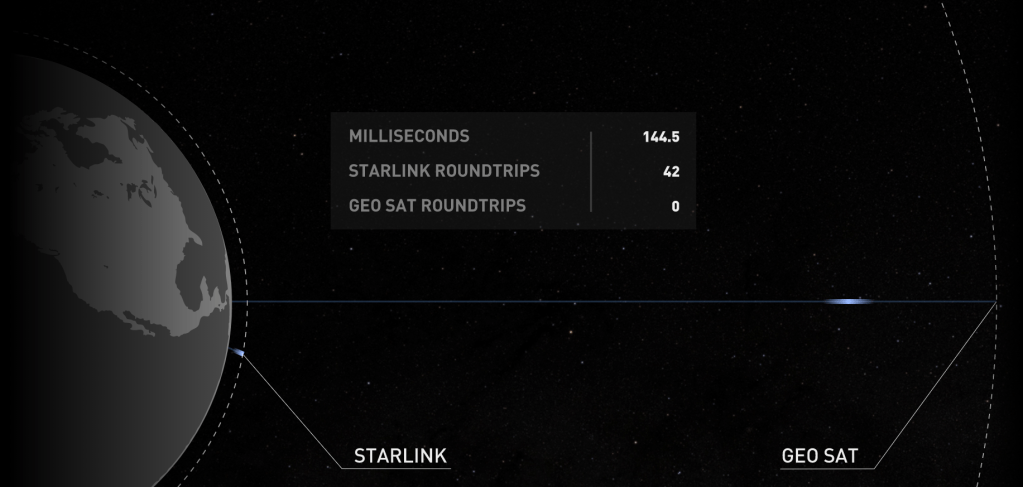
Image (Credit): Starlink page explaining why Starlink satellites are better then geostationary satellites. (SpaceX)

As if Elon Musk doesn’t have enough problems with his Twitter purchase and declining shares at Tesla, now the Ukranians are reporting that SpaceX’s Starlink internet service failed to work during a critical point in their battle to push the Russians out of Ukranian territory. This problem has been going on for weeks, but we are hearing about it now.

SpaceX was silent when these reports came out, but some suggested this may have been a feature rather than a bug in the Starlink system to prevent it from being used by Russians.

Mr. Musk later tweeted on this matter, stating:

Bad reporting by [The Financial Times]. This article falsely claims that Starlink terminals & service were paid for, when only a small percentage have been. This operation has cost SpaceX $80M & will exceed $100M by end of year. As for what’s happening on the battlefield, that’s classified.

Sadly, Mr. Musk did not clear the air but rather boasted about his company and attacked the media. But another media story from The Eurasian Times shed more light on the issue. The newspaper reports that Russia may be using its Tirada-2S satellite communications electronic jamming system to interrupt Starlink signals.

I would rather SpaceX is the cause of the problem rather than the Russians, but whatever it is we can only hope the Ukrainians, SpaceX, and Ukraine’s allies have a quick fix. Mr. Musk should received accolades for adding a novel asset to this war, yet his entire Starlink enterprise, and not just his donated equipment, is now at risk.

Update: Elon Musk is now asking the Pentagon to assume the costs of the Ukrainian Starlink program, expected to cost SpaceX about $100 million by the end of the year. Given the ongoing Twitter battle between Elon Musk and the Ukrainians related to Mr. Musk’s proposed peace plan for the region, the Ukrainians should probably be looking for another funding partner rather than continuing to count on the generosity of Mr. Musk.

Further Update: Elon Musk is now backing off on his attempts to seek more funding for Starlink, but as usual he is not very graceful about it. Here is his recent tweet:

The hell with it … even though Starlink is still losing money & other companies are getting billions of taxpayer $, we’ll just keep funding Ukraine govt for free.

Such drama from the wealthiest man in the world.