Looking to Experience Mars? It is Possible Today

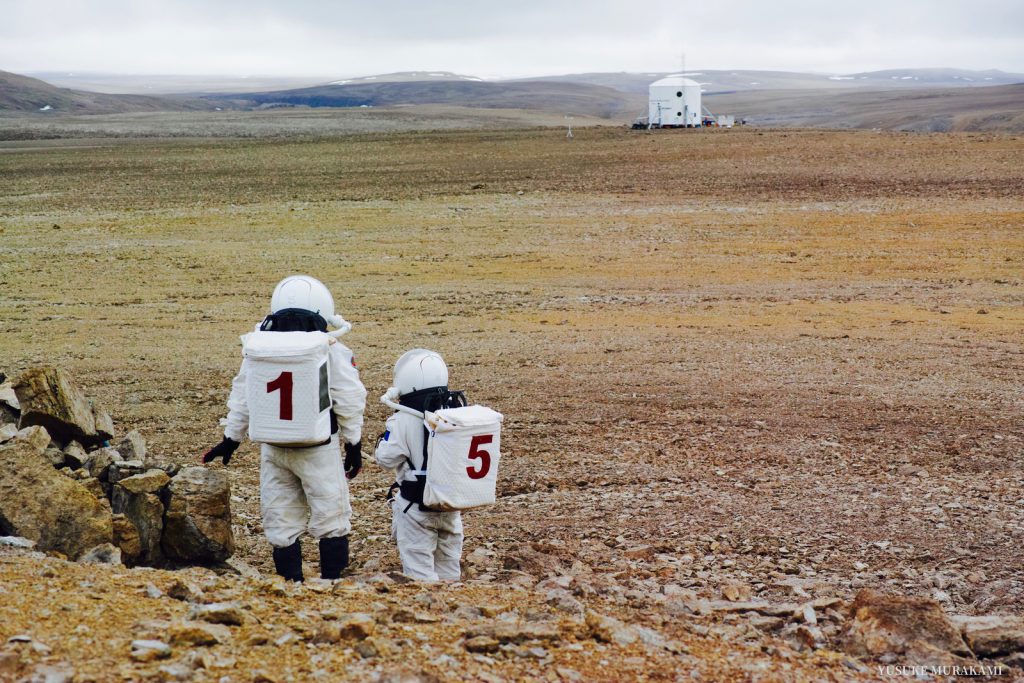
Image (Credit): Earlier FMARS participants. (Mars Society)

The Mars Society is looking for volunteers who want to experience what it would be like to live on Mars. Don’t worry, you do not need to spend months traveling to get there, but you can experience the cold and isolation of the Red Planet while never leaving the Blue Planet.

The Mars Society is looking for six volunteers who will help to reactivate its Flashline Mars Arctic Research Station (FMARS), which is located on Devon Island in the Canadian Arctic and has not operated since 2017. This location creates a Mars-like environment that can be used to anticipate some of the issues future astronauts will experience on Mars.

What will you do? The site notes:

The team will spend the first half of this period working to repair and upgrade the station. It will then spend the second half of the visit exercising the station with a Mars mission simulation during which it will attempt to conduct a program of sustained geological and microbiological exploration while operating under Mars mission constraints.

The mission will take place from June through August 2023, so you do not have a lot of time to get prepared. It will be challenging work. Not only will you face aggressive Martians (in this case local bears), but you will have to assist with the financing of the mission. Each of the six volunteers will need to arrive with $20,000 in sponsorship funding. That said, you will not need to bring your own sleeping bag, as “…all supplies, mission equipment, training, firearms, transportation to the Arctic and transportation and housing while on site.”

Interested? You can read more about it here and reach out to the Mars Society at arctic-mission@marssociety.org.

The Mars Society also runs the Mars Desert Research Station in Utah. The site runs an eight month field season for professional scientists, engineers, and college students of all levels that trains participants for human activities on Mars.

Image (Credit): Mars Desert Research Station in Utah. (Mars Society)

You Too Can Help Find Galaxies

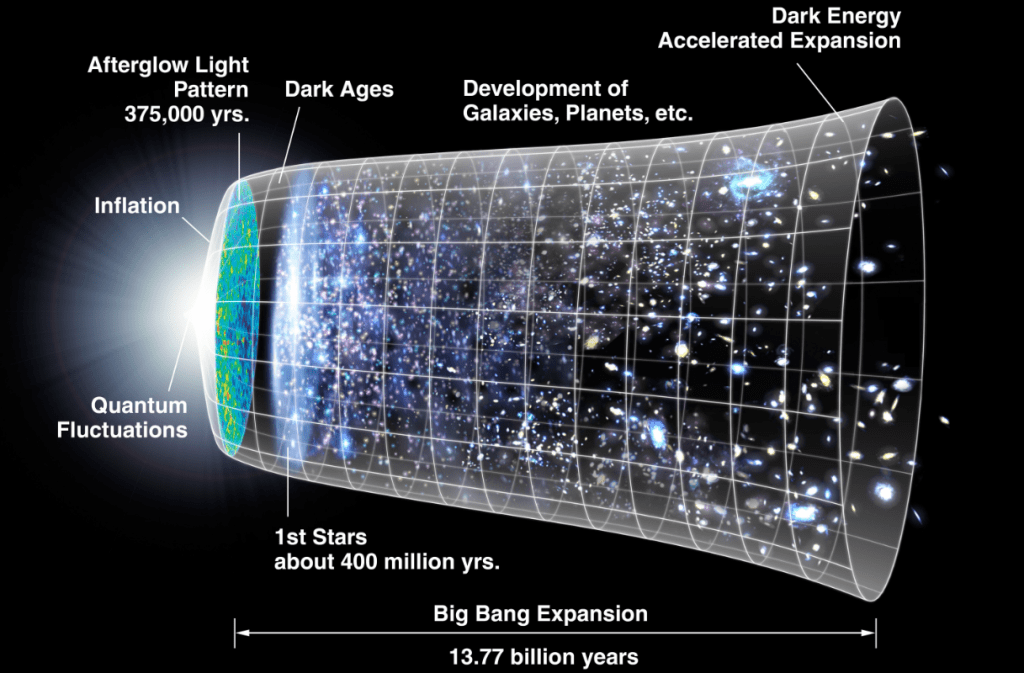
Image (Credit): Big Bang expansion. (NASA/WMAP Science Team]

About 10,000 amateur scientists in 85 countries have already assisted with galaxy-mapping, but more help is needed in locating these distant galaxies billions of light-years away.

It is all part of the Dark Energy Explorers project using data from the Hobby-Eberly Telescope, a 10 meter telescope located at the McDonald Observatory in West Texas. Volunteers will assist with the Hobby-Eberly Dark Energy Experiment (HETDEX), which is designed to:

….find over one million galaxies that are 9 billion to 11 billion light-years away, yielding the largest map of the universe ever produced. The map will allow HETDEX astronomers to measure how fast the universe was expanding at different times in its history. Changes in the expansion rate will reveal the role of dark energy at different epochs. Various explanations for dark energy predict different changes in the expansion rate, so by providing exact measurements of the expansion, the HETDEX map will eliminate some of the competing ideas.

The Explorers website can walk you through all of the necessary details to help identify signals from distant galaxies. Approximately 247,000 galaxies have already been identified, but that is just a fraction of what scientist believe is out there in the patch of sky being observed.

Ultimately, the plan is to build a 3D map of the cosmos concentrated on galaxies in the early universe. This should assist scientists with their understanding of dark energy.

This is your chance to be an astronomer. Time to have fun and pitch in.