Space Quote: Exciting Days Ahead for the US Space Program

Image (Credit): An image of Buzz Aldrin’s bootprint on the lunar surface from the Apollo 11 mission. (NASA)

“After having no other U.S. options for over 30 years, three different human spacecraft programs are now underway. In addition to the SpaceX Crew Dragon and the Boeing Starliner, NASA’s Orion spacecraft for the Artemis II mission, is planned to fly four astronauts around the Moon in the next couple of years. These programs have had setbacks and bumps along the way – and there will be more – but I haven’t been this excited about human spaceflight since I was an 11-year-old cheering for Apollo and dreaming about putting the first human footprints on Mars.”

Statement by former commander of the International Space Station Michael Fossum when asked by The Conversation about NASA’s decision to return the craft uncrewed, the future of the Starliner program and its crew’s extended stay at the space station.

Starliner: So Far, So Good

Image (Credit): NASA video coverage of the Starliner pulling away from the ISS earlier today. (NASA)

The Boeing CST-100 Starliner capsule has started its journey back to Earth from the International Space Station (ISS). Soon we will learn whether the spacecraft is operating as expected and could have returned the two astronauts safely.

The extra caution is not unexpected, and this does not spell doom for Boeing, but it is a setback. The real question will be the rate at which the Starliner’s issues can be resolved and another launch attempted.

On August 2, Boeing stated:

Boeing remains confident in the Starliner spacecraft and its ability to return safely with crew. We continue to support NASA’s requests for additional testing, data, analysis and reviews to affirm the spacecraft’s safe undocking and landing capabilities. Our confidence is based on this abundance of valuable testing from Boeing and NASA. The testing has confirmed 27 of 28 RCS thrusters are healthy and back to full operational capability. Starliner’s propulsion system also maintains redundancy and the helium levels remain stable. The data also supports root cause assessments for the helium and thruster issues and flight rationale for Starliner and its crew’s return to Earth.

Let’s hope Boeing is correct and the company is back on the launch pad with an improved Starliner shortly.

Update: NASA reported that the uncrewed Starliner capsule safely landed at 10:01 p.m. MDT on Friday, September 6, at White Sands Space Harbor in New Mexico.

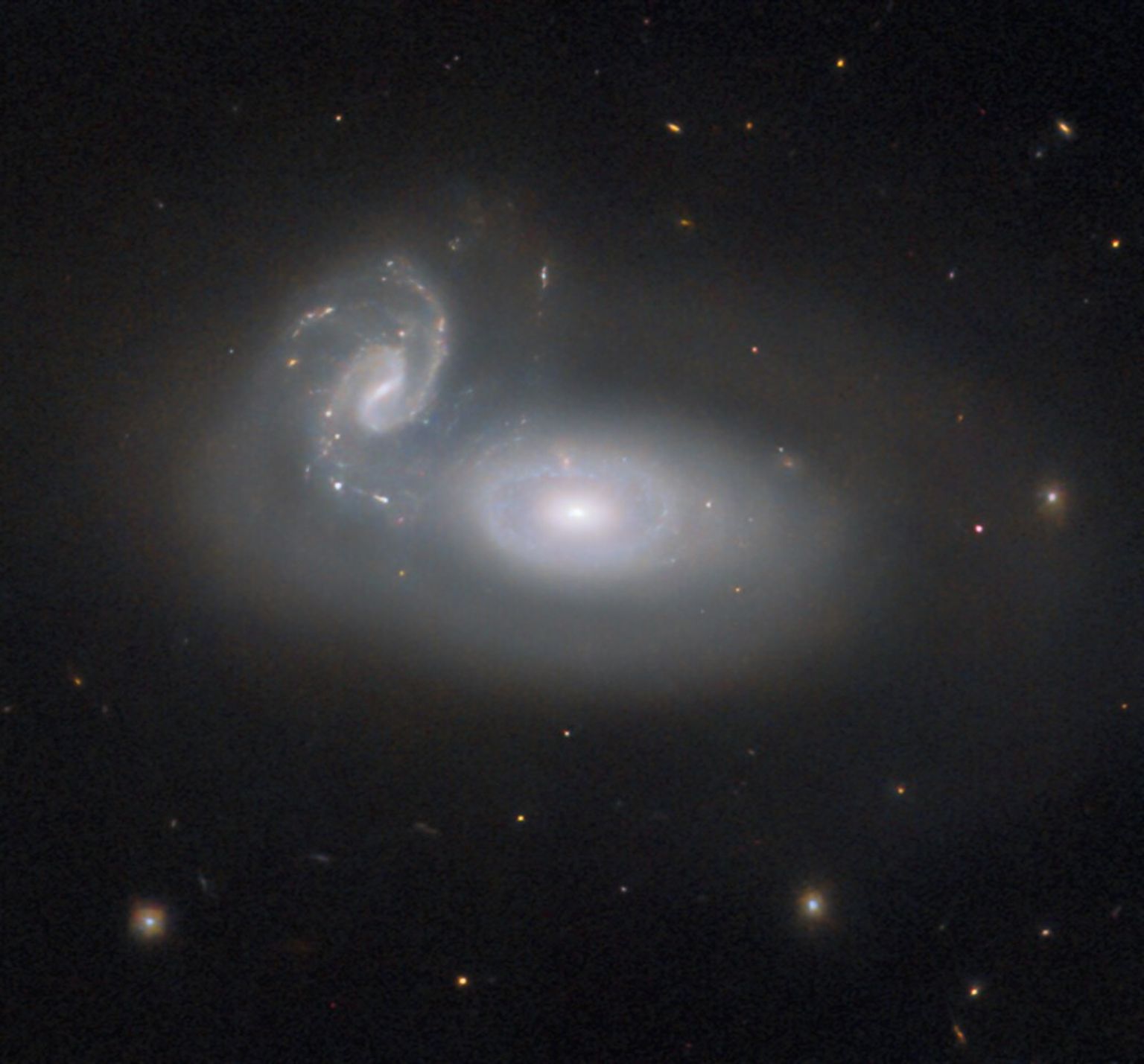
Pic of the Week: Picture Perfect Spiral Galaxy

Image (Credit): Hubble’s view of spiral galaxy IC 4709. (ESA/Hubble & NASA, M. Koss, A, Barth)

This week’s image comes from the Hubble Space Telescope. It shows an almost too perfect spiral galaxy that might have come from AI software, but it is a real image from NASA and ESA. You are looking at spiral galaxy IC 4709, which is about 240 million light-years away.

Here is more information on the image from the ESA’s Hubble site:

Its view here is studded with stars, many of which appear particularly large and bright thanks to their nearby locations in our own galaxy, and which feature the characteristic diffraction patterns caused by Hubble’s optics. Much further away — around 240 million light-years distant in fact, in the southern constellation Telescopium — is the spiral galaxy IC 4709. Its swirling disc filled with stars and dust bands is beautifully captured, as is the faint halo surrounding it. The compact region at its core might be the most remarkable sight, however: this is an active galactic nucleus (AGN).

Europa Clipper and Starliner: Two Missions, Two Dates

Image (Credit): Artist’s rendering of the Europa Clipper above Europa. (NASA)

NASA has decided to move forward with the Europa Clipper mission even though there have been some questions about its ability to withstand the moon’s radiation. The launch is set for an October 10 aboard a SpaceX Falcon Heavy rocket from Launch Complex 39A at NASA’s Kennedy Space Center in Florida.

NASA is also moving forward with the return of the empty Starliner capsule currently attached to the International Space Station. This Friday, September 6, Boeing’s CST-100 Starliner will disconnect from the station and land at White Sands Space Harbor in New Mexico. If all goes well, NASA can continue to study the capsule and learn more about what went wrong.

Stay tuned.

Space Stories: ESA Drill Going to the Moon, ROMAN Takes on the Ever-changing Universe, and Six New Worlds Discovered

Image (Credit): The Hadley-Apennine region of the Moon photographed during the Apollo 15 mission of 1971. (NASA)

Here are some recent stories of interest.

European Space AgencyEuropean Drill and Mini Lab Secure Ride to the Moon

ESA’s Prospect package, including drill and a miniaturised laboratory, will fly to the Moon’s South Polar region in search of volatiles, including water ice, as part of NASA’s Commercial Lunar Payload Services initiative…NASA has selected Intuitive Machines for a flight opportunity in 2027 that will deepen our understanding of the Moon and answer key questions about where and how volatiles can be found on the lunar surface.V olatiles, such as water ice, are chemical components that easily evaporate or vaporise under certain conditions. Prospect is a suite of instruments that will drill up to at least one metre depth beneath the lunar surface, extract samples, and process them in a mini lab. The combination of robotic drill and sample analysis package aims to identify volatiles trapped beneath the surface at extremely cold temperatures down to –150 °C.

Space Telescope Science InstituteNASA’s Roman Space Telescope to Investigate Galactic Fossils

The universe may seem static, only capable of being captured in still frames, but that is far from the truth. It is actually ever-changing, just not on timescales clearly visible to humans. NASA’s upcoming Roman Space Telescope will bridge this gap in time, opening the way to the dynamic universe. RINGS, the Roman Infrared Nearby Galaxy Survey, will specifically uncover the dynamic universe by searching galaxies for fossils of their formation history. RINGS will also lead scientists to clues about the true nature of dark matter, the mysterious substance that makes up the majority of the mass in our universe. Roman will launch in 2027, prepared to revolutionize how scientists understand our universe and give them access to the vision of the universe as it truly is: changing.

Science DailySix New Rogue Worlds: Star Birth Clues

The James Webb Space Telescope has spotted six likely rogue worlds — objects with planet-like masses but untethered from any star’s gravity — including the lightest ever identified with a dusty disk around it. The elusive objects offer new evidence that the same cosmic processes that give birth to stars may also play a common role in making objects only slightly bigger than Jupiter.