One More Wrinkle Related to the Starliner Delay

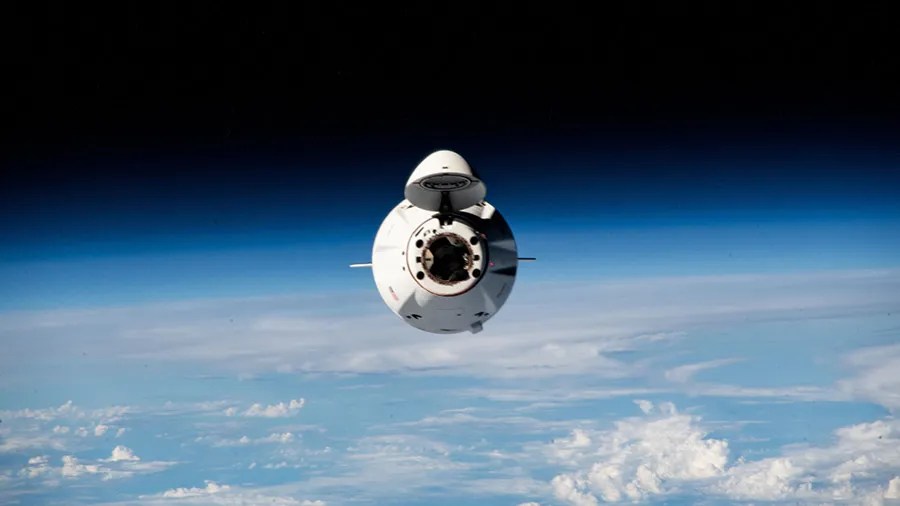
Credit: NASA

As if NASA needed another issue with the Boeing Starliner stranded at the International Space Station (ISS), the media (particularly the Indian media) is now reporting that one of the Starliner astronauts is having eyesight issues.

According to one media source, Astronaut Sunita Williams is experiencing eyesight problems that may be linked to her exposure to microgravity. The issue, called Spaceflight Associated Neuro-ocular Syndrome (SANS), is not an uncommon symptom related to space flight. It can lead to blurred vision over time and worsens over time.

NASA has noted that:

Most astronauts’ eyes and brain structure change in space…Weightlessness causes blood and cerebrospinal fluid to shift toward the head. This fluid shift is believed to be the underlying cause of the eye and brain structural changes…The longer they are in space, the more they may be impacted. Many astronauts only experience effects in space, but some changes may be permanent in some astronauts.

This has only become an issue now that an 8-day tour has turned into a potential 8-month tour. This Gilligan’s Island tour needs to come to an end so that the ISS can return to regular operations.

Image (Credit): Scene from the television show Gilligan’s Island. (CBS Television Network)

Movie Quote: Not Such an Alien World

Image (Credit): A scene from the movie Alien: Romulus. (20th Century Studios)

The production design harkens back to both Scott and Cameron’s ALIEN movies. It’s a world we recognize so there’s not much new world-building except for the brief glance at an active mining colony. What’s different is the cinematography by Galo Olivares…ALIEN: ROMULUS works as a stand-alone movie, and is probably a better experience if you come in cold, without any knowledge of the franchise. ALIEN fans bring in too much baggage and rarely can we be satisfied.”

-Statement by movie critic Lupe R Haas in her recent review of the film Alien: Romulus.

Progress MS-28/89 Spacecraft Docks with the ISS

Image (Credit): The Progress MS-28 cargo spacecraft approaches the ISS on Saturday, August 17, 2024. (NASA)

The Progress MS-28 (or Progress 89 per NASA) spacecraft successfully attached itself to the International Space Station (ISS) yesterday so that three tons of supplies could be unloaded.

As with previous resupply spacecraft, it will remain attached to the station for the next six months before being ejected back towards Earth where it will burn up in the atmosphere.

Study Findings: Feasibility of Keeping Mars Warm with Nanoparticles

Image (Credit): Frost on Olympus Mons (,shaded in blue). (ESA/DLR/FU Berlin)

Science Advances abstract of the study findings:

One-third of Mars’ surface has shallow-buried H2O, but it is currently too cold for use by life. Proposals to warm Mars using greenhouse gases require a large mass of ingredients that are rare on Mars’ surface. However, we show here that artificial aerosols made from materials that are readily available at Mars—for example, conductive nanorods that are ~9 micrometers long—could warm Mars >5 × 10³ time smore effectively than the best gases. Such nanoparticles forward-scatter sunlight and efficiently block upwelling thermal infrared. Like the natural dust of Mars, they are swept high into Mars’ atmosphere, allowing delivery from the near-surface. For a 10-year particle lifetime, two climate models indicate that sustained release at 30 liters per second would globally warm Mars by ≳30 kelvin and start to melt the ice. Therefore, if nanoparticles can be made at scale on (or delivered to) Mars, then the barrier to warming of Mars appears to be less high than previously thought.

Citation: Ansari S, Kite ES, Ramirez R, Steele LJ, Mohseni H, Feasibility of keeping Mars warm with nanoparticles, Science Advances, (2024).
10.1126/sciadv.adn4650

Study-related stories:

Space.com

Universe Today

Northwestern University

Volunteer Work Pays Off: Sighted Star on Course to Escape the Milky Way

Credit: NASA’s Backyard Worlds: Planet 9

NASA’s Backyard Worlds: Planet 9 program allows interested volunteers to search earlier data to potentially locate an extra planet or new brown dwarfs near our solar system. Well, one of these volunteers found something unusual – an object with a mass similar to or less than that of a small star that was traveling fast enough to eventually escape the Milky Way’s gravity and enter intergalactic space. This object was clocked at approximately 1 million miles per hour.

You can read about this object and other efforts by visiting this NASA link. You might want to look into becoming part of the citizen scientists looking for more interesting objects.