Space Stories: Launch of the Euclid Space Telescope, Mercury Flyby, and a Super Hot Brown Dwarf

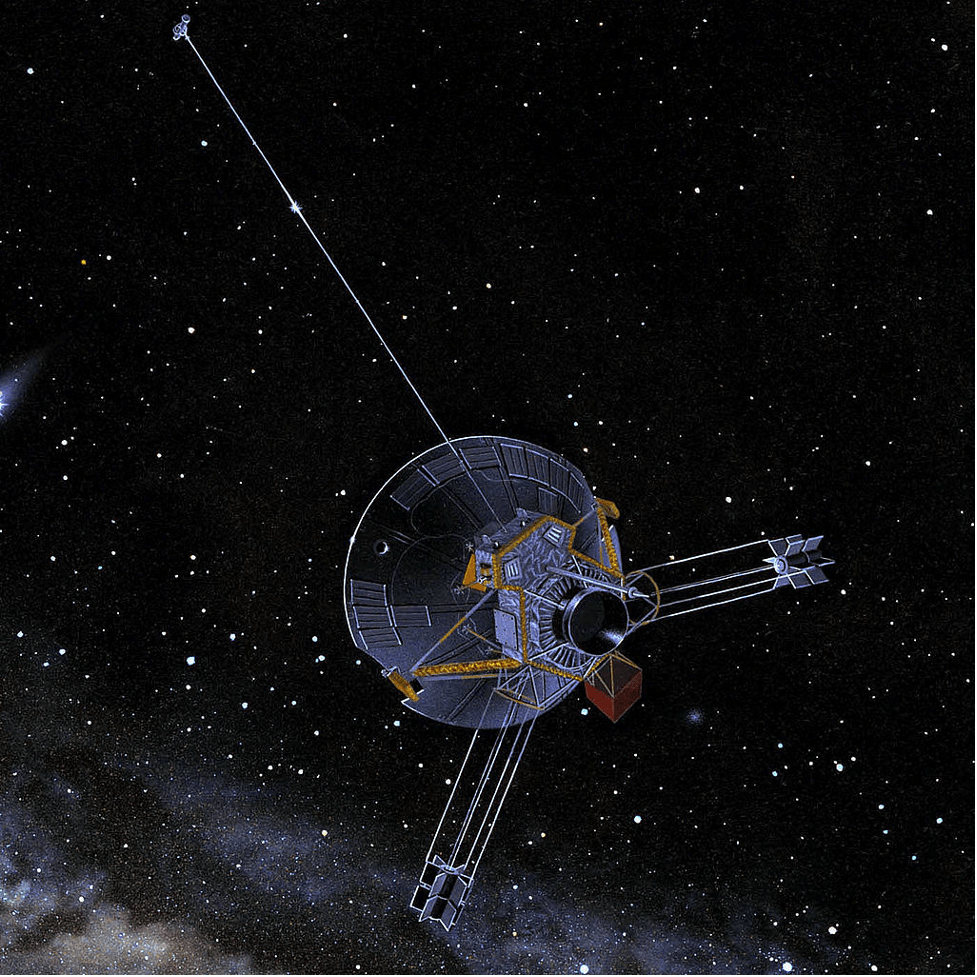
Image (Credit): Artist’s rendering of the ESA’s Euclid Space Telescope. (ESA, CC BY-SA 3.0 IGO)

Here are some recent stories of interest.

NASA/JPL: “NASA to Provide Coverage for Launch of ESA ‘Dark Universe’ Mission

The ESA (European Space Agency) and SpaceX are targeting no earlier than 11:11 a.m. EDT (8:11 a.m. PDT) Saturday, July 1, to launch the Euclid spacecraft. Euclid is an ESA mission with contributions from NASA that will shed light on the nature of dark matter and dark energy, two of the biggest modern mysteries about the universe.

Sky&Telescope: “BepiColombo Mission Makes Third Mercury Flyby

An intrepid space mission had another brief glimpse of its final destination this week, as the European Space Agency’s BepiColombo flew past Mercury for a third time. The team confirms that the spacecraft is in good health post flyby, and that all instruments performed as planned. “Everything went very smoothly with the flyby and the images from the monitoring cameras taken during the close-approach phase of the flyby have been transmitted to the ground,” said Ignacio Clerigo (ESA) in a recent press release. “While the next Mercury flyby isn’t until September 2024, there are still challenges to tackle in the intervening time.”

Phys.org: “Discovery of a Brown Dwarf Hotter than the Sun

An international team of astronomers has discovered a planet-like object that is hotter than the sun. Their report has been accepted for publication in the journal Nature Astronomy and is currently available on the arXiv pre-print server. Brown dwarfs are sometimes called failed stars and do not qualify for the category of either a planet or a star. In this new effort, the researchers have identified one that orbits a star so closely that its temperature is hotter than our sun.

Remember International Asteroid Day

Credit: United Nations

This Friday, June 30th, is International Asteroid Day as adopted by the United Nations to “…observe each year at the international level the anniversary of the Tunguska impact over Siberia, Russian Federation, on 30 June 1908, and to raise public awareness about the asteroid impact hazard.”

NASA has set up page to celebrate the day, as has the European Space Agency. And the Asteroid Foundation is sponsoring a few days of activities leading up to the July 1 Asteroid Day Festival in Luxembourg.

Or you can simply watch your favorite asteroid disaster film on Friday evening.

However you mark the day, enjoy yourself, and look up!

Credit: Asteroid Foundation

Is the Backlash to the Titan Tragedy Coming for the Space Industry?

Image (Credit): Recent Axiom Space crew that visited the International Space Station. (Axiom Space)

Axiom has an interesting article, “Titanic Sub Tragedy Stokes Fears for Space Tourism,” on how the recent Titan tragedy may impact the space tourism industry, noting:

Congress has explicitly prohibited the Federal Aviation Administration from enacting any regulations designed to protect the safety of people flying into space. It can only concern itself with the safety of people on the ground.

That may not be an acceptable state of affairs after last week. Yet Congress seems to have little focus these days, so it is unlikely it will get involved in new regulations. So potential passengers beware because your government is not really all that engaged in your welfare.

One big difference between a sea versus a space mission is that I do not foresee an extended rescue mission at taxpayer expense. While the Titan exploded in an environment that made it difficult to locate, involving enormous resources to find the wreckage, any space explosion or incident will be easy to see from the ground and come to a quick close with little need for additional resources. That may not sound good to the tourists on the spacecraft, but it is one less thing the taxpayers need to worry about.

Television: Black Mirror Has Another Space Episode

Image (Credit): Aaron Paul and Josh Hartnett from Black Mirror. (Netflix)

While I recommend the second season of Star Trek: Strange New Worlds to anyone looking for a good program (now that the third and final season of Star Trek: Picard has ended), you can also tune into the new season of Netflix’ Black Mirror for a space episode.

You may remember the “USS Callister” episode from season 4 back in 2017, which played off of the Star Trek series. It was one of the better episodes of the series. Well, in season 6 that just started you get to see another space-related episode called “Beyond the Sea.” It is a strange story about astronauts living on a space station while their replicas live back on Earth. The astronauts can slip into the replicas at any time to be back on Earth with their families.

The story starts out well enough (as does with acting, with Josh Hartnett and Aaron Paul playing the astronauts), but then it gets weird, as one might expect with this series.

I do not want to give too much away, but the time period is very odd as is the ending of the story. It makes little sense to me and does not seem to be a completed thought. One would almost expect a follow-on episode, but it is not clear how that could ever correct what we just witnessed.

Hence, I am not recommending the episode, but instead pointing it out for the curious. Even poorly plotted episodes can have minor merits. You decide.

And then go back and watch the “USS Callister” episode to clear your head. That one I can recommend.

$10 Billion for Some Martian Rocks?

Image (Credit): Hole left by the Perserverance rover as it collected its 14th sample of Martian rock. (NASA)

A recent ARS Technica article, “NASA’s Mars Sample Return Has a New Price Tag—and it’s Colossal,” discusses the potential plans to retrieve rocks from the Martian surface at a total cost of $10 billion. This has the potential to crowd out other important NASA projects and may need to be reconsidered at a time of budget constraints.

NASA has been seeking innovative solutions from the private sector to lower the retrieval costs, but the mission may be on hold for some time. Getting rocks from the Moon and even an asteroid seems easy by comparison.

Maybe NASA needs to seen another private sector solution – a study of Martian rocks on the surface of Mars. It may be easier to land a laboratory and conduct long-term experiments in situ rather than attempting a journey back to Earth. It is something to consider for now and may give us quicker access to the rocks.

Of course, we can always wait until Elon Musk lands on the Red Planet and retrieves them.