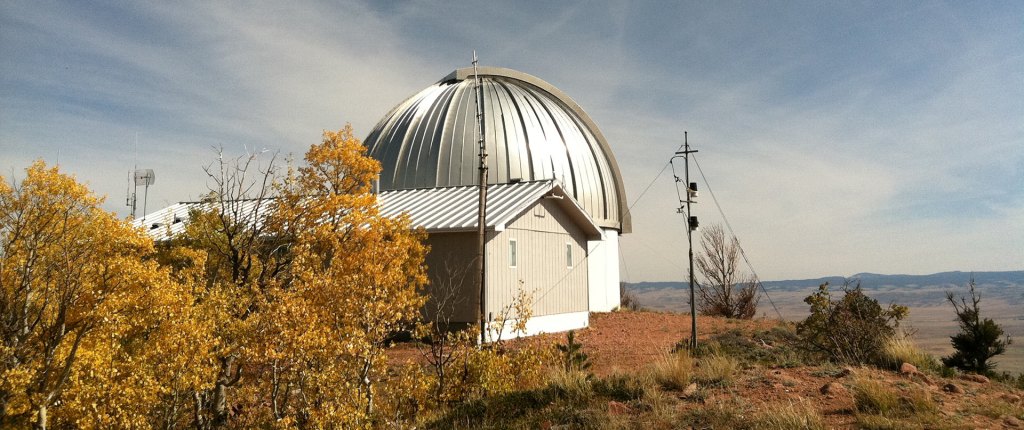
Image (Copy): The Wyoming Infrared Observatory (WIRO). (WIRO)
The New York Times had a good article on various mishaps related to telescopes here on Earth (such as WIRO above) as well as those now floating in space. The story, “From Bullets to ‘Bird Residue,’ the Many Trials of Telescopes,” shares stories about various natural (bird poop) and man-made (dropped tool) events that have left their marks on astronomy.
We have all heard about the misshaped mirror on the Hubble Space Telescope as well as micrometeors hitting the James Webb Space Telescope, but have you heard about the employee who shot and hammered the primary mirror at the McDonald Observatory in West Texas?
Take a look at the article. You will find plenty of stories to amuse you as well as give you pause.
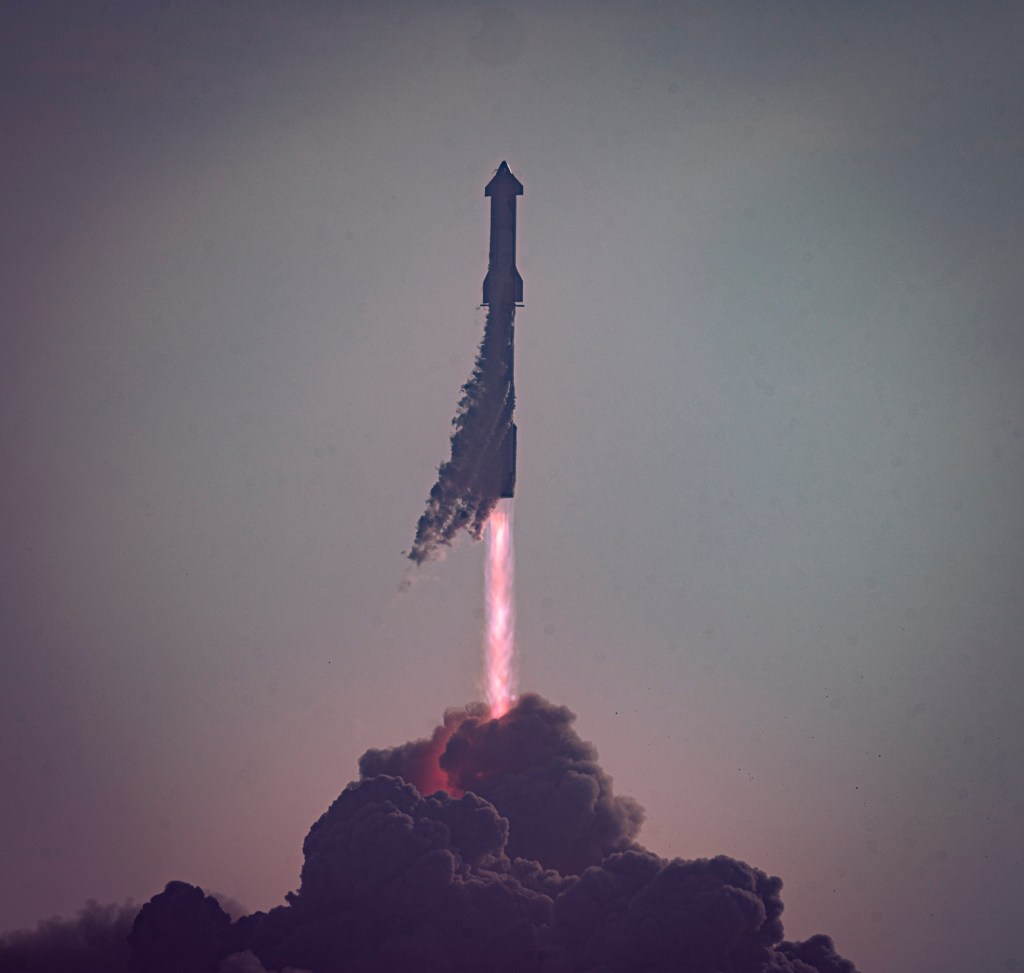
Image (Credit): The Starship before the “rapid unscheduled disassembly.” (SpaceX)
“As if the flight test was not exciting enough, Starship experienced a rapid unscheduled disassembly before stage separation.”
-Statement by SpaceX following the self-destruct of the Starship rocket after it started to spin out of control. What a way to put a spin on a malfunction. I am sensing the rapid unscheduled disassembly of the English language.
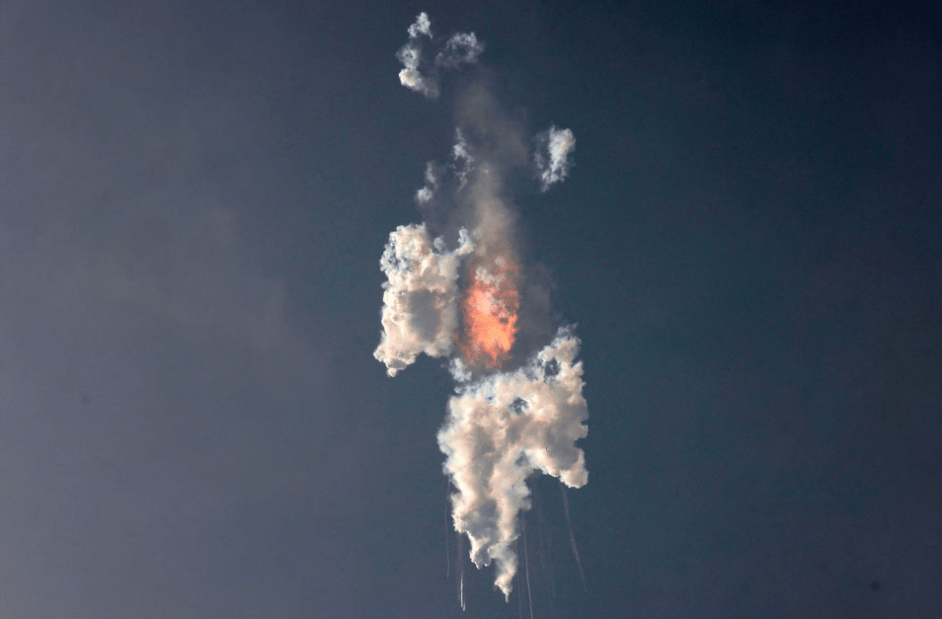
Image (Credit): Starship explosion after launch on April 20, 2023. (Rueters)
This week’s image is from today’s launch of the SpaceX Starship. The rocket experienced engine troubles and exploded about four minutes following the launch after reaching a height of 25 miles. The goal of this mission was to reach at least 90 miles.
At 8:33 a.m. CT, Starship successfully lifted off from the orbital launch pad for the first time. The vehicle cleared the pad and beach as Starship climbed to an apogee of ~39 km over the Gulf of Mexico – the highest of any Starship to-date. The vehicle experienced multiple engines out during the flight test, lost altitude, and began to tumble. The flight termination system was commanded on both the booster and ship. As is standard procedure, the pad and surrounding area was cleared well in advance of the test, and we expect the road and beach near the pad to remain closed until tomorrow.
With a test like this, success comes from what we learn, and we learned a tremendous amount about the vehicle and ground systems today that will help us improve on future flights of Starship.
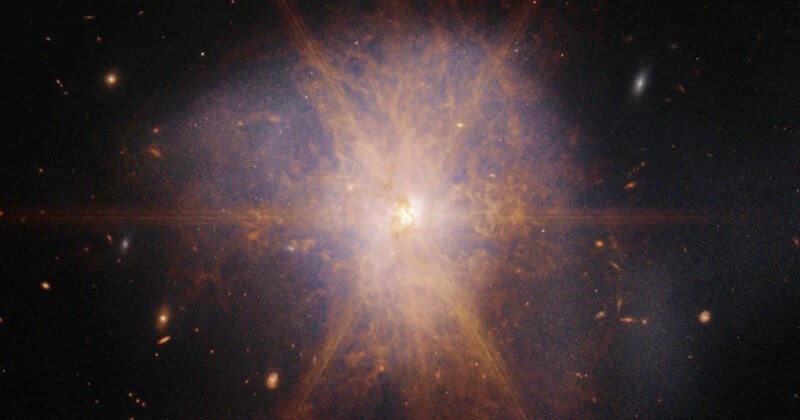
NASA’s James Webb Space Telescope has captured a stunning “smash-up” of two spiral galaxies. Collectively called Arp 220, the collision of the pair of galaxies has facilitated massive star formation. Arp 220 is located within the constellation Serpens, about 250 million light-years from Earth. Arp 220 gets its namesake because it is the 220th object in Hallton Art’s Atlas of Peculiar Galaxies. Arp 220 is “peculiar” because it’s an ultra-luminous infrared galaxy (ULIRG), and the nearest ULIRG to Earth.
Now in its fifth year in space, NASA’s TESS (Transiting Exoplanet Survey Satellite) remains a rousing success. TESS’s cameras have mapped more than 93% of the entire sky, discovered 329 new worlds and thousands more candidates, and provided new insights into a wide array of cosmic phenomena, from stellar pulsations and exploding stars to supermassive black holes.
NASA’s Ingenuity Mars Helicopter has completed its 50th flight on Mars. The first aircraft on another world reached the half-century mark on April 13, traveling over 1,057.09 feet (322.2 meters) in 145.7 seconds. The helicopter also achieved a new altitude record of 59 feet (18 meters) before alighting near the half-mile-wide (800-meter-wide) “Belva Crater.”