
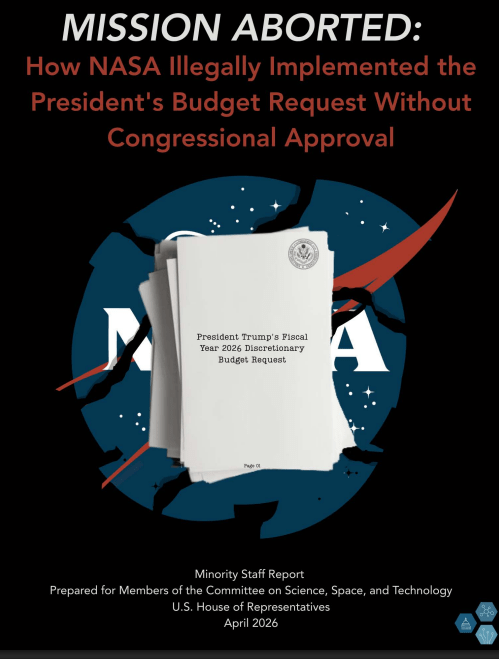
A new released minority staff report from the House Committee on Science, Space, and Technology, titled MISSION ABORTED: How NASA Illegally Implemented the President’s Budget Request Without Congressional Approval, has a few issues with the budget process at NASA.
Here is the main point from the report’s executive summary:
In 2025, NASA implemented the President’s Budget Request for Fiscal Year 2026 instead of the laws duly enacted by Congress. NASA leaders denied this fact repeatedly during the summer and fall of 2025. But the evidence gathered by Committee Staff says otherwise. Without authorization or direction from Congress, and in violation of the basic separation-of-powers framework set forth by the Constitution, NASA put into effect an executive branch proposal as if it were the law of the land. The consequences of that decision – for the agency, its workforce, and American leadership in science and space – were adverse to the agency’s mission.
The 38-page report gives plenty of examples about the various missions delayed or thwarted by NASA management, such as the Electrified Powertrain Flight Demonstration project and the Advanced X-ray Imaging Satellite mission.
Last year was a pretty horrible year overall for government programs, but we can all be thankful that DOGE did not get too far past the destruction of the US Agency for International Development before it steered into the rocks and eventually sunk. Besides, Mr. Musk would not want to attack an agency that keeps him in business.
With Jared Isaacman as NASA’s administrator, and Congress basically ignoring White House cuts, the overall damage has been contained. With that said, the scars left on agency programs and personnel will be long-lasting.
Congress will need to remain vigilant and continue to investigate and highlight any budgetary abuses at NASA should they still occur, even if it is only the minority party paying attention at the moment (though that minority status seems likely to change with elections later this year).
We will see many more such reports in the years to come, but for too many it will be too little, too late.

