
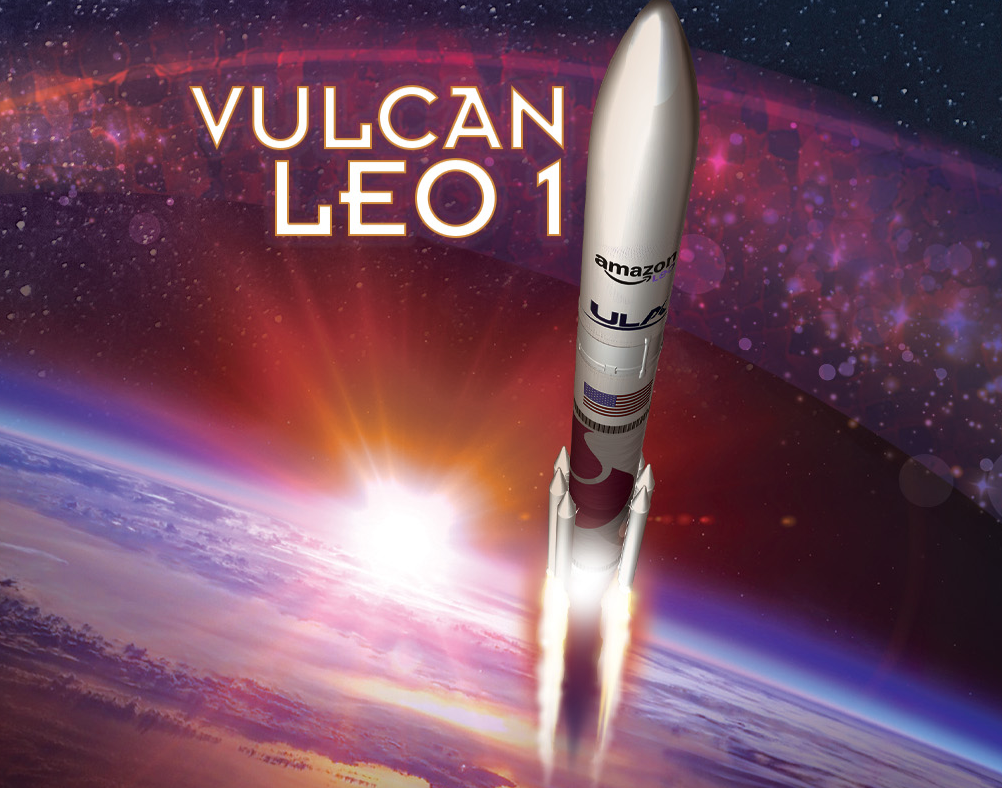
The recent failure of the United Launch Alliance’s (ULA) Vulcan rocket was unfortunate for ULA and Amazon, but not Blue Origin, the company that supplied the rocket engines. Sunday’s failed launch cost Amazon 40 Leo internet satellites. This was the first ULA Vulcan launch of LEO satellites. Amazon hopes to place more than 3,000 satellites into orbit.
The ULA site states:
ULA has completed an initial integrated review of flight data from the Leo 1 launch anomaly that occurred last Sunday. While work remains to determine cause, preliminary indications are that the low booster thrust was the result of inadequate fuel supply from the vehicle to the BE-4 engines, not from the performance of the engines.
As shared previously, the Vulcan second stage appears to have started nominally, and the RL10 engines were operating as planned. The second stage was performing well but was unable to recover from the performance loss resulting in loss of mission.
All indications are that the solid rocket booster performance was nominal, following nozzle improvements implemented for this launch.
As the investigation continues, we will provide updates when there is information to share.
This is good news for Blue Origin and NASA since the BE-4 engines will be key to the New Glenn rocket being used for Artemis III. Any problems with the engine would be seen as another setback for the program.
One has to be quite an optimist to think everything will come together quickly. Blue Origin is using a brand new rocket for its part in Artemis III, while Elon Musk is more interested in playing games with his Starship rockets rather than getting them into the air. Add to that the fact that neither company will have a fully capable lunar lander as part of the Artemis III tests (though Blue Origin is further ahead), and one could even get nervous.
NASA Administrator Jared Isaacman may be citing NASA’s successes of the 1960s, but that was a different time when NASA had full control of the program. While the privatization of space has its advantages, it also involves a lot of egos and issues that did not hamper the program in the past. Administrator Isaacman appears to be herding cats, and I do not envy him.

