Take a look at the image above. Can you determine where this image originated? Take a guess and then check your answer by going to the menu and selecting the “Where is this?” page.

Take a look at the image above. Can you determine where this image originated? Take a guess and then check your answer by going to the menu and selecting the “Where is this?” page.

This week’s photo is a “lunar transit” of the International Space Station (ISS) taken on January 18, 2022. The details in the photo are impressive, including Tycho crater. The Mashable article accompanying this image states:
The silhouette of the space station is so clear, observers can make out a faint grid pattern on its solar panel arrays. The attached SpaceX Crew-3 spacecraft, which brought up NASA astronauts Raja Chari, Tom Marshburn, and Kayla Barron, as well as European Space Agency astronaut Matthias Maurer in November, is easily identifiable.

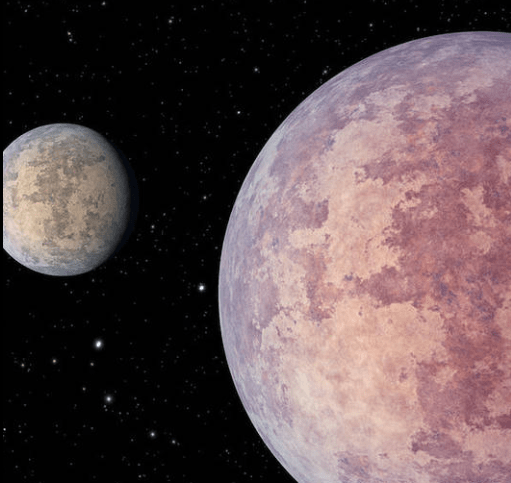
It was not so long ago that we were questioning the very existence of exoplanets, and now we are measuring their dark-sides. MIT News has a story about a recent paper discussing the findings of astronomers observing an exoplanet approximately 850 light years from Earth. About twice the size of Jupiter and tidally-locked with its host star, the exoplanet has a very strange water cycle. The article states:
While on Earth, water cycles by first evaporating, then condensing into clouds, then raining out, on WASP-121b, the water cycle is far more intense: On the day side, the atoms that make up water are ripped apart at temperatures over 3,000 kelvins. These atoms are blown around to the night side, where colder temperatures allow hydrogen and oxygen atoms to recombine into water molecules, which then blow back to the day side, where the cycle starts again.
The article and paper go into many more details, yet I am most impressed with this level of observation already possible using a spectroscopic camera aboard NASA’s Hubble Space Telescope. With the James Webb Space Telescope soon to go online, we can only hope for more fascinating insights into distant exoplanets.

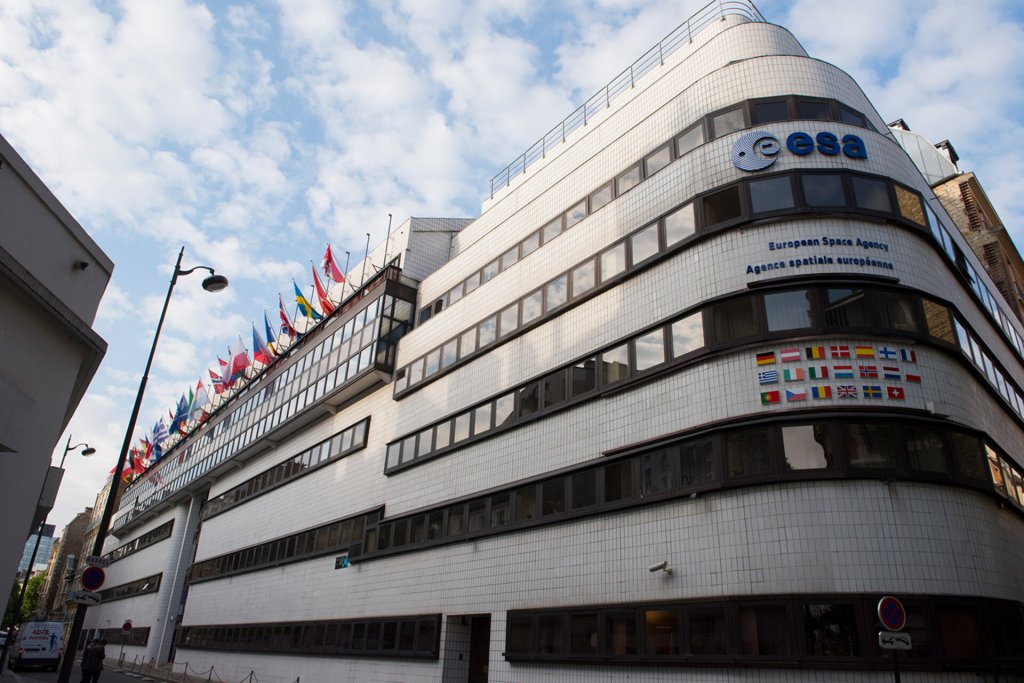
Yesterday, the European Space Agency (ESA) announced that another space program has been impacted by the Russia’s invasion of Ukraine:
Regarding the ExoMars programme continuation, the sanctions and the wider context make a launch in 2022 very unlikely. ESA’s Director General will analyse all the options and prepare a formal decision on the way forward by ESA Member States.
The ESA website on the Exomars program notes that it is a two part mission searching for life on Mars: the Trace Gas Orbiter launched in 2016 and the Exomars rover and surface platform planned for launch in 2022. NASA also contributed to this latest mission:
NASA’s participation in the 2022 ExoMars Rover mission includes providing critical elements to the premier astrobiology instrument on the rover, the Mars Organic Molecule Analyzer (MOMA). By studying organic molecules, the chemical building blocks of life, MOMA is designed to help answer questions about whether life ever existed on Mars, along with its potential origin, evolution and distribution on the Red Planet.
The list of impacted space missions will only grow.

Three cheers for SpaceX’s assistance to Ukraine during this difficult time. After Ukrainian Vice Prime Minister Mykhailo Fedorov made a plea to SpaceX for assistance with its Internet, Mr. Must approved the shipment of Starlink terminals to Ukraine to allow the country to use the company’s satellites for its communications.
Vice Prime Minister Fedorov had tweeted:
@elonmusk, while you try to colonize Mars — Russia try to occupy Ukraine! While your rockets successfully land from space — Russian rockets attack Ukrainian civil people! We ask you to provide Ukraine with Starlink stations and to address sane Russians to stand.
We can haggle about the number of Starlink satellites in orbit another time. Fortunately, such satellites are there when the beleaguered Ukrainians need them.
You can read more about it via The Verge.