Is Elon Musk Experiencing a Rapid Unscheduled Disassembly?

Image (Credit): 2015 explosion of a SpaceX Falcon 9 rocket. (ABC News)

SpaceX may have suffered a rocket loss yesterday, but everyone agrees that this is part of the process when trying something big.

What can we then say about Mr. Musk creating a second loss last week, but in this case it was a loss of confidence in his leadership at Twitter (yes, the site is also oddly called “x” even though the web address is still twitter.com)? Is that also part of the process when trying something big, or is he simply becoming a loss leader that is getting in his own way. And, more importantly to this site, is he squandering his other assets, including SpaceX?

The latest incident involves his support of an earlier post on Twitter that defamed the American Jewish community. It is unclear why Mr. Musk cannot act like an adult and focus on his businesses, but his actions have led to multiple firms pulling their advertising dollars from Twitter.

I agree his irresponsible behavior is nothing new, but it is starting to raise even more eyebrows as his businesses become more entangled with US Government missions. He is not just pushing a declining social app and electric cars, but rather he is also launching critical military satellites, bringing astronauts to the International Space Station, and planning to heavily support our return to the Moon.

Exhibit A – Kelsey D. Atherton, Chief Editor at the Center for International Policy, had this to say recently about Mr. Musk and SpaceX:

In the immediate term, Congress needs to investigate whether Musk’s public comments present a breach of contract on ethical or reliability grounds. Congress could require that any company that receives launch contracts must go public, ensuring at least some mechanism for shareholders to oust a CEO should they become a public or security liability.

I recommend reading the entire article. It is one voice at the moment, but the evidence is growing that Mr. Musk may be the wrong person to rely on in these times when he clearly cannot control himself. His “Rapid Unscheduled Disassembly” is painful to watch and something we need to guard against.

Starship Self-Destructs on Second Launch Attempt

Image (Credit): Starship hot-staging separation earlier today. (SpaceX)

Earlier today, SpaceX lost contact with its Starship rocket about 10 minutes into the launch. This happened after the second-stage separation, so while a successful landing of the rocket did not occur, the rocket had more success than the launch earlier this year.

After what appeared to be a self-detonation of the Starship rocket, the Federal Aviation Administration stated, “The anomaly resulted in a loss of the vehicle. No injuries or public property damage have been reported.” That includes the launchpad, which was basically destroyed during the last launch.

Baby steps.

It is not clear if this latest incident will lead to another long delay before another attempt is possible. And such tests are increasingly expensive when your reusable parts continue to blow up rather than land.

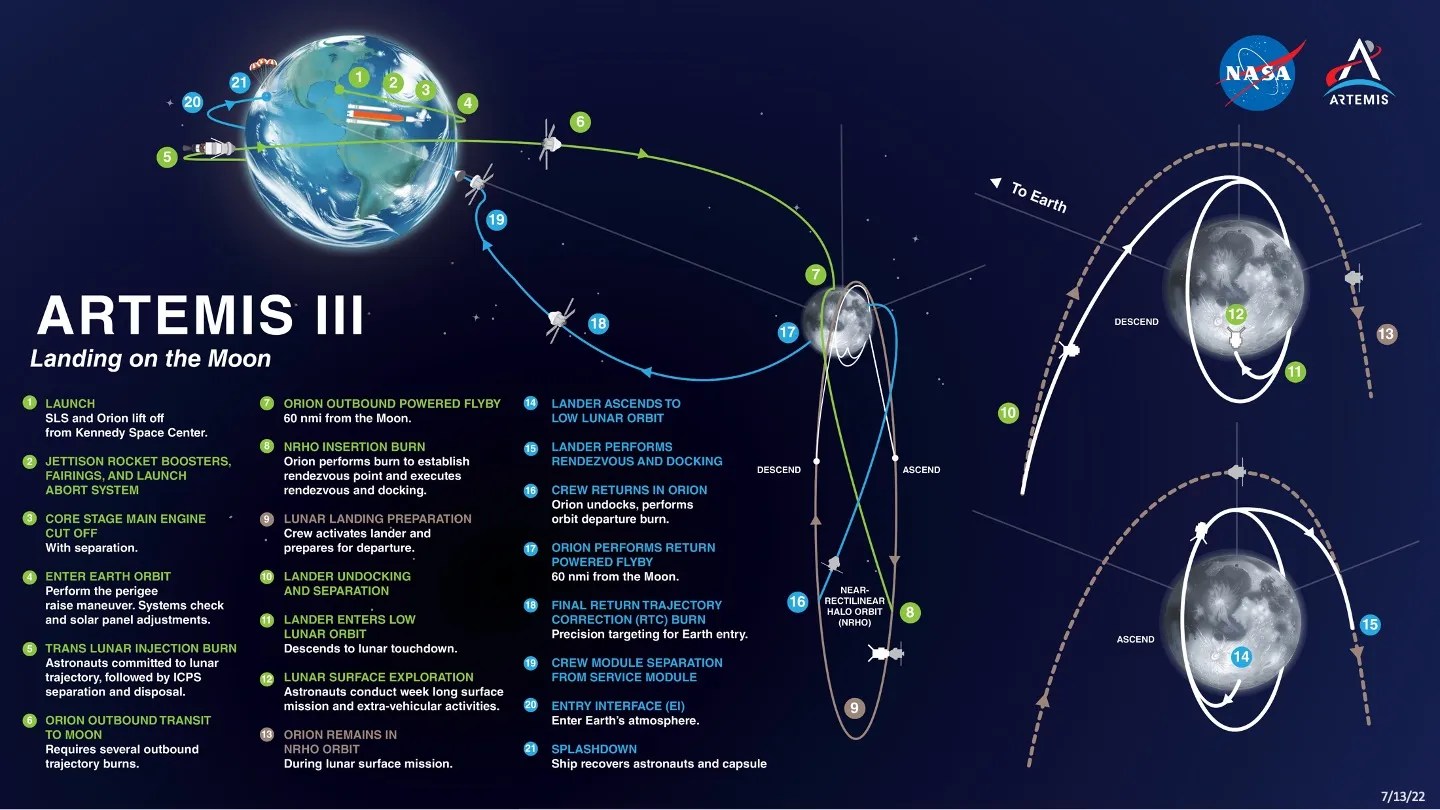
A lot is riding on these launches, as well as the reusable feature, given that NASA is estimating that as many as 20 Starship launches will be necessary under the Artemis III moon mission. Of course, if someone asked NASA to schedule 20 Space Launch System launches in this way, I doubt we would even be talking about an Artemis program.

Mr. Musk has promised a lot to the US space program. We need his full attention on this project.

Starship May Launch on Saturday

Credit: SpaceX

The Federal Aviation Administration has given SpaceX a green light to move forward with its next test of the Starship rocket. SpaceX may attempt the launch as soon as Saturday.

Let’s hope SpaceX can get back on track with its rocket. NASA is counting on the Starship as part of its Artemis III mission returning humans to the Moon, though recent delays have concerned all parties and may push off the Moon mission.

A 3D Billboard Displaying NASA’s History

Image (Credit): NASA’s 3D billboard display by Blunt Action at Kennedy Space Center. (NASA)

If you want to see something that is both fun and educational, check out the 30-foot 3D billboard display outside the Kennedy Space Center Visitor Complex in Merritt Island, Florida.

Created by Blunt Action, the billboard plays out the history of NASA’s space program from its origins with the Mercury missions all the way to the Artemis missions.

You can go to an article by Designboom to watch the space story play out, though I expect it is better in person.

However you decide to watch it, it is worth viewing.

Audit Results: More Concern About NASA’s Space Launch System

First, the US Government Accountability Office reported that NASA’s Space Launch System (SLS) is unaffordable, and now NASA’s Office of Inspector General (OIG) doubles down on that earlier finding, reporting that the SLS, a key component of the Artemis program, has costs that are spinning out of control.

In its report, NASA’s Transition of the Space Launch System to a Commercial Services Contract, NASA OIG concludes:

Our analysis shows a single SLS Block 1B will cost at least $2.5 billion to produce—not including Systems Engineering and Integration costs—and NASA’s aspirational goal to achieve a cost savings of 50 percent is highly unrealistic. Specifically, our review determined that cost saving initiatives in several SLS production contracts such as reducing workforce within Boeing’s Stages contract and gaining manufacturing efficiencies with Aerojet Rocketdyne’s RS-25 Restart and Production Contract were not significant and, as a result, a single SLS will cost more than $2 billion through the first 10 SLS rockets produced under [the Exploration Production and Operations Contract].

NASA OIG concludes that maybe other contractors needs to be considered, stating:

Although Congress directed NASA in 2010 to build a heavy-lift rocket and crew capsule using existing contracts from the canceled Constellation effort to meet its space exploration goals, the Agency may soon have more affordable commercial options to carry humans to the Moon and beyond. In our judgment, the Agency should continue to monitor the commercial development of heavy-lift space flight systems and begin discussions of whether it makes financial and strategic sense to consider these options as part of the Agency’s longer-term plans to support its ambitious space exploration goals.

Where are these “more affordable commercial options”? Could it be SpaceX? Blue Origin? If so, let’s start the transition ASAP so that the Moon and Mars remain a realistic goal in the near future. We have plenty of talent in this country and a race to the top is what we need, not a space agency stuck with an Edsel rocket system.