Twelfth Starship Launch Successful

Credit: SpaceX

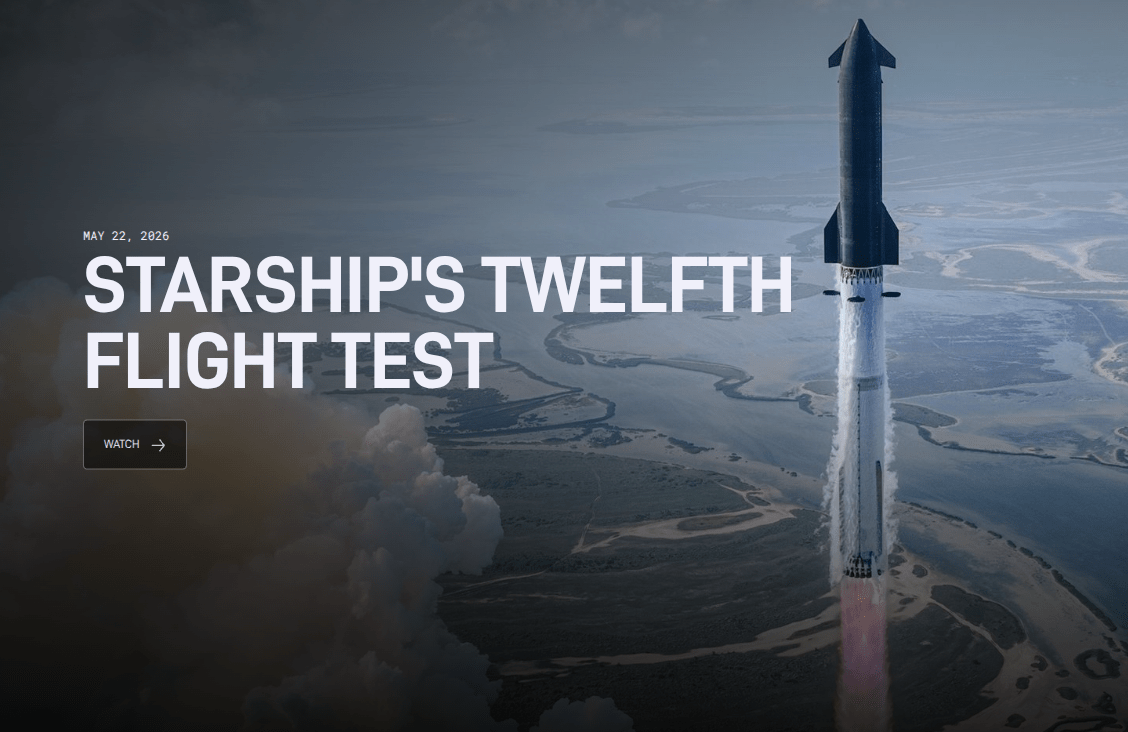
Fortunately, the first SpaceX Starship launch of the year (and the twelfth for the rocket) went well yesterday with only a few bumps along the way. While it was not perfect, given that it was the first test of a new version of the rocket, it was a good night for the rocket-maker and NASA.

Here is SpaceX’s description of some of the bumps last night:

Following stage separation, the Super Heavy booster performed a directional flip maneuver and attempted its boostback burn. It was unable to light all planned engines and performed a partial boostback burn that ended early. Super Heavy attempted to reignite its engines for the landing burn before experiencing a hard splashdown in the Gulf of America. During its ascent burn to space, Starship lost one of the Raptor 3 vacuum engines but demonstrated its engine-out capability and achieved its planned trajectory.

This latest test is encouraging, but would be more encouraging is a solid schedule of more tests this year to ensure the Starship will be ready for the Artemis III low Earth orbit tests next year. SpaceX is still significantly behind schedule on it launches. For instance, this twelfth launch was delayed many times.

Both SpaceX and Blue Origin are racing to be part of the Artemis III test in late 2027 to see if NASA is really ready for a crewed landing on the Moon in 2028. This latest launch brings SpaceX that much closer.

House Budget Looking Better for NASA

Credit: ABC’s Schoolhouse Rock

The Planetary Society has provided a nice summary of where the NASA funding battle is at this moment. Here is its latest summary of events:

  • The House budget bill that includes NASA funding just cleared a key hurdle, advancing out of the Appropriations Committee. This is the first funding bill for FY 2027 to be released and reach this stage, establishing congressional intent and rejecting the worst of the Office of Management and Budget’s proposed cuts to NASA.
  • The bill keeps NASA funding flat with the currently enacted budget, but reprioritizes funding levels across the agency, including a 17% cut to Science to offset increases elsewhere.
  • A number of science missions proposed for cancellation by the OMB see their funding protected by this bill, including OSIRIS-APEX, New Horizons, and the Chandra X-Ray Observatory. New programs initiated by Administrator Isaacman that were absent from the OMB proposal, like Space Reactor-1 Freedom, also see their first dedicated mention in the proposal.
  • The full House still needs to vote on this, and the Senate is expected to release its own proposal within weeks. Congress will then work to develop full-year funding, in anticipation of the start of FY 2027 on Oct. 1, but will likely require a short-term funding patch, which comes with its own hurdles.

I recommend you read the entire statement, House Appropriators Advance Key NASA Funding Bill, to fully understand the rigors of this Hill battle. Fortunately, both the House and Senate continue to be supportive of NASA’s work and Administrator Isaacman’s new direction for Artemis. It helps to have someone full time at the helm of the agency.

I was especially pleased to read that missions such as New Horizons and the Chandra X-Ray Observatory are being saved and key programs like the James Webb Space Telescope and the Hubble Space Telescope are no longer facing drastic cuts. It is unfortunate that the White House was so willing to destroy generations of space-related work – what have been called the crown jewels of our space program.

The budget battle is not over, but we are seeing that when good legislators push back, good things can happen.

ISS Mission Launched, Starship Launch Delayed

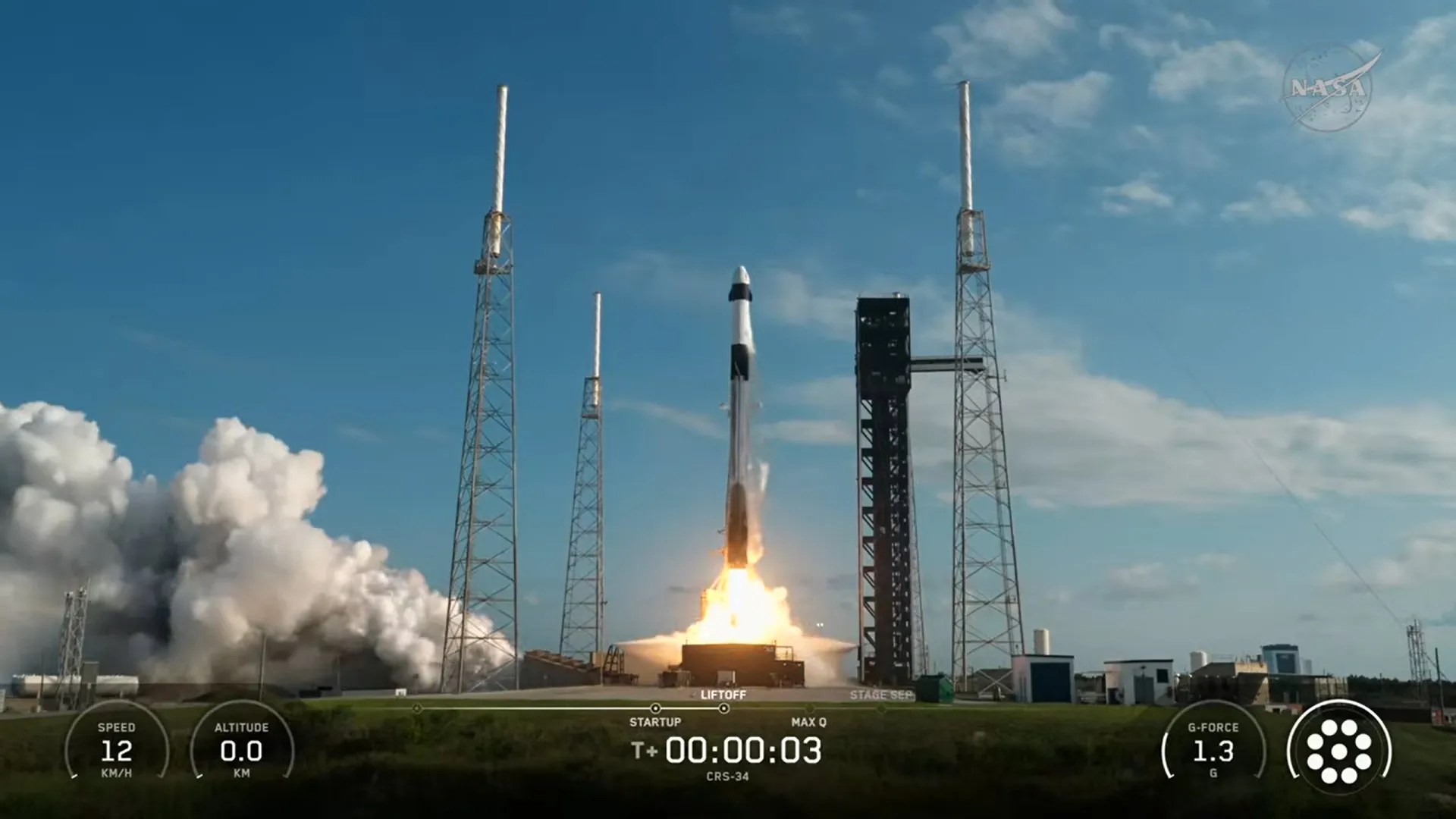
Image (Credit): The CRS-34 mission launched from Space Launch Complex 40 at Cape Canaveral Space Force Station in Florida. (NASA)

Delays abound, but at least one space mission successfully launched this week. After delays earlier this week, today the CRS-34 mission successfully launched towards the International Space Station (ISS). The Dragon capsule, carrying supplies for the Expedition 74 Crew on the station, is expected to dock with the ISS Sunday morning.

The first launch this year of the SpaceX Starship was not so lucky. While is was scheduled to launch today as well, it was delayed until Tuesday, May 19th. This will be the 12th test of the new rocket.

SpaceX has planned a long list of objectives related to the booster and rocket on this flight:

The booster’s primary test objective will be executing a successful launch, ascent, stage separation, boostback burn, and landing burn at an offshore landing point in the Gulf of America. As this is the first flight test of a significantly redesigned vehicle, the booster will not attempt a return to the launch site for catch.

The Starship upper stage will target multiple in-space and reentry objectives, including a payload deployment of 20 Starlink simulators, similar in size to next-generation Starlink V3 satellites, and two specially modified Starlink satellites. The two modified satellites will test hardware planned for Starlink V3 and will attempt to scan Starship’s heat shield and transmit imagery down to operators to test methods of analyzing Starship’s heat shield readiness for return to launch site on future missions. Several tiles on Starship have been painted white to simulate missing tiles and serve as imaging targets in the test. All of the deployed payloads will be on the same suborbital trajectory as Starship. A relight of a single Raptor engine while in space is also planned.

For Starship entry, a single heat shield tile has been intentionally removed to measure the aerodynamic load differences on adjacent tiles when there is a tile missing. Finally, the ship will perform experimental actions tested on previous flight tests, including a maneuver to intentionally stress the structural limits of the vehicle’s rear flaps and a dynamic banking maneuver to mimic the trajectory that future missions returning to Starbase will fly.

It appears SpaceX is trying to make up for numerous delays with a single mission – a mission that is critical to the success of NASA’s Artemis program as well as SpaceX’s upcoming IPO.

Pic of the Week: The Crescent Earth

Image (Credit): A look back at Earth by the Artemis II crew. (NASA)

This week’s image is one of more than 12,000 from the Artemis II mission recently released by NASA. This particular shot of the crescent Earth is a whole new way to look at our world from afar.

These images are currently available via the Gateway to Astronaut Photography of Earth website, but they are not easy to locate. NASA also maintains a multimedia website with many images, videos, wallpapers, and more (shown below).

Space Stories: New Artemis II Photos, JWST Studies Exoplanet Surface, and Japanese Space Sake for Sale

Image (Credit): One of the new photo from the Artemis II mission recently released by NASA. (NASA)

Here are some recent space-related stories.

ABC News: “NASA Releases More Than 12,000 Images from Historic Artemis II Moon Mission

Over the weekend, NASA made public more than 12,000 photos from the historic Artemis II lunar mission…Over the course of the mission, NASA released dozens of images of the astronauts, Earth, the moon and even a total solar eclipse. However, the new trove reveals some never-before-seen photos as well as new angles of objects in space, primarily using Nikon cameras and iPhone 17s.

ZME Science: Astronomers Determine the Surface of a Rocky Planet Beyond Our Solar System for the First Time

A rocky planet nearly 50 light-years away appears to be airless, dark, and covered in volcanic or weathered rock, according to new observations from the James Webb Space Telescope. This is the first time that astronomers have obtained details about the surface of a rocky planet outside our solar system. The planet, LHS 3844 b, is not habitable. It is about 30 percent larger than Earth, orbits its star every 11 hours, and has one side permanently pointing towards the Sun, baked at about 725°C.

The Korean Times: Space-fermented Sake by Japanese Brewer Dassai Sells for $700,000

Japanese brewer Dassai has sold a 100-milliliter bottle of sake fermented on the International Space Station for 110 million yen ($700,000). Dassai partnered with Mitsubishi Heavy Industries to ferment sake ingredients in space, the Yomiuri Shimbun newspaper reported Monday. Using the space-fermented mash, or moromi, the brewery finished brewing the sake on Earth, yielding 116 milliliters. Dassai sold a 100-milliliter bottle of the final product to an unnamed Japanese buyer. The company plans to donate the proceeds to Japan’s space program.