More on those Chinese Balloons

Image (Credit): Chinese balloon details from the leaked Pentagon documents. (The Daily Mail)

The Chinese balloons that causes so much trouble a few months back appear to be nothing new, according to recently leaked Pentagon documents. The Chinese have been using them for years to spy on American military positions. And on closer inspection, the contraption being carried by these balloons looks a lot like a normal satellite, with solar panels, antenna, sensors, and more (see the image above).

So why use balloons and not normal satellites? As noted in earlier press stories, the balloons are cheaper, easier to launch, more difficult for US intelligence to detect when launched, fly closer to targets, and linger longer over those targets. These are many of the same reason the US and many other countries continue to use balloons for scientific reasons as well.

The leaked documents are simply confirming what we already know. UFOs are all over and as far as we know to date man-made. I know it is still hard for many to believe that the crashed object in Roswell, New Mexico back in the 1947 was just a US military surveillance balloon. Real life can be boring at times.

Space Stories: Sagan as Scripture, Chinese Lunar Plans, and Outer Space in NYC

Credit: Ballantine Books

Here are some recent stories of interest.

Gizmodo.com: “New NASA Official Took Her Oath of Office on Carl Sagan’s ‘Pale Blue Dot’”

When Dr. Makenzie Lystrup was sworn in as the new director of NASA’s Goddard Space Flight Center last week, she didn’t take her oath of office on the Bible or the U.S. Constitution, but rather on a tome revered by space enthusiasts everywhere: Carl Sagan’s Pale Blue Dot. The book, published in 1994, is named after an iconic image of Earth, snapped by the Voyager I probe, that depicts the planet as a small speck smothered by the emptiness of space. That photo inspired astronomer Carl Sagan to write: “Look again at that dot. That’s here. That’s home. That’s us.” For many, the book serves as a reminder of humanity’s place in the universe and the need to preserve our home planet, which makes it similar to holy scripture for a newly appointed NASA director.

Time: “In Five Years, China Will Start Building a Lunar Base With Bricks Made From Moon Soil

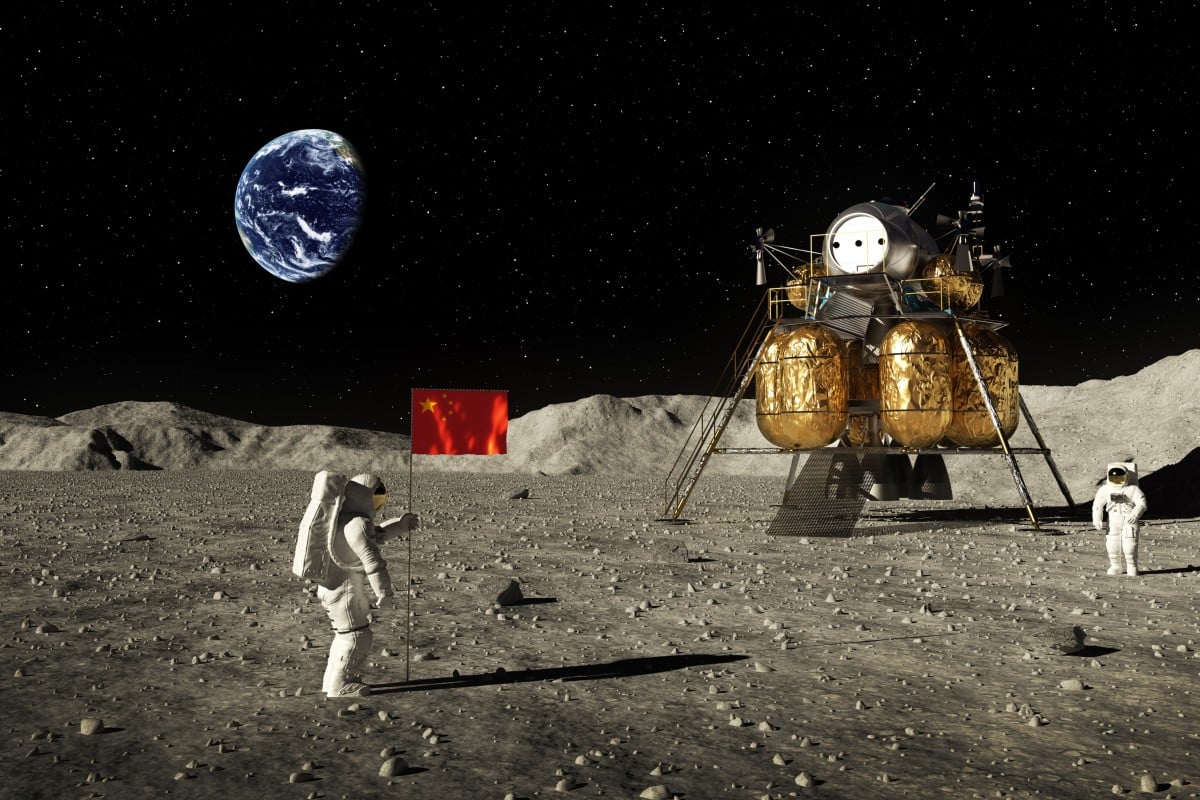
China plans to start building a lunar base in about five years, kicking off with bricks made of moon soil, according to scientists with ties to the project, the South China Morning Post reported. Ding Lieyun, a top scientist at Huazhong University of Science and Technology, told local media that the first brick would be made from moon soil during the Chang’e 8 mission around 2028.

AFAR: “NASA Teams With NYC Museum on New Immersive Outer Space Exhibit

With its blazing city lights, New York is one of the worst places to go stargazing. But space aficionados will want to visit lower Manhattan this spring—dark skies or not—thanks to a new digital art exhibit created with participation from NASA and CNES (the French space agency) that opened April 7 at Hall des Lumières, the city’s first permanent immersive art center. An earlier iteration of this show premiered at Hall des Lumières’ sister museum in Paris, Atelier des Lumières, in 2021. Destination Cosmos: The Immersive Space Experiencewill run for eight weeks through June 4, 2023, at Hall des Lumières, which opened in 2022 in the former Emigrant Savings Bank across from City Hall.

If You Thought the Skies Were Crowded, Just Wait

Credit: Starlink.

The Washington Post recently published a story, “China’s military aims to launch 13,000 satellites to rival Elon Musk’s Starlink,” that can only terrify astronomers here on Earth trying to view the stars. The title says it all – the space race continues to clutter the skies with more and more low-Earth satellites broadcasting back to the surface. It is a dippy Dyson Sphere that contains scientists rather than energy.

Starlink’s success in Ukraine really bothers the Chinese, who see the network as a lifeline for Taiwan as well. The article quotes Chinese military researchers, who state:

Once the Starshield is completed, it will be tantamount to installing networked surveillance cameras all over the world. At that time, military operations including the launch of ballistic missiles, hypersonic missiles and fighter jets will hardly escape the monitoring of the United States.

I would prefer the space race between the US and China focused on the Moon or Mars rather than local invasions, but that is the state of the world at the moment. Not that the race to the Moon was a completely tame affair. For instance, the US contemplated exploding a nuclear bomb on the surface of the Moon to impress the Russians and everyone else. Fortunately, Project A119 never happened.

Good Article: The Sad State of Russia’s Space Program

Image (Credit):  A destroyed Russian tank in the village of Dmytrivka, Ukraine. (CNN/Alex Chan Tsz Yuk/SOPA Images/Sipa/Reuters)

Wired magazine’s latest article, “Russia’s Space Program Is in Big Trouble,” summarizes a sad trend since Russia’s invasion of Ukraine. With all of the nation’s attention on an unnecessary war, the space program, like many things nowadays in Russia, has taken a back seat.

Problems can be seen with the spacecraft – two Russian capsules at the International Space Station (ISS) sprung leaks – as well as ground control. Assets at Russia’s spaceport in Kazakhstan are being seized, while corruption and other problems are delaying a new spaceport within Russia’s borders.

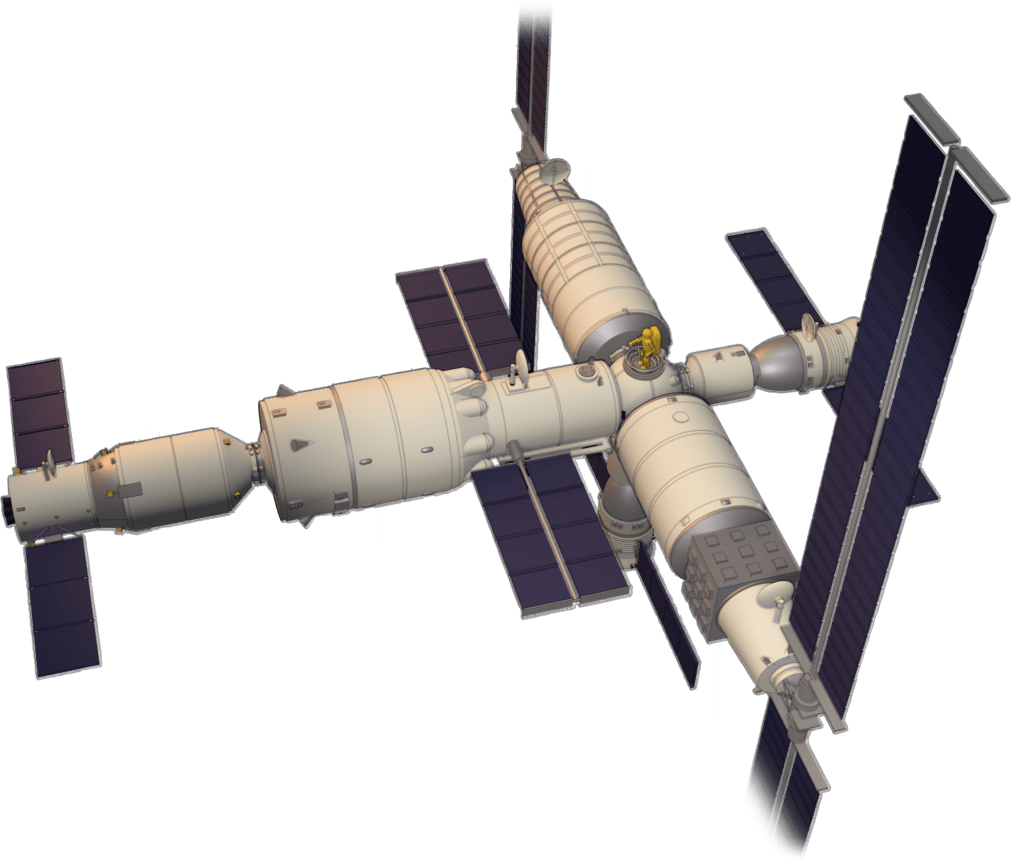
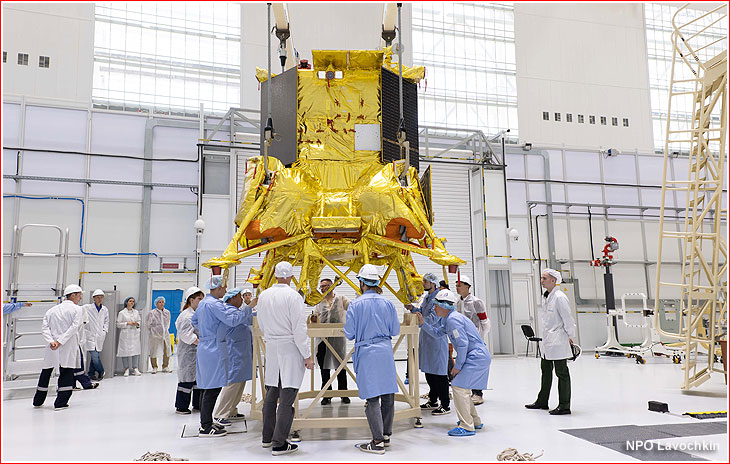
Russia also lacks a partner for a new space station after the ISS, and its mission to the Moon with China look’s tenuous. Does the country have a plan for the future beyond militarizing space?

The article concludes with these words:

The Soviet Union may have put the first human into space—but now, 60 years later, Russia faces a near-future in which it is no longer able to do that. 

No Pyrrhic victory in Ukraine will change this.

Extra: The Wall Street Journal also had a good article about the situation in Russia. The article, “Russia’s Economy is Starting to Come Undone,” includes an interview with Oleg Mansurov, who hoped to create the next SpaceX with his company SR Space. However, the situation in Ukraine has caused his investors to flee. As a result, he is staying afloat as an IT company for now. He notes:

We became more focused not on the development of a long-term product that would make some kind of qualitative leap but on simply becoming a classic business and generating revenue…We understood we just had to survive.

Space Stories: Stalled Martian Rover, Early Mega-Galaxies, and Soviet Space Debris

Image (Credit): Artist’s rendering of China’s Zhurong rover about to roll off the lander and drive onto Mars. (WEIBO)

Here are some recent stories of interest.

SpaceNews: “NASA Mars Orbiter Reveals China’s Zhurong Rover Has Not Moved for Months

Images from NASA’s Mars Reconnaissance Orbiter reveal that China’s Zhurong rover remains stationary on the Red Planet as China remains silent on the status of its spacecraft. The High Resolution Imaging Science Experiment (HiRISE) camera aboard the Mars Reconnaissance Orbiter (MRO) captured images of the rover on March 11, 2022, a second on Sept. 8, 2022 and finally Feb. 7, 2023. The images were published Feb. 21 by the HiRISE Operations Center.

Los Angeles Times: “Space Telescope Spots Massive Galaxies Near Cosmic Dawn and Blows Astronomers’ Minds

Astronomers have discovered what appear to be massive galaxies dating back to within 600 million years of the big bang, suggesting the early universe may have had a stellar fast-track that produced these “monsters.” While the new James Webb Space Telescope has spotted even older galaxies, dating to within a mere 300 million years of the beginning of the universe, it’s the size and maturity of these six apparent mega-galaxies that stunned scientists. They reported their findings Wednesday in the journal Nature.

Newsweek: “Russian Rocket Crashes Back Into Russia After 42 Years

A decades-old Soviet era piece of space junk has crashed back to Earth after over 40 years in orbit, improbably crash landing back in its home country, Russia. The abandoned Soviet Vostok-2M Blok E rocket stage, weighing more than 3,000 pounds, “made an uncontrolled reentry over Novaya Zemlya at 1016 UTC Feb 20 after 42.7 years in orbit,” tweeted Jonathan McDowell, an astrophysicist and group leader at the Chandra X-ray Center Science Data Systems.