AI Shown to be Useful for a Mars Mission

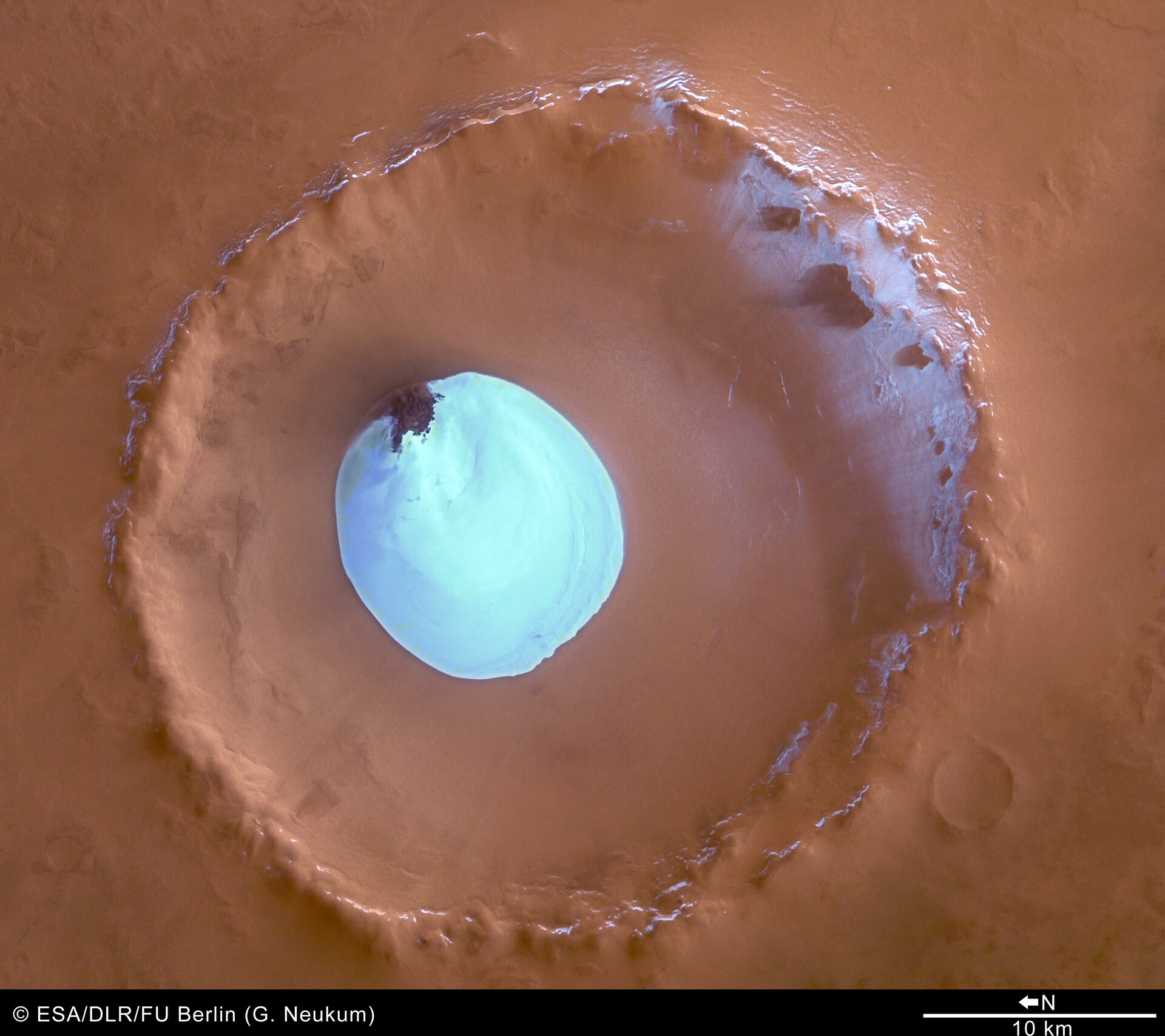
Image (Credit): Martian impact crater located on Vastitas Borealis with residual water ice. (ESA/DLR/FU Berlin (G. Neukum))

While the media is continually writing about artificial intelligence (AI) doing a kid’s homework and then destroying the world, maybe AI does have some utility in preparing us for a second world.

A study published in Nature Synthesis found that AI may be useful in finding ways to extract oxygen from water on Mars. Scientists from China used AI to analyze about 3.7 million formulae to identify a chemical that could break down water. A single researcher would have needed about 2,000 years to perform similar analysis.

While other programs are also looking at ways to extract oxygen from the Martian surface or atmosphere (such as NASA’s MOXIE), this study demonstrates the power of AI and its ability to potentially produce other needed material for survival on Mars.

Mr. Musk may not like AI, but he may want to have it on hand if he ever finds himself on Mars.

Space Stories: Name-dropping on Europa, Flying Toolboxes, and Space Veggies

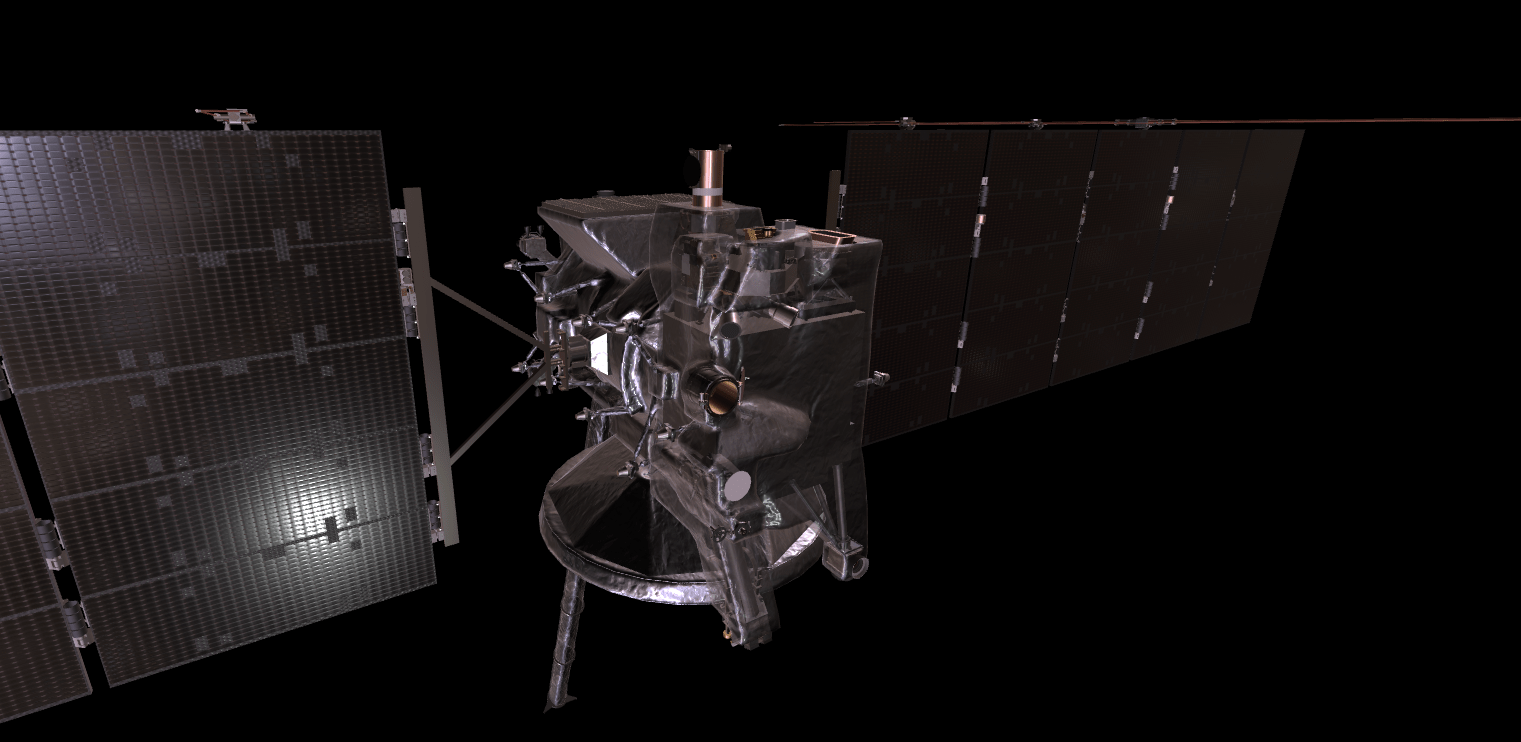
Image (Credit): NASA’s Europa Clipper. (NASA)

Here are some recent stories of interest.

NASA JPL: “Time is Running Out to Add Your Name to NASA’s Europa Clipper

Six weeks remain for you to add your name to a microchip that will ride aboard the spacecraft as it explores Jupiter’s moon Europa. It’s not every day that members of the public have the chance to send their names into deep space beyond Mars, all the way to Jupiter and its moon Europa. But with NASA’s Europa Clipper, you have that opportunity: Names will ride aboard the spacecraft as it journeys 1.8 billion miles (2.6 billion kilometers) to this icy moon, where an ocean hides beneath a frozen outer shell. The deadline to join the mission’s “Message in a Bottle” campaign is only six weeks away. The campaign closes at 11:59 p.m. EST, Dec. 31, 2023.

NBC News: “Look! Up in the sky! It’s a bird! It’s a plane! It’s … a tool bag?

That’s no moon. An astronaut’s tool bag that accidentally floated away during a routine spacewalk at the International Space Station is now orbiting Earth and may be bright enough to spot by keen-eyed skywatchers. The bag drifted away from the space station this month when NASA astronauts Jasmin Moghbeli and Loral O’Hara were performing maintenance on the exterior of the orbiting outpost.

LiveScience: “China Successfully Grows Lettuce and Tomatoes Aboard Tiangong Space Station

China’s Shenzhou 16 astronauts have been growing vegetables aboard the Tiangong space station, as part of plans for future deep space exploration. Mission commander Jing Haipeng and rookie astros Zhu Yangzhu and Gui Haichao have been aboard Tiangong since late May and are due to return to Earth on Oct. 31, after handing over control of the station to the newly arrived Shenzhou 17 mission crew. Jing and company have spent time cultivating veggies using two sets of specialized equipment. The first started operation in June and has reaped four batches of lettuce. The second one was put into operation in August for growing cherry tomatoes and green onions.

Source of ISS Leak Identified on Russian Module

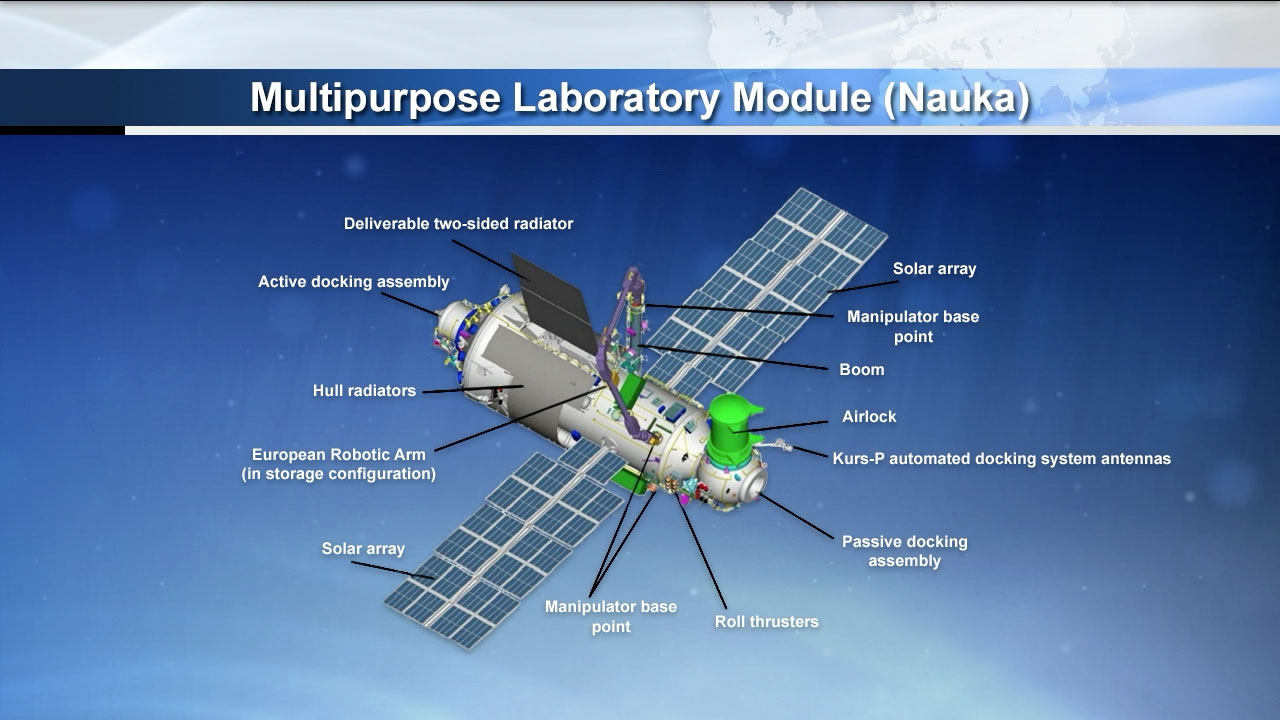
Image (Credit): Russia’s Nauka laboratory module on the ISS. (NASA)

We know Mr. Putin wants to pursue his own space station, but how about fixing the one Russia is already part of?

Cosmonauts Oleg Kononenko and Nikolai Chub conducted a spacewalk this week to investigate the third leak aboard the International Space Station (ISS). Luckily, the source of the leak was found – a 2010 radiator attached to Russia’s Nauka laboratory module.

News reports indicate that Russia’s space agency, Roscosmos, is downplaying the leak, noting that it did not impact the primary coolant loop. Roscosmos finished by stating, “the crew and the station are not in any danger.” That’s hopeful, but still a worrisome incident for the aging space station.

A disaster with the $100 billion space station will set back if not kill future funding for similar stations. As with the US space shuttle, the space station could be a passing phase if we cannot keep it running and our astronauts and cosmonauts safe.

Maybe it is time for Russia to go its own way if it is not willing to keep the ISS afloat. I would rather Russia steps up its game, but it may have trouble fighting wars and funding space at the same time.

Note: The US and Russian need to get this fixed so that the focus can return to science. While the ISS crew was searching for leaks this week, China sent another team to its Tiangong space station.

Space Stories: Distant Spacecraft Updates, Lucy Gets Ready for a Flyby, and Lunar Near-Earth Asteroids

Image (Credit): Voyager II spacecraft instruments. (NASA)

Here are some recent stories of interest.

Space.com: “NASA’s interstellar Voyager Probes Get Software Updates Beamed from 12 Billion Miles Away

About 46 years after NASA’s Voyager 1 and Voyager 2 launched on an epic journey to explore space, the probes’ antique hardware continues to receive tweaks from afar. One update, a software fix, ought to tend to the corrupted data that Voyager 1 began transmitting last year, and another set aims to prevent gunk from building up in both spacecraft’s thrusters. Together, these updates intend to keep the spacecraft in contact with Earth for as long as possible.

NASA: “NASA’s Lucy Spacecraft Preparing for its First Asteroid Flyby

NASA’s Lucy spacecraft is preparing for its first close-up look at an asteroid. On Nov. 1, it will fly by asteroid Dinkinesh and test its instruments in preparation for visits in the next decade to multiple Trojan asteroids that circle the Sun in the same orbit as Jupiter. Dinkinesh, less than half a mile, or 1 kilometer, wide, circles the Sun in the main belt of asteroids located between the orbits of Mars and Jupiter. Lucy has been visually tracking Dinkinesh since Sept. 3; it will be the first of 10 asteroids Lucy will visit on its 12-year voyage. To observe so many, Lucy will not stop or orbit the asteroids, instead it will collect data as it speeds past them in what is called a “flyby.”

UC San Diego: “How Could a Piece of the Moon Become a Near-Earth Asteroid? Researchers Have an Answer

A team of astronomers has found a new clue that a recently discovered near-Earth asteroid, Kamooalewa, might be a chunk of the moon. They hypothesized that the asteroid was ejected from the lunar surface during a meteorite strike–and they found that a rare pathway could have allowed Kamooalewa to get into orbit around the sun while remaining close to the orbits of the Earth and the Moon. The research team details their findings in the Oct. 23 issue of the journal Nature Communications Earth & Environment. Kamo`oalewa has been the object of several astronomy studies in recent years. As a result, a Chinese mission launching in 2025 is set to land on the asteroid and return samples to Earth.

Amazon’s Project Kuiper is Underway

Image (Credit): Launch of the Amazon Project Kuiper prototypes from Cape Canaveral. (Amazon)

If you were worried about satellite traffic and its impact on astronomy, then you have one more thing to worry about. Yesterday, two prototype satellites were launched aboard an Atlas V rocket from the Cape Canaveral Space Force Station. They are part of Amazon’s Project Kuiper, which may lead to 3,200 additional satellites orbiting the Earth.

So what is Project Kuiper? Amazon explains it this way:

Project Kuiper is an initiative to increase global broadband access through a constellation of 3,236 satellites in low Earth orbit (LEO). Its mission is to bring fast, affordable broadband to unserved and underserved communities around the world.

Sounds a lot like SpaceX’s Starlink, doesn’t it? And plenty more similar projects are being planned by the Chinese and others.

It does make you wonder whether there is a better way. I understand the nationals security complications with satellites, but thousands upon thousands of satellites circling the Earth to provide similar Internet services to customers sounds wasteful, dangerous, and bothersome to astronomy. I liked it better when the wires were running under the seas or underground. This new approach will be a mess.

The Government Accountability Office issued a report last year highlighting some of the risks and mitigation ideas:

  • Increase in orbital debris. Debris in space can damage or destroy satellites, affecting commercial services, scientific observation, and national security. Better characterizing debris, increasing adherence to operational guidelines, and removing debris are among the possible mitigations, but achieving these is challenging.
  • Emissions into the upper atmosphere. Rocket launches and satellite reentries produce particles and gases that can affect atmospheric temperatures and deplete the ozone layer. Limiting use of rocket engines that produce certain harmful emissions could mitigate the effects. However, the size and significance of these effects are poorly understood due to a lack of observational data, and it is not yet clear if mitigation is warranted.
  • Disruption of astronomy. Satellites can reflect sunlight and transmit radio signals that obstruct observations of natural phenomena. Satellite operators and astronomers are beginning to explore ways of mitigating these effects with technologies to darken satellites, and with tools to help astronomers avoid or filter out light reflections or radio transmissions. However, the efficacy of these techniques remains in question, and astronomers need more data about the satellites to improve mitigations.

The report has a lot of good information, but I am not sure Amazon, SpaceX, or the Chinese will be paying any attention until a world body gets involved. National regulation will not be enough.

More likely than not, as with many of these areas in need of regulation, we are just one major accident away from new rules.