Television: Space Force, the TV Show

Source/Credit: Netflix.

It did not take long for the newly-created U.S. Space Force to be the butt of jokes, but its mission is critical, as has already been noted in earlier postings on this site. Even so, a little bit of humor goes a long way, and the Netflix series Space Force has plenty of humor to go around. Season two starts Friday, February 18th. Here are trailers for season one and two.

Steve Carell is perfect as the leader of U.S. Space Force as it bungles along and eventually faces an international crisis on the moon. Mimicking reality, the U.S. and China have designs on the Moon and it may not be big enough for both nations. Given the accompanying cast, such as John Malkovich, Lisa Kudrow, and Ben Schwartz, you know this will be one strange space ride. Patton Oswalt will join the cast in season two as a bumbling astronaut, so things can only get more insane. Think of it as a combination of The Office and The Right Stuff giving birth to “The Wrong Stuff.”

We all need a laugh at the moment, so tune in and lighten up. After that, you can look into the work of the official U.S. Space Force and start worrying again.

Note: Here is the mission statement of the real U.S. Space Force (that word “Guardians” is really in there):

The USSF is responsible for organizing, training, and equipping Guardians to conduct global space operations that enhance the way our joint and coalition forces fight, while also offering decision makers military options to achieve national objectives.

Source/Credit: Official flag of the official U.S. Space Force.

Note: The real Space Force is protecting our satellites rather than running missions to the Moon, Mars, and Europa. TV shows have more latitude on such things.

Chinese Space Debris Clean-up or Something Else?

Source/Credit: Chinese Shijian-21satellite from Asia Times.

Phys.org reported the success of a Chinese mission to retrieve a dead satellite, a hopeful sign given the increasing number of satellites and related debris in orbit. The story, “A Chinese space tug just grappled a dead satellite,” discusses how the Chinese spacecraft, Shijian-21, retrieved a dead navigation satellite belonging to the Chinese CompassG2 network. The story also included a video from ExoAnalytic Solutions demonstrating the retrieval and eventual release of the CompassG2 satellite into a graveyard orbit.

Of course, every pro comes with a con. Is this just a maintenance spacecraft or could it be part of a future offensive strategy to take other non-Chinese satellites out of orbit? The media in India were skeptical, as you can see from this headline: “China Preparing for War in Space?” Not that China is alone should it be looking for an anti-satellite spacecraft. Other countries, including the US, have similar dual-use spacecraft.

According to the Phys.org article, the Chinese have been silent, so the whole operation is somewhat opaque. Given the various attempts by other nations to solve the debris problem, it benefits each nation to share information on debris mitigation efforts so everyone can learn from them. Greater transparency from China would be nice.

China’s Space Program: The Next Five Years

Source: China National Space Administration.

On January 28th, China the released its five-year plan for its space program. Titled China’s Space Program: A 2021 Perspective, the paper addresses both accomplishments to date as well as how the China National Space Administration (CNSA) and China Manned Space (CMS) Program will build upon those accomplishments. China has plenty to be proud of, including multiple lunar missions with a sample successfully returned to Earth, a Mars mission with a rover, and efforts to finalize the nation’s first space station. The paper states, “From 2016 to December 2021, 207 launch missions were completed, including 183 by the Long March carrier rocket series.”

In terms of space exploration, in addition to sending more missions to the Moon, the paper states China plans to:

· Launch asteroid probes to sample near-earth asteroids and probe main-belt comets;

· Complete key technological research on Mars sampling and return, exploration of the Jupiter system, and so forth; [and]

· Study plans for boundary exploration of the solar system.

The paper also addresses planned progress in some of the other areas already discussed on this site, including limiting the amount of debris in space and monitoring what is already up there. For instance, China plans to work on “space debris cleaning,” improve its “space debris monitoring system,” and “actively participate in formulating international rules regarding outer space.” Such actions should benefit all spacefaring nations.

Check out the paper for more on China’s plans for the future.

Source: Chang’e-5 after returning to Earth with lunar samples. Image from the BBC.

Should We Name the Moon’s New Crater After Mr. Musk?

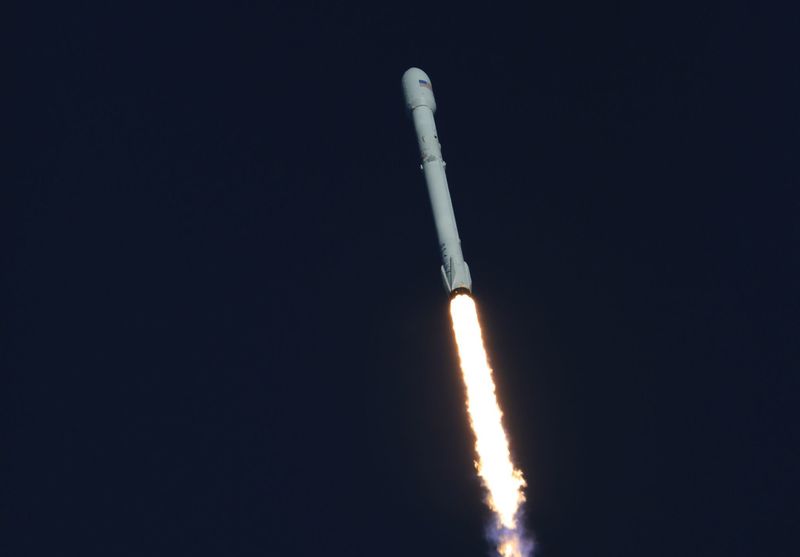
Source: SpaceX Rocket from NASA.

In the early days of March, a SpaceX rocket booster is expected to crash into the surface of the Moon just north of its equator. Part of a rocket launched in 2015, the booster has been floating around ever since.

In general, the Moon has not been used for trash storage beyond the lunar missions. Moreover, SpaceX likes to be known for landing its boosters back on Earth rather than sending them off into the wild blue (or black) yonder.

This could be an opportunity for SpaceX to claim it has created one of the first unintentional man-made craters on the Moon. The small crater could be known as the Musk Mini-Basin.

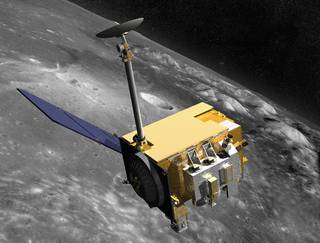
Luckily, Mr. Musk’s Tesla Roadster, launched in 2018, made it past the Moon with little incident (and then overshot Mars). We did not need an Elon Musk Parking Lot on the moon, yet the little red car would have been quite a sight for NASA’s Lunar Reconnaissance Orbiter (LRO).  

Source: LRO from NASA.

Extra: Visit this Sky & Telescope story for LRO images of the six Apollo landing sites on the Moon.

Update: Recent news indicates that the object about to hit the Moon is not a SpaceX rocket booster but rather a Chinese rocket part from the Long March 3C that launched the Chang’e 5-T1 lunar mission. I guess we will need to rethink the naming of that new crater.

Follow-up: Other Anti-Satellite Tests

Source: Indian Space Research Organization.

In an earlier posting, I pointed out that both China and Russia have left debris in orbit after conducting anti-satellite tests. To be fair, they are not alone. Back in March 2019, India also blew up one of its satellites with a ground-based missile, spreading debris and jeopardizing its own space program as well as that of others. Luckily, the explosion happened at a height that does not threaten the International Space Station or the majority of satellites in orbit. Moreover, most of the pieces of debris were expected to burn up and disappear quickly.

There have been other such anti-satellite missions as well, with the U.S, Russia, and China in the lead. So who started all of this, you may ask. The same Forbes story cited above makes it clear that the U.S. began this space arms race more than 60 years ago:

The U.S. tested its first anti-satellite missile in 1959, when the space lanes were mostly empty. Russia followed suit in the late 1960s and early 1970s, but after the end of the Cold War, space warfare mostly fell off the defense policy radar. 

The radar is active again given the continuing series of destructive anti-satellite missions in Earth’s orbit. You can add to this the various other secret spacecraft believed to already be in orbit to enhance each nation’s ability to kill another nation’s satellites. Things are pretty ugly on the ground these days, and the heavens above seem to be fair game as well.