Amazon’s Project Kuiper is Underway

Image (Credit): Launch of the Amazon Project Kuiper prototypes from Cape Canaveral. (Amazon)

If you were worried about satellite traffic and its impact on astronomy, then you have one more thing to worry about. Yesterday, two prototype satellites were launched aboard an Atlas V rocket from the Cape Canaveral Space Force Station. They are part of Amazon’s Project Kuiper, which may lead to 3,200 additional satellites orbiting the Earth.

So what is Project Kuiper? Amazon explains it this way:

Project Kuiper is an initiative to increase global broadband access through a constellation of 3,236 satellites in low Earth orbit (LEO). Its mission is to bring fast, affordable broadband to unserved and underserved communities around the world.

Sounds a lot like SpaceX’s Starlink, doesn’t it? And plenty more similar projects are being planned by the Chinese and others.

It does make you wonder whether there is a better way. I understand the nationals security complications with satellites, but thousands upon thousands of satellites circling the Earth to provide similar Internet services to customers sounds wasteful, dangerous, and bothersome to astronomy. I liked it better when the wires were running under the seas or underground. This new approach will be a mess.

The Government Accountability Office issued a report last year highlighting some of the risks and mitigation ideas:

  • Increase in orbital debris. Debris in space can damage or destroy satellites, affecting commercial services, scientific observation, and national security. Better characterizing debris, increasing adherence to operational guidelines, and removing debris are among the possible mitigations, but achieving these is challenging.
  • Emissions into the upper atmosphere. Rocket launches and satellite reentries produce particles and gases that can affect atmospheric temperatures and deplete the ozone layer. Limiting use of rocket engines that produce certain harmful emissions could mitigate the effects. However, the size and significance of these effects are poorly understood due to a lack of observational data, and it is not yet clear if mitigation is warranted.
  • Disruption of astronomy. Satellites can reflect sunlight and transmit radio signals that obstruct observations of natural phenomena. Satellite operators and astronomers are beginning to explore ways of mitigating these effects with technologies to darken satellites, and with tools to help astronomers avoid or filter out light reflections or radio transmissions. However, the efficacy of these techniques remains in question, and astronomers need more data about the satellites to improve mitigations.

The report has a lot of good information, but I am not sure Amazon, SpaceX, or the Chinese will be paying any attention until a world body gets involved. National regulation will not be enough.

More likely than not, as with many of these areas in need of regulation, we are just one major accident away from new rules.
Satellite News: Otter Pup to the Rescue

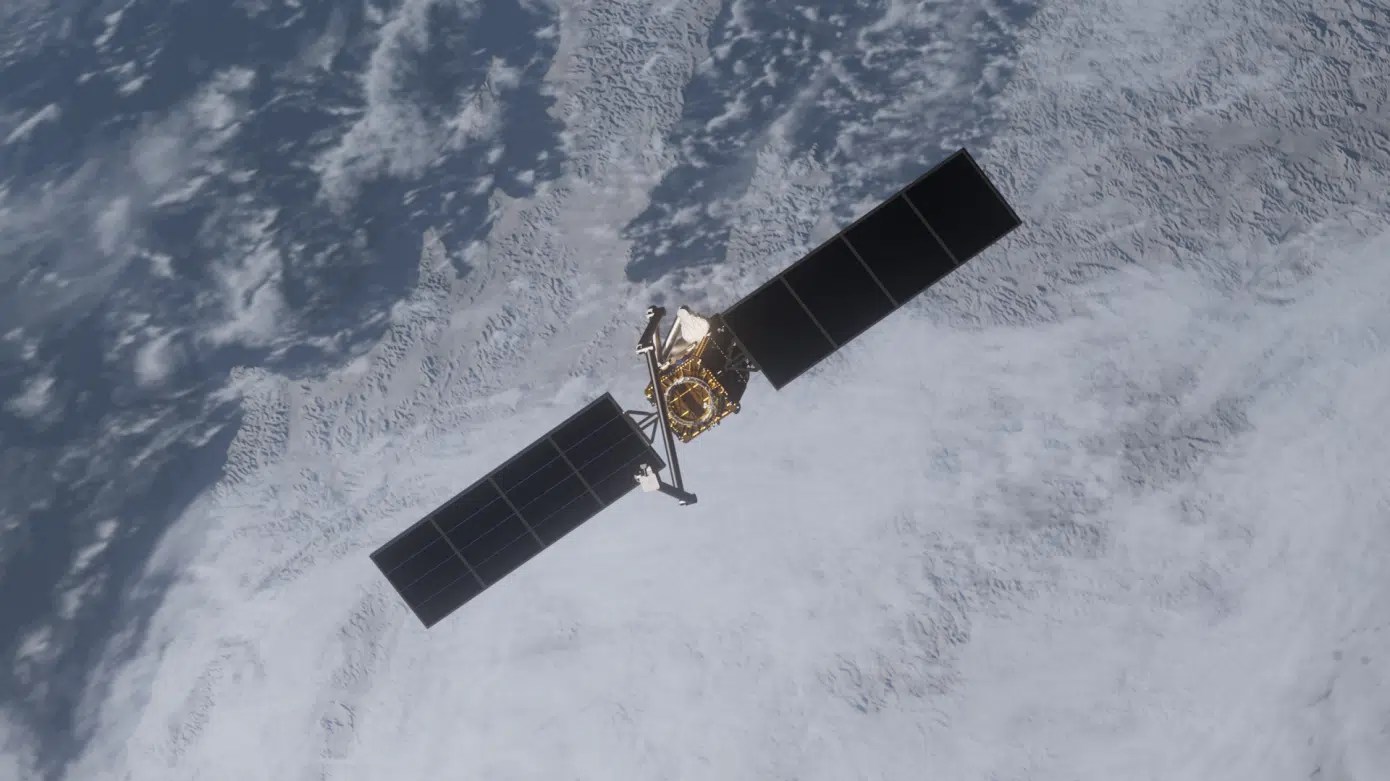
Credit: Starfish Space

Things are looking up for the satellite business. That is, things should shortly be coming down from space that no longer need to be there, and that is a good thing. And Starfish Space hopes to be the one to bring down those satellites.

Here is the story. Starfish Space has created the electric-propulsion Otter Pup prototype spacecraft to act as a tug boat in space that can safely nudge old satellites and debris out of orbit. This will be the basis for the commercially-available Otter spacecraft in the near future. The mission of this spacecraft could also be expanded to serve as a “robotic repair crew.”

It sounds so promising that NASA has awarded the company with a contract to expand its work in this area.

This is good news for anyone concerned about the growing amount of traffic and debris in low-Earth orbit. We have no problem tossing things into space, but we have not given enough thought to what happens later. The Otter Pup is a step in the right direction.

Note: You can see a July 2022 Starfish Space presentation to NASA about the Otter spacecraft here.

Image (Credit): The Otter Pup prototype spacecraft . (Starfish Space)

Virgin Galactic: Tourism has Started

Credit: Virgin Galactic

We knew the day was coming, and it took place this week. Virgin Galactic is now open for business for interested space tourists.

Virgin Galactic’s “Galactic 02” mission brought six individuals into space on Thursday, which included three private passengers. Each of these passengers is believed to have paid between $250,000 to $450,000 per seat for the 90-minute experience. That’s about $2,800 per minute at the lower cost range.

Would I call then astronauts? Not really, and the Federal Aviation Administration (FAA) would agree. The criteria for a commercial astronaut are as follows:

To be eligible for FAA Commercial Space Astronaut Wings, commercial launch crew members must meet the following criteria:
a. Meet the requirements for flight crew qualifications and training under Title 14 of the Code of Federal Regulations (14 CFR) part 460.
b. Demonstrated flight beyond 50 statute miles above the surface of the Earth as flight crew on an FAA/AST licensed or permitted launch or reentry vehicle.
c. Demonstrated activities during flight that were essential to public safety, or contributed to human space flight safety
.

I doubt the three passengers met the criteria under c, nor would one expect them to on a fun 90-minute flight. That is fine, but if that’s the case then let’s retire the term astronaut for such tourists.

I am just glad Virgin Galactic is not interfering with actual space work and trying to put people aboard the International Space Station. That would be weird, right?

In the end, these space flights are glorified hot-air balloon rides for the wealthy. As long as they stay in their own lane (so to say), the skies should be open and friendly to all.

Space Stories: Rogue Exoplanets, ISS Power Problems, and Eco-Friendly Airlines

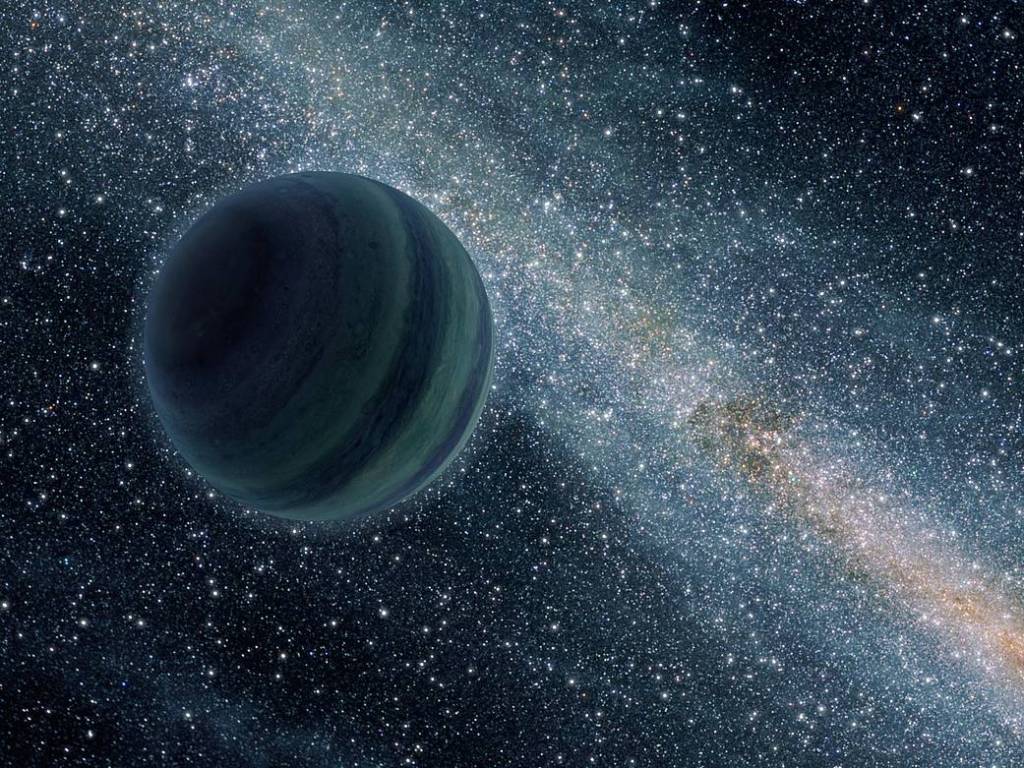
Image (Credit): Artist’s rendering of a rogue exoplanet. (NASA/JPL-Caltech)

Here are some recent stories of interest.

—Space.com : “400 Earth-size Rogue Planets could be Wandering the Milky Way“

New predictions suggest an upcoming NASA space telescope could spot over 400 Earth-mass worlds hidden throughout the Milky Way that have “gone rogue” and therefore wander our galaxy alone.  Such orphan worlds are thought to start their lives in a planetary system, akin to the solar system, but get kicked at some point out by a mechanism thus far unknown. Despite the familiar picture of planets neatly orbiting a star, new research suggests such orphaned starless worlds may outnumber stars in the Milky Way by 20 to 1. This implies untethered worlds in our galaxy are around six times more common than planets orbiting parent stars. 

—ABC News : “NASA Power Outage Temporarily Halts Contact with Space Station“

A NASA power outage disrupted communication between Mission Control and the International Space Station on Tuesday. Mission Control couldn’t send commands to the station and talk with the seven astronauts in orbit. The power outage hit as upgrade work was underway in the building at Houston’s Johnson Space Center. Space station program manager Joel Montalbano said neither the astronauts nor station were ever in any danger and that backup control systems took over within 90 minutes. The crew was notified of the problem through Russian communication systems, within 20 minutes of the outage.

—GeekWire : “Boeing and NASA Partner with Alaska and Other Airlines on Eco-friendly X-66A Aircraft“

Boeing and NASA say they’ll collaborate with Seattle-based Alaska Airlines and four other major airlines on the Sustainable Flight Demonstrator project, which aims to put Boeing’s innovative X-66 braced-wing aircraft design through flight tests in the 2028-2029 time frame. The X-66A makes use of a concept known as the Transonic Truss-Braced Wing, or TTBW, which features ultra-long, ultra-thin, drag-reducing wings that are stabilized by diagonal struts.

Travel to Moon and Mars Not Most Important Missions for the Public

While both Buzz Aldrin and I believe that lunar and Martian colonies are important, it would appear the public has other ideas about NASA’s priorities. The graphic above shows in a recent Pew Research Center study indicates the more Americans are interested in monitoring the Earth’s climate as well as watching for asteroids.

Even finding exoplanets that could support life seems to be more important than occupying local moons and planets. I am not sure how that would help us now if we want to spread the risk of living on one planet, as some propose. We are nowhere near sending a probe to exoplanets, let alone getting humans there.

The study has quite a bit to ponder, including:

  • 58% of U.S. adults believe it is essential to include the use of human astronauts in the U.S. space program, while 41% say astronauts are not essential;
  • Some 44% of Americans have a great deal of confidence private companies will make a profit in their space-related ventures;
  • As the public considers the possibilities ahead for ordinary citizens to orbit the Earth in a spacecraft, more Americans say they would not want to orbit the Earth than say they would (58% to 42%); and
  • About seven-in-ten Americans (72%) say it is essential for the U.S. to continue to be a world leader in space exploration, and eight-in-ten (80%) say the space station has been a good investment for the country.

I am not sure the survey shows a lot of consistency in the answers, but this can be a difficult topic at the outset. NASA should just be worried if Americans saw no reason for a space program, which does not seem to be the case. As noted above, the majority of Americans want a strong space program. Let’s see if that helps with the ongoing congressional budget discussions.