Space Stories: Bezos on the Moon, Strange Oort Objects, and Europe Visits Venus

Image (Credit): Artist’s rending of the Blue Origin lunar cargo lander. (Blue Origin)

Here are some recent stories of interest.

—Reuters: “Bezos’ Space Company Teams with Lockheed, Boeing for NASA Moon Lander Pitch“

Jeff Bezos’ space company Blue Origin is partnering with Boeing Co and Lockheed Martin Corp to pitch a lunar lander to NASA as the agency seeks to send humans to the moon again, the companies announced on Tuesday. The joint moon lander proposal, led by Blue Origin, marks the companies’ second attempt to win a coveted moon lander contract as NASA seeks more options for getting astronauts to the lunar surface under its multibillion dollar Artemis program.

—Western University: “‘Unexpected’ Space Traveller Defies Theories About Origin of Solar System“

Researchers from Western have shown that a fireball that originated at the edge of the Solar System was likely made of rock, not ice, challenging long-held beliefs about how the Solar System was formed. Just at the edge of our Solar System and halfway to the nearest stars is a collection of icy objects sailing through space, known as the Oort Cloud. Passing stars sometimes nudge these icy travellers towards the Sun, and we see them as comets with long tails. Scientists have yet to observe any objects in the Oort Cloud directly, but everything detected so far coming from its direction has been made of ice. Theoretically, the very basis of understanding our Solar System’s beginnings is built upon the foundation that only icy objects exist in these outer reaches and certainly, nothing made of rock.

—Universe Today: “ESA’s Upcoming Mission Will Tell us if Venus is Still Volcanically Active“

The EnVision mission is ESA’s fifth medium-class mission to Venus. It’s being planned in a partnership between NASA and ESA, and NASA will be providing the synthetic aperture radar instrument, which will map the surface (much as Magellan did). In addition to the two radars, the orbiter will carry spectrometers to study the atmosphere and surface. They will monitor trace gases in the atmosphere and analyze surface composition. The idea is to look for surface changes that might be linked to signs of active volcanism. Along with the VERITAS and DAVINCI missions, EnVision should reveal all we need to know about volcanic activity on Venus.
Lunar Traffic Jam – Japan Heads to the Moon

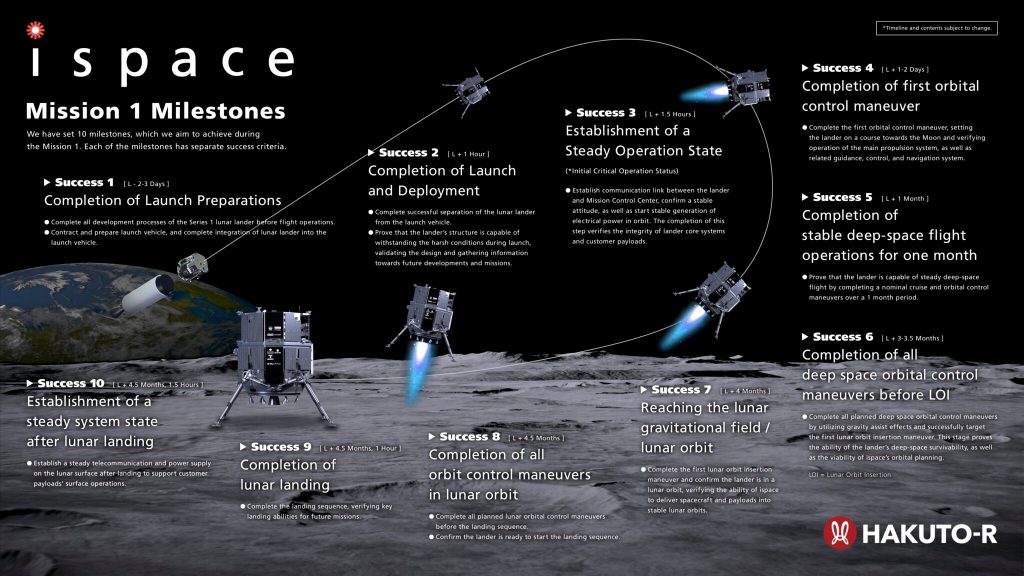
Image (Credit): iSpace mission milestones for the upcoming lunar landing. (iSpace)

While the Orion spacecraft was heading back to Earth, the Japanese HAKUTO-R Mission 1 lunar lander was on its way to the Moon. The name HAKUTO refers to the white rabbit that lives on the moon in Japanese folklore.

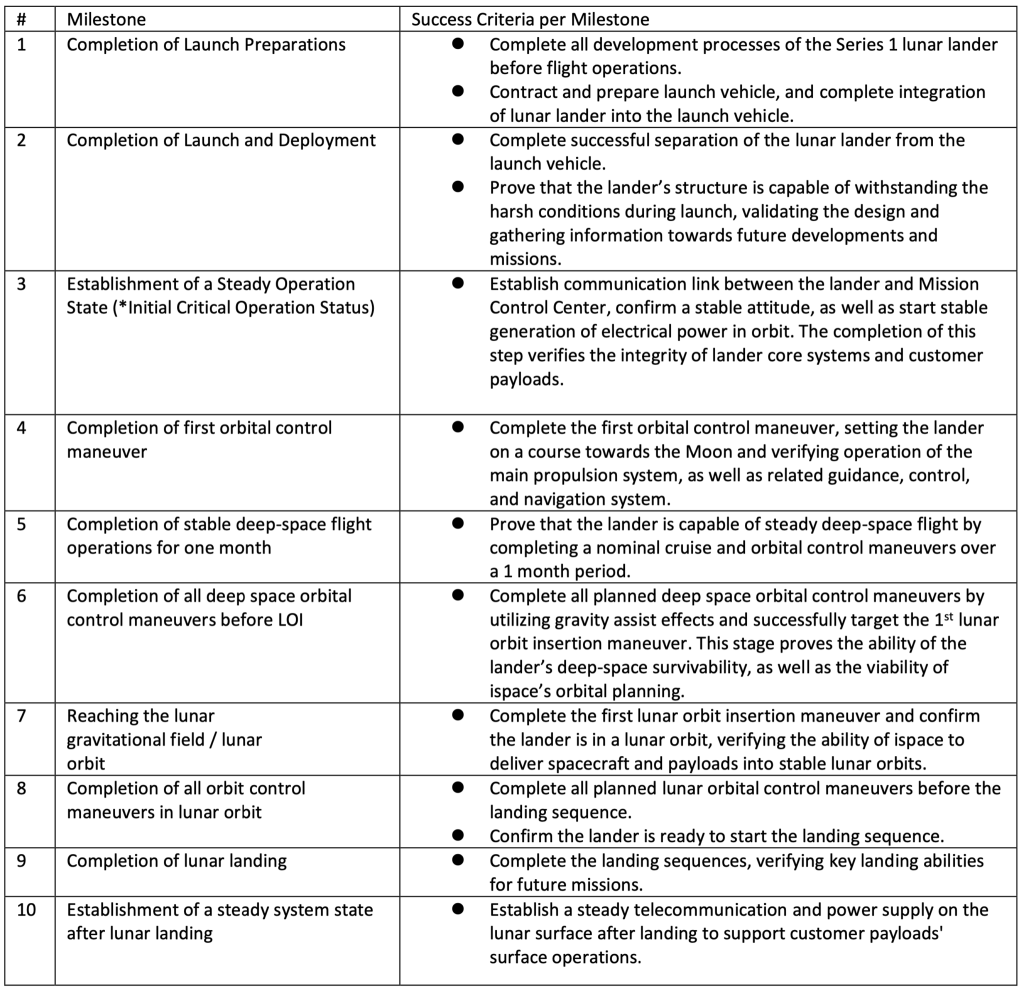
The Japanese private firm iSpace is behind the lunar mission, becoming the first private company to place a lander on the Moon. The lunar lander’s milestones are shown below, with the landing to occur next April.

Both the mission and payload are multinational. Investors in iSpace include the Development Bank of Japan, Suzuki Motor, Japan Airlines, and Airbus Ventures, which the payload includes items from the U.S. (including a NASA satellite looking for water), Canada, Japan (rover), and the United Arab Emirates (rover).

This should be the first of many iSpace lunar missions, demonstrating the role of commercial parties in the ongoing race back to the Moon.

Image (Credit): Milestones for the AKUTO-R Mission 1 lunar lander. (iSpace)

Reason Magazine Discusses the Space Age

The December issue of Reason Magazine has plenty of fun articles on space travel, the ethics of terra-forming, science fiction books and films, and more. The magazine tends to favor privatization of just about everything, so expect some cheering for space billionaires like Elon Musk and Jeff Bezos, but overall it is a nice collection of thought-provoking articles.

Here is a sample of the articles:

Japan Supports the ISS Through 2030 and Expands Support for the Lunar Gateway

Image (Credit): Graphic showing Lunar Gateway elements from commercial and international partners. (NASA)

Late last week, the White House announced that Japan plans to support the operations of the International Space Station (ISS) through 2030 as well as further collaborate with the United States on the Artemis Lunar Gateway platform that will orbit the Moon.

On November 17, Vice President Kamala Harris stated:

The United States welcomes Japan’s intention to extend its support of International Space Station (ISS) operations through 2030, following the United States’ announcement of our ISS extension one year ago. In addition, our two countries are taking a step forward by reaching an agreement on collaboration on the Lunar Gateway orbiting platform, which will pave the way for the return of humanity to the Moon.

Under a previous agreement that has been expanded further, Japan’s JAXA has promised a number of contributions to the Lunar Gateway, including:

  • Critical components of the International Habitation (I-HAB) module that will provide the heart of the Gateway space station’s life support capabilities, as well as space for crew to live, conduct research, and prepare for lunar surface activities during Artemis missions. Japan will provide I-HAB’s Environmental Control and Life Support System (ECLSS), thermal control system functions, and cameras.
  • Batteries for I-HAB, the Habitation and Logistics Outpost (HALO) module, the initial crew cabin for astronauts visiting the Gateway, and the European System Providing Refueling Infrastructure and Telecommunication (ESPRIT) refueling module.
  • The JAXA HTV-XG spacecraft for launch and delivery of a logistics resupply mission for Gateway, scheduled for no later than 2030.

With the successful start of Artemis I lunar mission, it is good to hear that partner nations are increasing their support for a return to the Moon as well as plans to travel to Mars. While the United States went to the Moon alone last century, the Artemis partnership ensures this century’s return to the Moon is an international project.

More Satellite Pollution Impacting Ground Telescopes

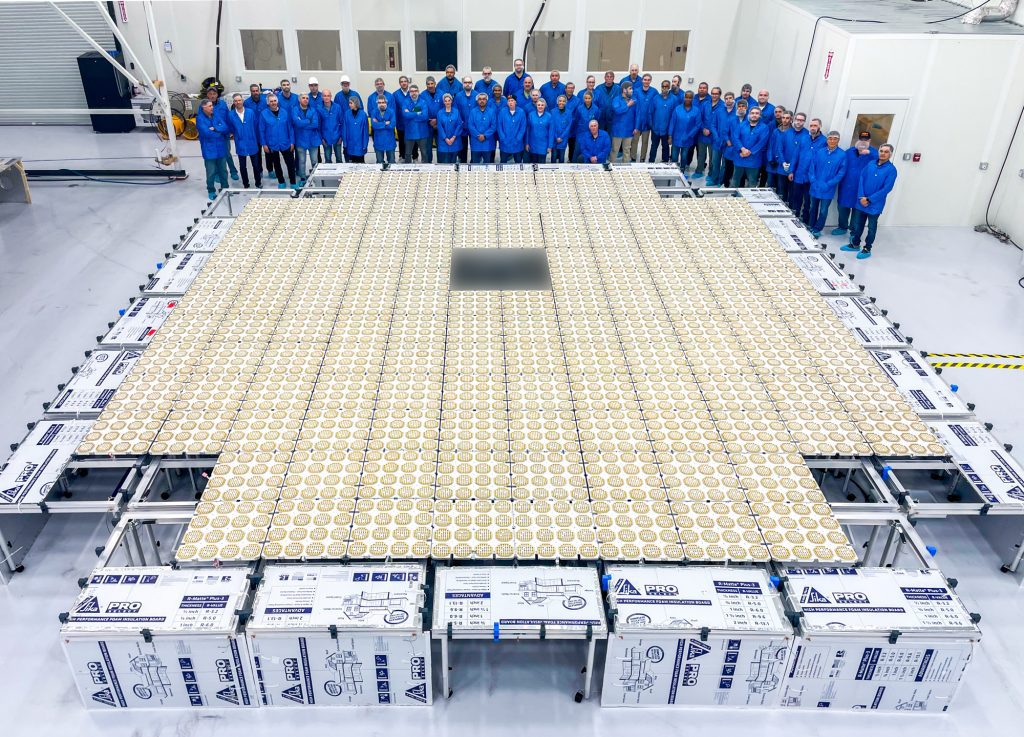
Image (Credit): AST SpaceMobile’s BlueWalker 3 test satellite, which is 693 square feet in size. (AST SpaceMobile)

It is called Bluewalker 3, and it may change the night sky for years to come. Launched in September 2022 aboard a SpaceX rocket, the Bluewalker3 prototype communications satellite from AST SpaceMobile spread its 693 square feet antenna array in low-Earth orbit. It has now become as bright as the brightest stars in the evening sky. And more of these satellites will soon be launched – 168 of them.

Needless to say, astronomers on the ground are perturbed. As noted in Science, astronomer Meredith Rawls of the University of Washington, Seattle, stated, “It’ll show up as a superbright streak in images and potentially saturate camera detectors at observatories.”

That is not to say it will be the brightest man-made object in the night sky. The International Space Station wins that battle being about 40 times brighter than the Bluewalker3, but there is only one ISS versus the 168 Bluewalker satellites being planned.

But wait, there’s more. The Bluewalker satellites direct-to-mobile cell service will also impact radio astronomers.

All of this has astronomers up in arms, leading to complaints against the use of such satellites. The Federal Communications Commission (FCC) is monitoring the matter.

As reported by NBC News, the FCC is also placing new restrictions on satellites at the end of their mission life, but this will not help with all of the new satellites going up today that will be crowding the night sky for many years to come.

If this continues, we may need that planned lunar base as a telescope collection point, at least until the objects orbiting the Moon become a problem.