Europe Takes New Steps Toward Space Travel

Credit: ESA

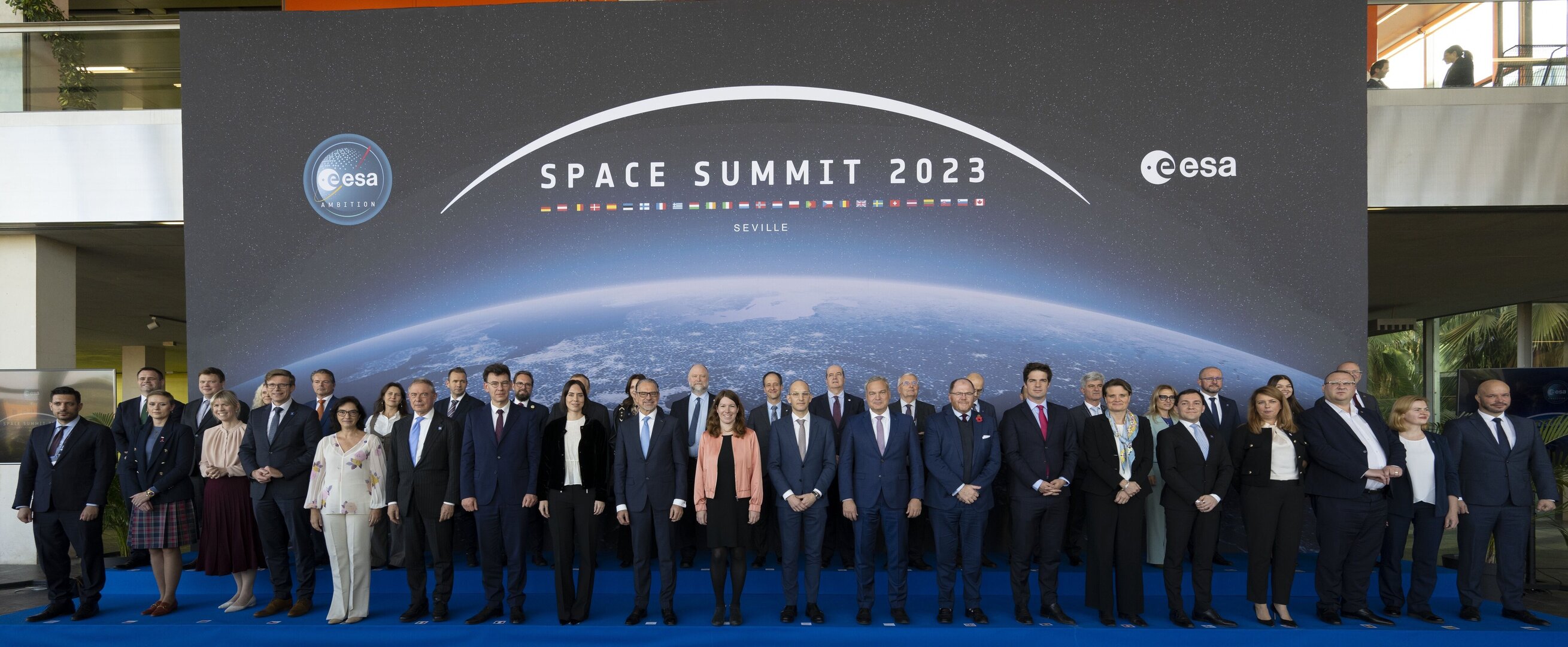
Did you have a chance to attend the European Space Agency’s (ESA) Space Summit 2023 earlier this month in Seville, Spain? Well, neither did I, but from what I hear it appears the Europeans are trying to address some shortfalls in their space program.

We already know that Europe is having difficulties timely developing its own rockets for space missions, and the Russians are no help these days. So SpaceX and others are helping out for now. But the Europeans can see they need to set things right, and soon.

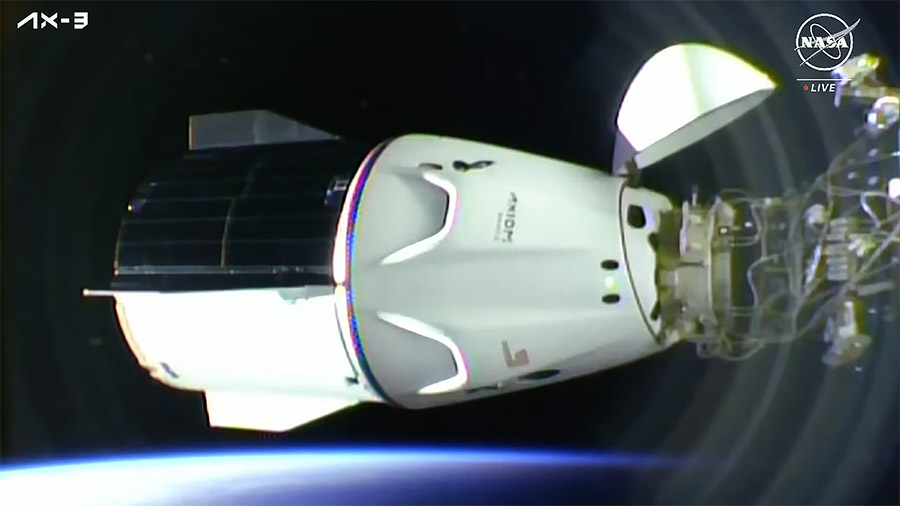
The Guardian reports that the 22 ESA members agreed to encourage competition among private sector companies to build cargo spacecraft to support the International Space Station (ISS). Moreover, the competition may expand to crewed spacecraft.

This is similar to President Obama’s commercial competition initiatives years ago, helping to create a web of companies that NASA now relies on for the ISS and its Artemis program.

A crewed spacecraft would be something new for the ESA and suggests greater investment and involvement in future space missions, which is good for everyone.

Could we see an ESA lunar station one day? It seems more possible now.

Pic of the Week: Telescope Teamwork with MACS0416

Image (Credit): Galaxy cluster MACS0416. (NASA, ESA, CSA, STScI, J. Diego (Instituto de Física de Cantabria, Spain), J. D’Silva (U. Western Australia), A. Koekemoer (STScI), J. Summers & R. Windhorst (ASU), and H. Yan (U. Missouri))

This week’s image combines the talents of the Hubble Space Telescope and the James Webb Space Telescope to create a dazzling show of light. The galaxy cluster, known as MACS0416, is about 4.3 billion light-years from Earth.

Here is much more from the European Space Agency:

The image reveals a wealth of details that are only possible by combining the power of both space telescopes. It includes a bounty of galaxies outside the cluster and a sprinkling of sources that vary over time, likely due to gravitational lensing — the distortion and amplification of light from distant background sources.

This cluster was the first of a set of unprecedented, super-deep views of the Universe from an ambitious, collaborative Hubble programme called the Frontier Fields, inaugurated in 2014. Hubble pioneered the search for some of the intrinsically faintest and youngest galaxies ever detected. Webb’s infrared view significantly bolsters this deep look by going even farther into the early Universe with its infrared vision.

To make the image, in general the shortest wavelengths of light were colour-coded blue, the longest wavelengths red, and intermediate wavelengths green. The broad range of wavelengths, from 0.4 to 5 microns, yields a particularly vivid landscape of galaxies.

Those colours give clues to galaxy distances: the bluest galaxies are relatively nearby and often show intense star formation, as best detected by Hubble, while the redder galaxies tend to be more distant and are best detected by Webb. Some galaxies also appear very red because they contain copious amounts of cosmic dust that tends to absorb bluer colours of starlight.

While the new Webb observations contribute to this aesthetic view, they were taken for a specific scientific purpose. The research team combined their three epochs of observations, each taken weeks apart, with a fourth epoch from the CANUCS (CAnadian NIRISS Unbiased Cluster Survey) research team. The goal was to search for objects varying in observed brightness over time, known as transients.

They identified 14 such transients across the field of view. Twelve of them were located in three galaxies that are highly magnified by gravitational lensing, and they are likely to be individual stars or multiple-star systems that are briefly very highly magnified. The remaining two transients are within more moderately magnified background galaxies and are likely to be supernovae.

The finding of so many transients with observations spanning a relatively short timeframe suggests that astronomers could find many more transients in this cluster and others like it through regular monitoring with Webb.

Among the transients the team identified, one stood out in particular. Located in a galaxy that existed about 3 billion years after the Big Bang, it is magnified by a factor of at least 4000. The team nicknamed the star system Mothra in a nod to its ‘monster nature’, being both extremely bright and extremely magnified. It joins another lensed star that the researchers previously identified and that they nicknamed Godzilla. Both Godzilla and Mothra are giant monsters known as kaiju in Japanese cinema.

Interestingly, Mothra is also visible in the Hubble observations that were taken nine years earlier. This is unusual, because a very specific alignment between the foreground galaxy cluster and the background star is needed to magnify a star so greatly. The mutual motions of the star and the cluster should have eventually eliminated that alignment.

The most likely explanation is that there is an additional object within the foreground cluster that is adding more magnification. The team was able to constrain its mass to be between 10 000 and 1 million times the mass of our Sun. The exact nature of this ‘milli-lens’, however, remains unknown. It is possible that the object is a globular star cluster that’s too faint for Webb to observe directly.

Pic of the Week: The Horsehead Nebula

Image (Credit): The Horsehead Nebula courtesy of the Euclid mission. (ESA / Euclid / Euclid Consortium / NASA, image processing by J.-C. Cuillandre (CEA Paris-Saclay), G. Anselmi; CC BY-SA 3.0 IGO)

This week’s image is from the European Space Agency’s (ESA) Euclid telescope. It is the famous Horsehead Nebula in all its beauty.

Here is a little more about the image from ESA:

Euclid shows us a spectacularly panoramic and detailed view of the Horsehead Nebula, also known as Barnard 33 and part of the constellation Orion. In Euclid’s new observation of this stellar nursery, scientists hope to find many dim and previously unseen Jupiter-mass planets in their celestial infancy, as well as young brown dwarfs and baby stars.

Space Stories: Strange Asteroid Behavior, Another Earth in Our Solar System, and the Study of Galaxy Clusters

Image (Credit): Photo of Dimorphos taken by the DATA spacecraft. (NASA)

Here are some recent stories of interest.

Futurism: “Something Weird is Going On with the Asteroid NASA Smashed

Nearly a year ago, NASA successfully smashed an asteroid for the first time, in a landmark test to see whether we could divert a killer space rock before disaster — but now, the asteroid in question is behaving strangely. As New Scientist reports, a schoolteacher and his pupils seem to have discovered that the orbit of Dimorphos, the space rock socked by the Double Asteroid Redirection Test (DART) last September, has apparently continued slowing down, unexpectedly, in the year since the refrigerator-sized craft smashed into it.

Kindai University: “Possible Existence of Earth-Like Planet Predicted in the Outskirts of the Solar System

Researchers from Japan predict, based on computer simulations, the likely existence of an Earth-like planet in the distant Kuiper Belt. There are many unexplained anomalies in the orbits and distribution of trans-Neptunian objects, small celestial bodies located at the outer reaches of the solar system. Now, based on detailed computer simulations of the early outer solar system, researchers from Japan predict the possibility of an undiscovered Earth-like planet beyond Neptune orbiting the Sun. Should this prediction come true, it could revolutionize our understanding of the history of the solar system.

European Space Agency:X-ray mission lifts off to study high-energy Universe

The Japan Aerospace Exploration Agency’s (JAXA) X-Ray Imaging and Spectroscopy Mission (XRISM) lifted off on a H-IIA rocket from the Tanegashima Space Center in Japan at 08:42 JST / 00:42 BST / 01:42 CEST on 7 September 2023. The successful launch marks the beginning of an ambitious mission to explore the growth of galaxy clusters, the chemical make-up of the Universe, and the extremes of spacetime. XRISM is a collaboration between JAXA and NASA, with significant participation from ESA.

Pic of the Week: Cosmic Smokescreen

Image (Credit): NGC 6530 as captured by the NASA/ESA Hubble Space Telescope. (ESA/Hubble & NASA, ESO, O. De Marco)

This week’s image is from the Hubble Space Telescope. It shows a fantastic array of colors from a portion of NGC 6530, which is about 4,350 light-years from Earth.

Here is more about this image from the European Space Agency (ESA):

A portion of the open cluster NGC 6530 appears as a roiling wall of smoke studded with stars in this image from the NASA/ESA Hubble Space Telescope…The cluster is set within the larger Lagoon Nebula, a gigantic interstellar cloud of gas and dust. It is the nebula that gives this image its distinctly smokey appearance; clouds of interstellar gas and dust stretch from one side of this image to the other.

You can also watch this short video that pans over the cluster.