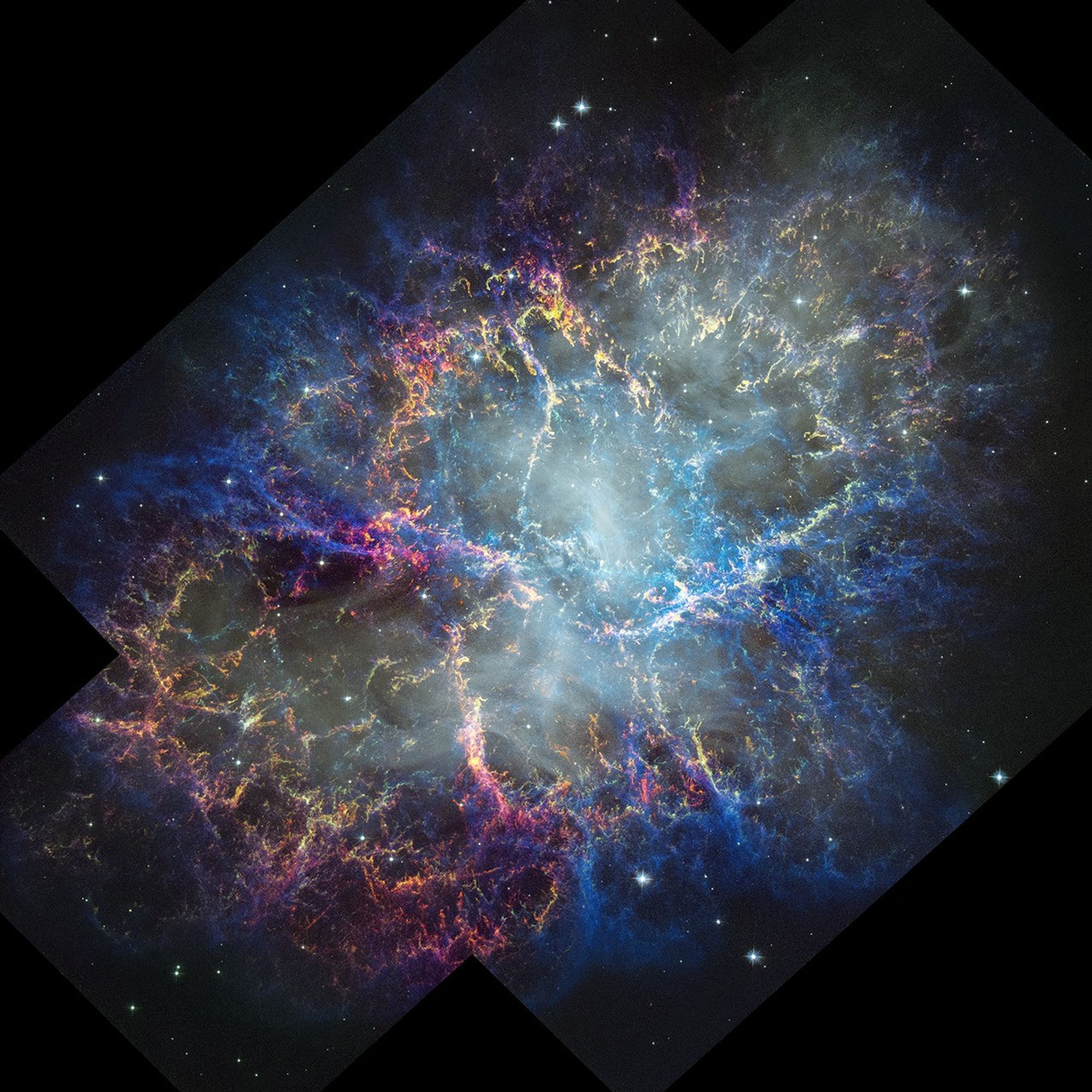
Image (Credit): A 2024 image of the Crab Nebula captured by NASA’s Hubble Space Telescope. (NASA, ESA, STScI, William Blair (JHU); Image Processing: Joseph DePasquale (STScI))
This week’s image is from the Hubble Space Telescope. It is an image of the Crab Nebula taken 25 years after the Hubble’s first image of the nebula. If you want to learn more about this history, a paper titled The Crab Nebula Revisited Using HST/WFC3 can be found in The Astrophysical Journal.
Here is a little more from NASA on earlier sightings of the nebula:
This new Hubble observation continues a legacy that stretches back nearly 1,000 years, when astronomers in 1054 recorded the supernova as an impressively bright new star that, for weeks, was visible even during the day. The Crab Nebula is the aftermath of SN 1054, located 6,500 light-years from Earth in the constellation Taurus…
The supernova remnant was discovered in the mid-18th century, and in the 1950s Edwin Hubble was among several astronomers who noted the close correlation between Chinese astronomical records of a supernova and the position of the Crab Nebula. The discovery that the heart of the Crab contained a pulsar — a rapidly rotating neutron star — that was powering the nebula’s expansion finally aligned modern observations and ancient records.
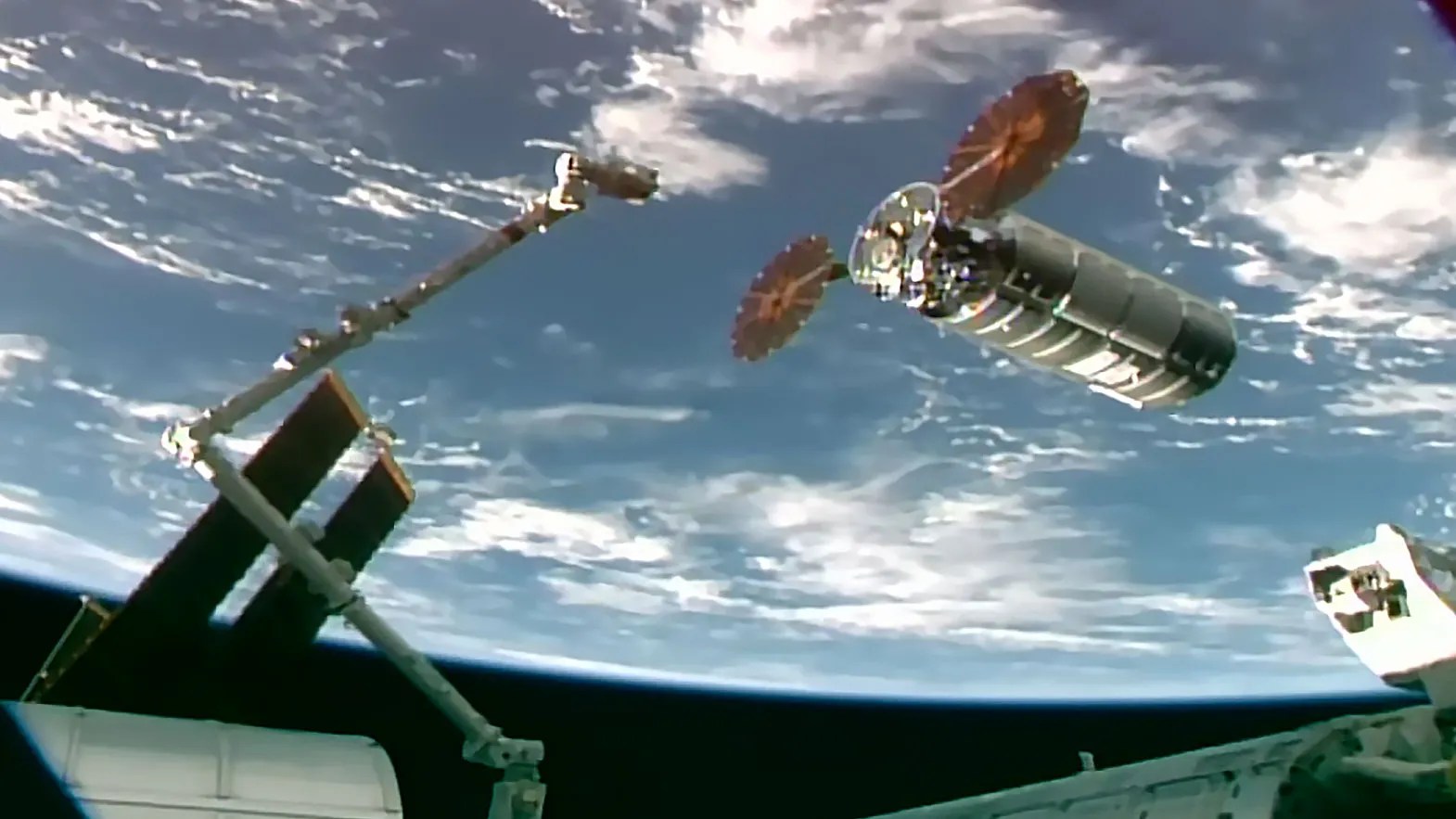
Image (Credit): The International Space Station’s (ISS) robotic arm reaching out to the Cygnus XL cargo spacecraft as it arrives on April 13, 2026. (NASA)
At 1:20 p.m. EDT, NASA astronaut Chris Williams, with assistance from NASA astronaut Jack Hathaway, captured Northrop Grumman’s Cygnus XL spacecraft using the International Space Station’s Canadarm2 robotic arm…NASA’s Northrop Grumman Commercial Resupply Services 24 mission launched at 7:41 a.m. on April 11 on a SpaceX Falcon 9 rocket from Space Launch Complex 40 at Cape Canaveral Space Force Station in Florida, carrying more than 11,000 pounds of scientific investigations and cargo to the orbiting laboratory.
China is not yet ready to perform a crewed circumlunar mission like the U.S., which began development of the Orion spacecraft in the 2000s and redesigned it to go with the SLS rocket in the early 2010s. But China is progressing on all the necessary hardware to reach the moon, with a stated goal of a crewed landing before 2030. Notably, the nation has already tested a key component that the U.S. is still working to bring online: the landing hardware. Last year China demonstrated its Lanyue crewed lunar lander, performing a propulsive lunar landing and lunar launch tests in simulated moon gravity conditions. In the U.S. SpaceX and Blue Origin are both working on NASA-funded lander concepts needed to make a 2028 Artemis landing possible.
We’ve spent decades scratching the surface of Mars trying to uncover life there. But we’ve been searching a barren wasteland bombarded by radiation and bathed in toxic perchlorates. The entire time, it’s likely that it’s been too hostile to harbor extant life. So if we want a better shot at finding currently living life on Mars, we need to go underground. That is exactly the purpose of Orpheus, a proposed Mars vertical takeoff and landing (VTOL) hopper mission put forth by Connor Bunn and Pascal Lee of the SETI Institute at the 57th Lunar and Planetary Science Conference (LPSC).
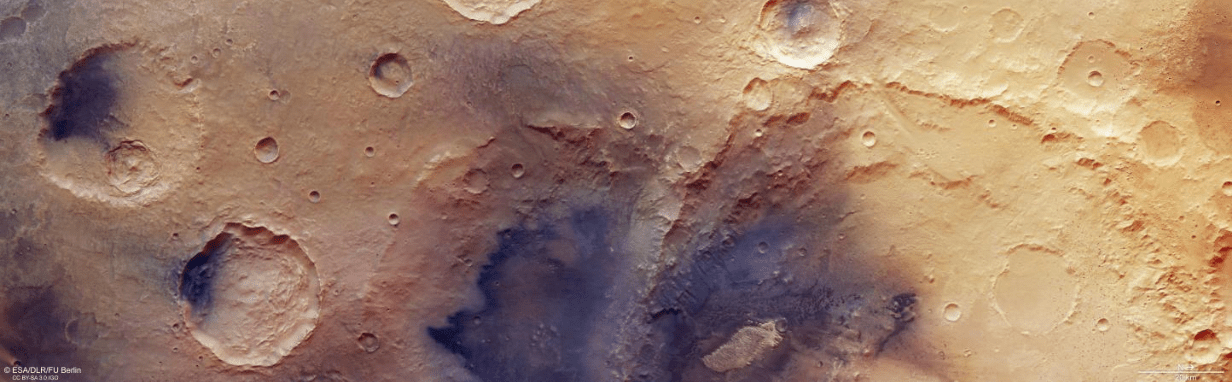
This week’s image comes from the the European Space Agency (ESA). Captured by ESA’s orbiting Mars Express, you are looking at a portion of the crater-covered Arabia Terra, which is a large plain in Mars’s ancient highlands. You can read more about this Martian region by visiting this site.
A high‑resolution overhead view of a rocky, desert‑like landscape on Mars. The surface is mostly reddish‑brown with patches of darker blue‑grey tones. Many circular impact craters of different sizes are scattered across the scene, some with raised rims and shadowed interiors. Subtle ridges, eroded valleys, and textured terrain patterns run diagonally through the image, giving a sense of ancient geological activity. The overall impression is of a dry, rugged, and heavily cratered Martian surface.
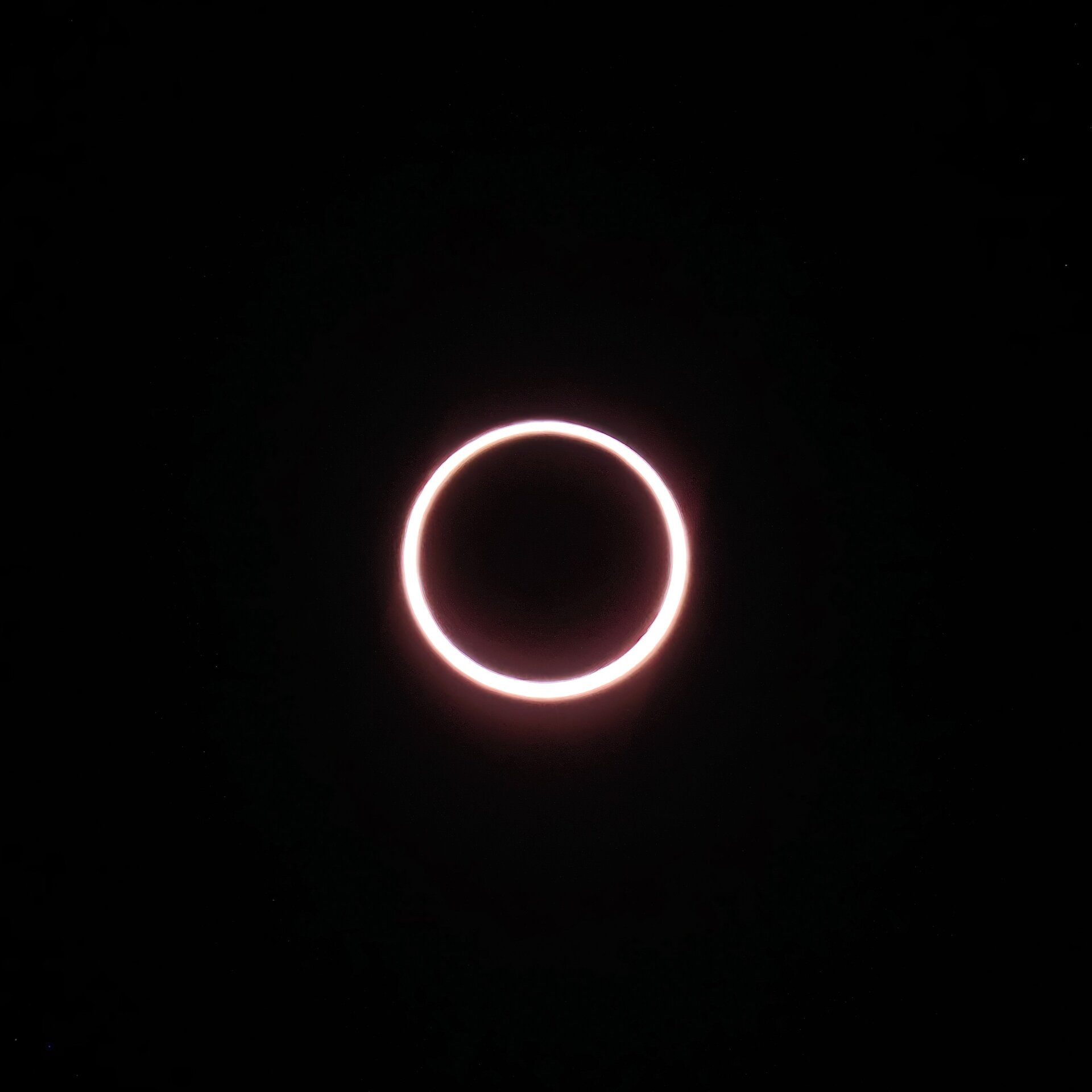
Image (Credit): The’ solar eclipse as seen from the Concordia research station in Antarctica on February 17, 2026. (ESA/IPEV/PNRA-A. Traverso)
This week’s image comes from the European Space Agency (ESA). It shows the “Ring of Fire” solar eclipse earlier this month from Antarctica. It was captured over the French and Italian Concordia research station.
Here is more from ESA on this image and the Concordia research station:
Peaking at 19:47 local time (12:47 CET), the Moon passed directly in front of the Sun’s centre, leaving only a thin, glowing annulus of sunlight visible. Astronomers call this moment annularity, and it lasted just two minutes, though the full partial eclipse spanned around two hours…Concordia sits 1100 km inland at an altitude of 3200 m. It is currently summer at the station: today, the Sun stayed above the horizon for nearly 20 hours, with temperatures reaching a comparatively mild –29 °C. But soon the light will fade: from May to August, the Sun will not rise at all, plunging the station into four months of continuous darkness where temperatures can fall below –80 °C. During this polar winter, the crew must live in complete isolation and full autonomy.
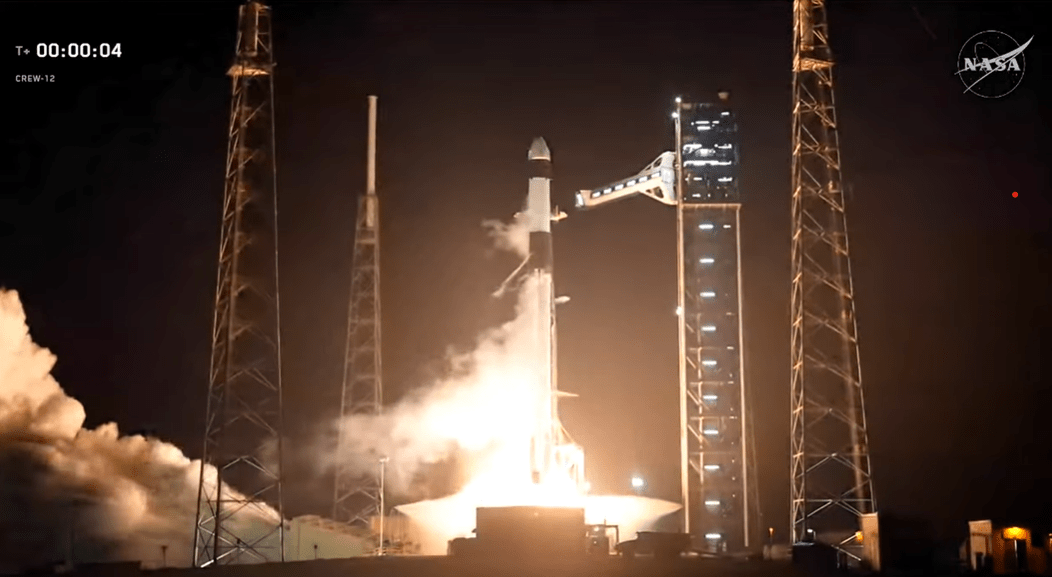
Image (Credit): NASA’s Crew-12 launches toward the ISS via a SpaceX Falcon 9 rocket on February 13, 2026. (NASA)
The International Space Station’s (ISS) Crew-12 is safely on its way. As NASA Administrator Isaacman noted:
With Crew-12 safely on orbit, America and our international partners once again demonstrated the professionalism, preparation, and teamwork required for human spaceflight.
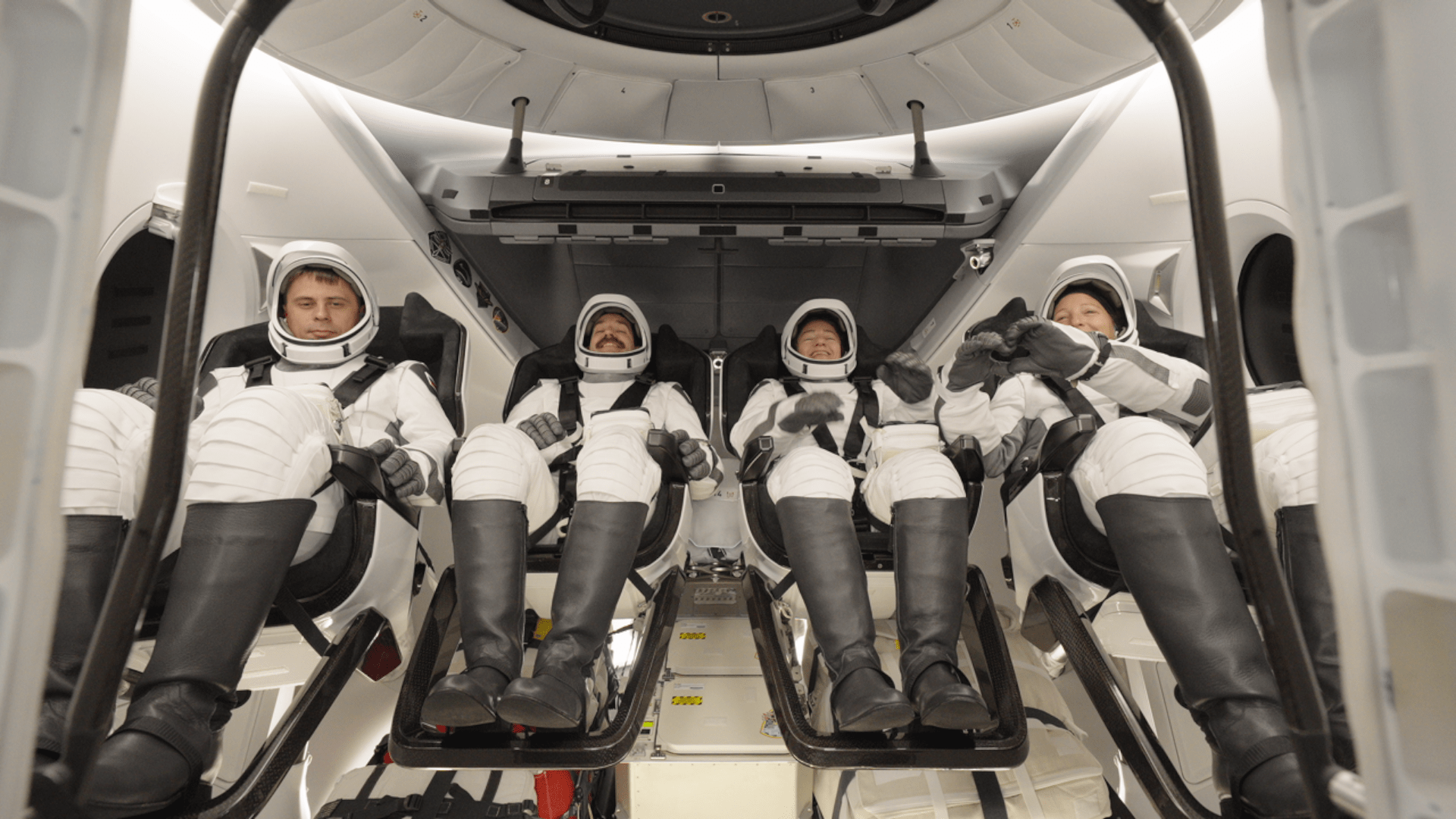
The launch carried NASA astronauts Jessica Meir and Jack Hathaway, European Space Agency (ESA) astronaut Sophie Adenot, and Roscosmos cosmonaut Andrey Fedyaev. The four crew members should climb aboard the ISS tomorrow afternoon.
Image (Credit): Crew-12 sitting in the SpaceX Dragon capsule in preparation for this week’s launch. From left to right you have Roscosmos cosmonaut Andrey Fedyaev, NASA astronauts Jack Hathaway and Jessica Mier, and ESA astronaut Sophie Adenot. (NASA)