The Europa Clipper Mission Has Begun

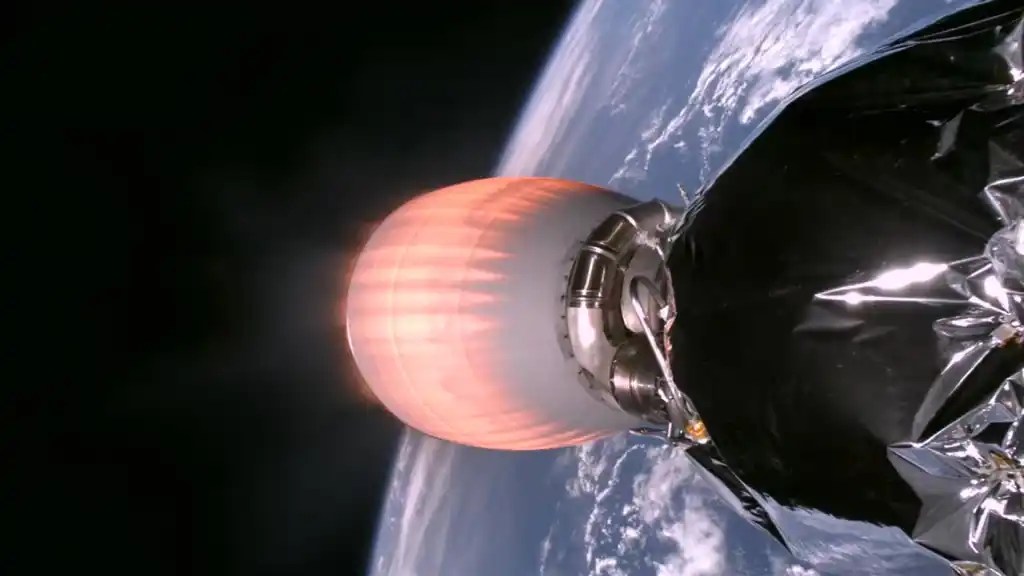
Image (Credit): View of SpaceX’s Falcon Heavy second stage engine as it completes its burn after launching the Europa Clipper spacecraft. (NASA)

Earlier today, the Europa Clipper spacecraft was launched from Kennedy Space Center for its 2030 rendezvous with the Jovian moon Europa. It can then begin to analyze the moon’s salt water ocean and look for any signs of life.

The mission is expected to last for three years, maybe longer should the spacecraft prove to be durable and ready for more scientific work. After that, it will plummet down into the Jovian moon Ganymede.

Scientists believe Europa may contain more water than is found here on Earth. That is interesting in terms of what may lie below the surface in terms of potential life. It also offers mankind a priceless resource should we ever find ourselves living in that region.

Europa Clipper Project Scientist Robert Pappalardo stated:

We know of our Earth as an ocean world, but Europa is representative of a new class of ocean worlds, icy worlds in the distant outer solar system where saltwater oceans might exist under their icy surfaces…In fact, icy ocean worlds could be the most common habitat for life, not just in our solar system, but throughout the universe.

You can follow the status of the mission here.

Delayed Launch of the Europa Clipper Mission

Credit: NASA

This week we expected to see the launch of NASA’s Europa Clipper, but an approaching hurricane has again thrown NASA’s plans into the wind. The original launch was scheduled for October 10.

NASA’s blog has stated the following:

NASA and SpaceX are standing down from the Thursday, Oct. 10, launch attempt of the agency’s Europa Clipper mission due to anticipated hurricane conditions in the area. Hurricane Milton is expected to move from the Gulf of Mexico this week moving east to the Space Coast. High winds and heavy rain are expected in the Cape Canaveral and Merritt Island regions on Florida’s east coast. Launch teams have secured NASA’s Europa Clipper spacecraft in SpaceX’s hangar at Launch Complex 39A at the agency’s Kennedy Space Center in Florida ahead of the severe weather, and the center began hurricane preparations Sunday.

I just hope hurricane season comes to an early close after this.

Stay tuned for a new launch date.

Update: As of October 12, NASA’s target launch date of the Europa Clipper is now October 14.

Europa Clipper and Starliner: Two Missions, Two Dates

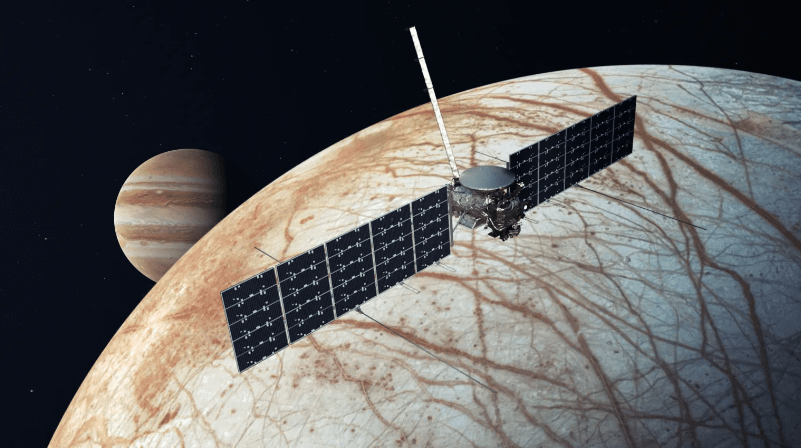
Image (Credit): Artist’s rendering of the Europa Clipper above Europa. (NASA)

NASA has decided to move forward with the Europa Clipper mission even though there have been some questions about its ability to withstand the moon’s radiation. The launch is set for an October 10 aboard a SpaceX Falcon Heavy rocket from Launch Complex 39A at NASA’s Kennedy Space Center in Florida.

NASA is also moving forward with the return of the empty Starliner capsule currently attached to the International Space Station. This Friday, September 6, Boeing’s CST-100 Starliner will disconnect from the station and land at White Sands Space Harbor in New Mexico. If all goes well, NASA can continue to study the capsule and learn more about what went wrong.

Stay tuned.

Movie: Slingshot

Credit: bleeckerstreetmedia.com

Just in time for the Labor Day weekend, we are offered a new space film that seemed to have had little publicity until it popped onto the scene. The new film Slingshot, starting today and starring Casey Affleck and Laurence Fishburne, takes us on a trip to Saturn’s moon Titan, or that is the plan.

Here is the general story (and trailer):

A psychological thriller starring Casey Affleck and Laurence Fishburne, SLINGSHOT follows an elite trio of astronauts aboard a years-long, possibly compromised mission to Saturn’s moon Titan. As the team gears up for a highly dangerous slingshot maneuver that will either catapult them to Titan or into deep space, it becomes increasingly difficult for one astronaut to maintain his grip on reality.

The trailer indicates plenty of issues with both the hardware and software – the softest ware being the mind of man on a distant voyage. Yes, we have another story about the struggle of man with himself, with space playing a supporting actor.

Fortunately, we are not dealing with a film that questions the space program, but NASA may be pleased that it is sending a robot to study Europa rather than taking chances with such fragile humans.

Here are a few of the available reviews:

Austin Chronicle:

The derivative look and feel of Slingshot – a little bit of Interstellar, a dash of 2010: The Year We Make Contact for whenever Håfström wants to add some grit, and most especially Steven Soderbergh’s Solaris remake – make it unclear exactly what kind of movie Håfström is trying to make.

The Hollywood Reporter:

It’s fairly boilerplate material, and Håfström frankly seems more interested in exploring John’s memories, nightmares, visions and wavering psyche..If you put aside all the space stuff, Slingshot is basically a one-set, one-character thriller that constantly tests the viewer’s belief in what’s happening.

RogerEbert.com:

It feels like a movie that hates its characters. And hates you too.

Now the movie has some publicity, but maybe not the type it wanted.

Go for the special effects rather than the plot.

That might work.

Video: More About Rogue Planets

Credit: Image by Valentin from Pixabay

Cool Worlds Lab released another great video recently that discusses rogue planets, or planets without a host star, in a video titled “A JuMBO Mystery – This Shouldn’t Happen!

A JuMBO means Jupiter-mass binary objects, which is just part of the story in this video. The presentation starts with a finding from astronomers using the James Webb Space Telescope, who identify 520 rogue planet candidates. This is interesting in itself, but the intriguing part is that a number of these planets are found in pairs. This would not make a lot of sense if we believed these planets were once within a solar system before being pushing into space.

The video discusses the various theories explaining these JuMBOs and rogue planets in general. It also discusses the potential impact on our own solar system, such as whether we lost one of our own planets in the past and/or a nearby rogue planet (and its moons) is out there today waiting to be discovered.

As always, Cool Worlds Lab keeps astronomy even more interesting.