Television: More Space Stories This Summer

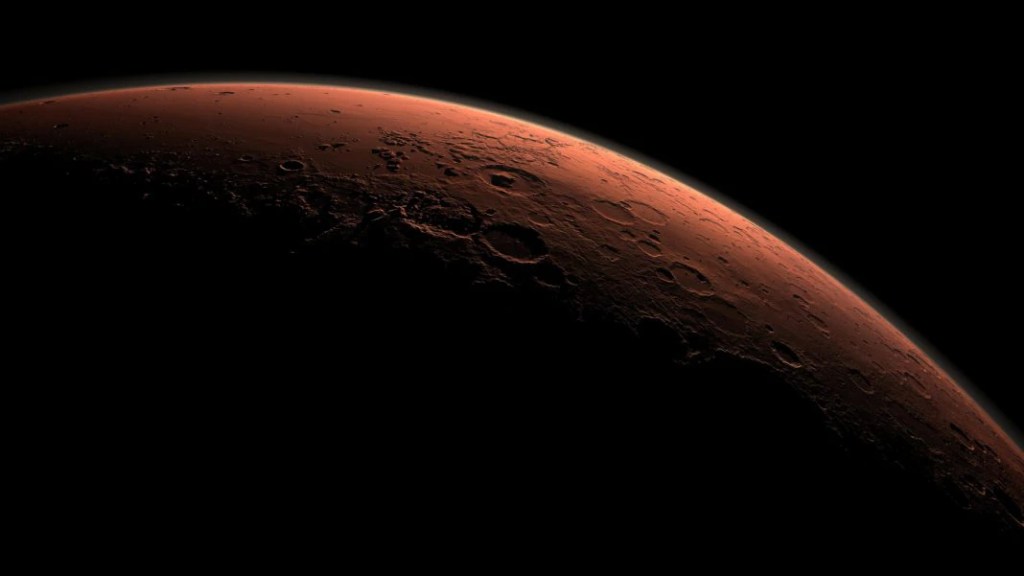
Image (Credit): The eight plants of our solar system. (NOVA)

If you are looking for space series beyond the Moon, PBS has a few more shows for you. With the James Webb Space Telescope releasing the first photos next week, now is the time to brush up on the mission with a NOVA special. And check out the earlier NOVA piece on the planets as well. Dates and times may vary by region.

NOVA: Ultimate Space Telescope, July 13 at 9pm (28 minutes):

How did NASA engineers build and launch the most ambitious telescope of all time? Follow the dramatic story of the James Webb Space Telescope—the most complex machine ever launched into space. If it works, scientists believe that this new eye on the universe will peer deeper back in time and space than ever before to the birth of galaxies, and may even be able to “sniff” the atmospheres of exoplanets as we search for signs of life beyond Earth. But getting it to work is no easy task. The telescope is far bigger than its predecessor, the famous Hubble Space Telescope, and it needs to make its observations a million miles away from Earth—so there will be no chance to go out and fix it. That means there’s no room for error; the most ambitious telescope ever built needs to work perfectly. Meet the engineers making it happen and join them on their high stakes journey to uncover new secrets of the universe.

NOVA: The Planets, July 7 & 14 at 8pm (5 episodes)

Among the stars in the night sky wander the eight-plus worlds of our own solar system—each home to truly awe-inspiring sights. Volcanoes three times higher than Everest, geysers erupting with icy plumes, cyclones larger than Earth lasting hundreds of years. Each of our celestial neighbors has a distinct personality and a unique story. In this five-part series, NOVA will explore the awesome beauty of “The Planets,” including Saturn’s 175,000-mile-wide rings, Mars’ ancient waterfalls four times the size of any found on Earth, and Neptune’s winds—12 times stronger than any hurricane felt on our planet. Using unique special effects and extraordinary footage captured by orbiters, landers and rovers, we’ll treat viewers to an up-close look at these faraway worlds. We’ll stand on the dark side of Pluto, lit only by the reflected light of its moons, watch the sun set over an ancient Martian waterfall, and witness a storm twice the size of Earth from high above Saturn. And, we’ll reveal how each of them has affected our own planet: Earth. 

Podcast: Elon Musk on the Moon and More

Credit: New York Times.

On this week’s podcast program Sway, you can re-listen to a September 2020 interview between host Kara Swisher and Elon Musk. This was long before all the Twitter nonsense, when Mr. Musk was still focused on cars and space (mostly). The discussion covers plenty of topics, including the need to settle Mars (Mr. Musk disagress with Jeff Bezos who he said believes a space station will be enough to save humanity from an existential crisis), neural implants, and a return to the Moon.

You can tell the program is dated because Mr. Musk complains that NASA cannot find a way to return to the Moon, whereas today we have the Artemis lunar program that includes SpaceX as one of its contractors. Nonetheless, it is good to hear from the old Musk when he was a little more focused.

Then again, the neural implants still seem odd. Neuralink, a company he co-founded, is focusing on those with disabilities at the moment, but the application is expected to be more widespread:

Neuralink is currently focused on making medical devices. These devices have the potential to help people with a wide range of injuries and neurological disorders, and we hope to develop treatments for many of these conditions in the coming years. We expect that as our devices continue scale, and as we learn to communicate with more areas of the brain, we will discover new, non-medical applications for our [brain-machine interface] BMIs. Neuralink’s long-term vision is to create BCIs that are sufficiently safe and powerful that the general population would want to have them.

In a Fortune magazine article, “Elon Musk Claims Neuralink’s Brain Implants will ‘Save’ Memories Like Photos and Help Paraplegics Walk Again. Here’s a Reality Check,” the authors take him to task on his neural implant idea, stating:

Helping paraplegics walk and curing brain disorders are certainly noble goals. And, hey, ordering a pizza just by thinking about it sounds cool. But many experts are concerned that Musk is seriously overhyping what Neuralink’s implants will be able to accomplish.

Elon Musk overhyping an idea? Never!

Check it out. You can download the podcast at the New York Times, the Apple Store, and elsewhere.

Help Wanted to Sift Through Martian Clouds

Image (Credit): Hubble space telescope image of the icy blue clouds swirling over the Martian mountain Syrtis Major (far right). (NASA Goddard)

NASA is looking for assistance to answer a few questions about Martian clouds:

  1. What causes the atmosphere to get cold enough for carbon-dioxide to freeze out?
  2. How do clouds change from day to night, or during different seasons, or in some years more than others?
  3. What are the clouds made of?

You can help by searching through data acquired by the Mars Climate Sounder (MCS) on the Mars Reconnaissance Orbiter (MRO) collected during Mars Year 29, which was from December 2007 to October 2009. Using an entire Martian year of identified clouds will allow NASA to determine how mesospheric clouds change during different seasons on Mars, and assist with future machine-learning algorithms for other years’ worth of data.

Visit the Cloudspotting on Mars website to learn more about how you can help. It’s a fun way to be part of the scientific community as it gains a greater understanding of the one planet in the solar system we hope to visit in person in the near future.

A Day in Astronomy: Viking 1 Begins Obit of Mars

Image (Credit): Viking orbiter spacecraft. (NASA/National Space Science Data Center)

On this day in 1976, NASA’s Viking 1 spacecraft began its orbit of Mars. Launched in August 20, 1975, it took the Viking 1 spacecraft 11 months to travel to Mars. Viking 1 was a combination of orbiter and landing craft. The attached lander did not land on the Martian surface until July 20th, setting down on the western slope of Chryse Planitia (the Plains of Gold).

The Viking 1 orbiter operated successfully for four years, circling Mars 1,489 times. In addition to orbiting Mars, the orbiter also approached the Martian “moon” Phobos to learn more about the captured asteroid.

As with other missions at the time, there was a Viking 1 and a Viking 2. Viking 2 also had an orbiter and lander, both of which operated successfully.

The Viking missions greatly expanded our knowledge of Mars and its “moons.” In NASA’s fact sheet we learn that the two orbiters sent back 52,000 photographs (and mapped 97 percent of the Martian surface) and the landers sent back 4,500 photographs. Some of the discoveries include:

  • The permanent north cap is water ice; the southern cap probably retains some carbon dioxide ice through the summer.
  • Water vapor is relatively abundant only in the far north during the summer, but subsurface water(permafrost) covers much if not all of the planet.
  • Northern and southern hemispheres are drastically different climatically, because of the global dust storms that originate in the south in summer.

NASA has been back to the Martian surface many times since this first set of missions, but nothing can surpass the initial excitement of Viking missions.