Private Space Missions: Is Venus Next?

Source/Credit: Venus from Mattias Malmer/NASA/JPL..

NBC news reports that a privately-funding space probe could visit Venus as early as next year as phase one of a three-part mission. The goal of the Venus Life Finder Mission, involving MIT alumni and Rocket Lab, is to search for signs of life or microbial-type life. This effort is another encouraging sign of increased interest in scientific missions throughout the solar system.

An earlier press release on the Venus Life Finder site stated:

The Venus Life Finder Missions are a series of focused astrobiology mission concepts to search for habitability, signs of life, and life itself in the Venus atmosphere. While people have speculated on life in the Venus clouds for decades, we are now able to act with cost-effective and highly-focused missions. A major motivation are unexplained atmospheric chemical anomalies, including the “mysterious UV-absorber”, tens of ppm O2,  SO2 and H2O vertical abundance profiles, the possible presence of PH3 and NH3, and the unknown composition of Mode 3 cloud particles. These anomalies, which have lingered for decades, might be tied to habitability and life’s activities or be indicative of unknown chemistry itself worth exploring.  Our proposed series of VLF missions aim to study Venus’ cloud particles and to continue where the pioneering in situ probe missions from nearly four decades ago left off. The world is poised on the brink of a revolution in space science. Our goal is not to supplant any other efforts but to take advantage of an opportunity for high-risk, high-reward science, which stands to possibly answer one of the greatest scientific mysteries of all, and in the process pioneer a new model of private/public partnership in space exploration.

It has been more than a decade since a government has sent a mission to Venus. The last US mission to Venus was the Magellan launched in May 1989, which started to orbit Venus in 1990 and continued to do so for four years. The European Space Agency sent the Venus Express to the planet in November 2005, while Japan sent the Akatsuki in May 2010.

Interest continues among government parties. For example, just last year NASA announced two new missions to Venus:

— DAVINCI+ (Deep Atmosphere Venus Investigation of Noble gases, Chemistry, and Imaging) to measure the composition of Venus’ atmosphere to understand how it formed and evolved, as well as determine whether the planet ever had an ocean. The mission consists of a descent sphere that will plunge through the planet’s thick atmosphere, making precise measurements of noble gases and other elements to understand why Venus’ atmosphere is a runaway hothouse compared the Earth’s. It will also will return the first high resolution pictures of the unique geological features on Venus known as “tesserae,” which may be comparable to Earth’s continents, suggesting that Venus has plate tectonics.

— VERITAS (Venus Emissivity, Radio Science, InSAR, Topography, and Spectroscopy) to map Venus’ surface to determine the planet’s geologic history and understand why it developed so differently than Earth. In addition, it will map infrared emissions from Venus’ surface to map its rock type, which is largely unknown, and determine whether active volcanoes are releasing water vapor into the atmosphere. 

Source: Venuscloudlife.com.

Space Quotes: Key to Successful Space Programs

Source/Credit: NASA Administrator Bill Nelson, Official Portrait from NASA/Bill Ingalls.

“…in order for a space program to be successful it has to be a multi-administration effort. It’s like building an aircraft carrier; that takes about 12 years and spans many administrations. So the space program has to be the same way.”

–NASA Administrator Bill Nelson responding to a Time Magazine question about the lack of continuity among presidential administrations on moon missions.

Movies: The Coming Moonfall

Source: Moonfall.movie.

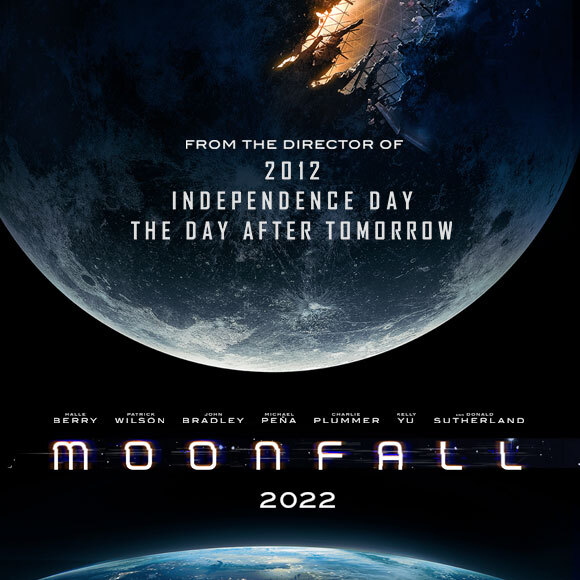
On Friday, February 4th, you can watch another crazy science fiction movie if you are up to it, but be prepared. Moonfall has the following premise from Movieinsider.com:

In Moonfall, a mysterious force knocks the Moon from its orbit around Earth and sends it hurtling on a collision course with life as we know it. With mere weeks before impact and the world on the brink of annihilation, NASA executive and former astronaut Jo Fowler (Academy Award® winner Halle Berry) is convinced she has the key to saving us all – but only one astronaut from her past, Brian Harper (Patrick Wilson, “Midway”) and a conspiracy theorist K.C. Houseman (John Bradley, “Game of Thrones”) believes her. These unlikely heroes will mount an impossible last-ditch mission into space, leaving behind everyone they love, only to find out that our Moon is not what we think it is.

Moonfall has plenty of stars, as was the case with the earlier disaster film Don’t Look Up. That said, I think you can just sit back and let this one wash over you without worrying about any science. I doubt NASA needed to be consulted on this one. In fact, late last week NASA sent out the following tweet:

At only ~240,000 miles away, our nearest neighbor affects our life here on Earth. Here are a few reasons why we’re grateful the Moon is stable in its orbit (no offense @MoonfallFilm)

After you enjoy the show, you may want to check out what is planned for the Moon as part of the Artemis Program. This accompanying video by NASA, How We Are Going to the Moon, is pretty dramatic all by itself (with the Moon remaining in orbit, of course).

Source: NASA.

Should We Name the Moon’s New Crater After Mr. Musk?

Source: SpaceX Rocket from NASA.

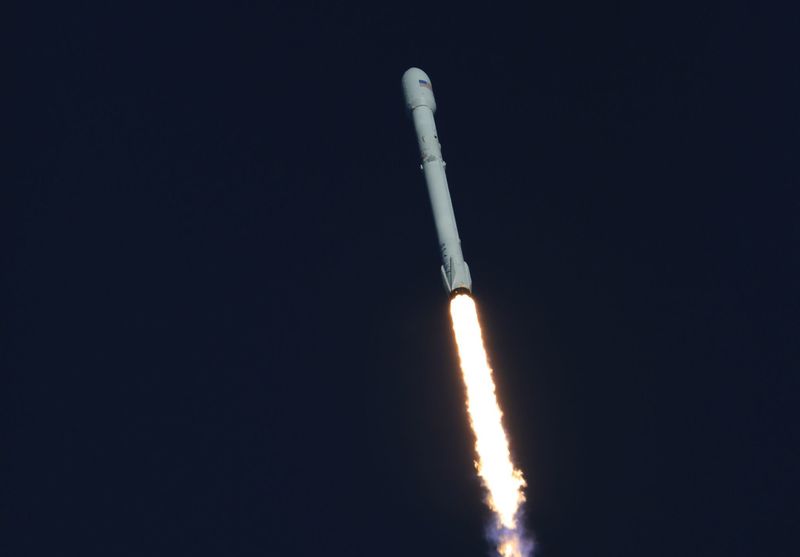
In the early days of March, a SpaceX rocket booster is expected to crash into the surface of the Moon just north of its equator. Part of a rocket launched in 2015, the booster has been floating around ever since.

In general, the Moon has not been used for trash storage beyond the lunar missions. Moreover, SpaceX likes to be known for landing its boosters back on Earth rather than sending them off into the wild blue (or black) yonder.

This could be an opportunity for SpaceX to claim it has created one of the first unintentional man-made craters on the Moon. The small crater could be known as the Musk Mini-Basin.

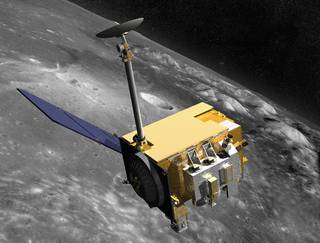
Luckily, Mr. Musk’s Tesla Roadster, launched in 2018, made it past the Moon with little incident (and then overshot Mars). We did not need an Elon Musk Parking Lot on the moon, yet the little red car would have been quite a sight for NASA’s Lunar Reconnaissance Orbiter (LRO).  

Source: LRO from NASA.

Extra: Visit this Sky & Telescope story for LRO images of the six Apollo landing sites on the Moon.

Update: Recent news indicates that the object about to hit the Moon is not a SpaceX rocket booster but rather a Chinese rocket part from the Long March 3C that launched the Chang’e 5-T1 lunar mission. I guess we will need to rethink the naming of that new crater.

Sidebar: Naming the James Webb Space Telescope

Source: James Webb Space Telescope from NASA.

Now that the James Webb Space Telescope (JWST) is settling in at its new location 1 million miles away, we will be hearing that name for at least a decade every time NASA has new findings related to distant planets. It is worth noting that some people are not so pleased with the spacecraft’s designated name.

A recent article in Scientific American magazine highlighted some resistance to allowing former NASA administrator James Webb’s name to be part of the new space telescope. In the article, “NASA Won’t Rename the James Webb Space Telescope—and Astronomers Are Angry,” we are told that more than 1,200 individuals, “including scientists,” signed a petition asking for a new name. The petition stated that Mr. Webb was in key government positions during a period when gay and lesbian federal employees were fired due to their sexual orientation.  NASA later reported it did not have any evidence to support such a name change and considered the matter closed.

I will admit that I liked the name Hubble for the space telescope being replaced by the JWST. It seemed appropriate to name the telescope after Edwin Hubble, who proved there were galaxies beyond our Milky Way. That is an impressive accomplishment, whereas Mr. Webb was a successful Washington bureaucrat. Maybe another scientist would have been more appropriate.

That said, getting space programs funded is no easy task, so even if they want to name a space telescope after a U.S. Senator I will not issue an objection if that senator can get the job done. And let’s remember that we do have many perfect people for naming rights. Even Edwin Hubble, for all of his great accomplishments, was under a cloud of suspicion regarding a questionable redaction of part of a translation of George’s Lemaître’s 1927 paper that first reported what is today know as Hubble’s Law. While Hubble was eventually cleared of any questionable deeds, had it been raised at the time NASA was naming the space telescope it could have become an issue.

You may recall that NASA has used other questionable names for its missions in the past. For example, the god Apollo has many misadventures involving innocent women. Just ask Cassandra. And Mercury was far from innocent. The pesky god was known for rape and even Pandora’s Box. For some reason, I do not believe any of the gods would pass the test today.

Source: “Pandora” by Charles Edward Perugini, 1839-1918.