Up to this point, only SpaceX and Blue Origin have been able to accomplish this feat. This means China is joining the U.S. in terms of reusable rockets at a time when it is also making strides in the race to the Moon.
The rocket test was also successful in putting a satellite into low-Earth orbit.
The Long March 10b rockets was built by a state-owned company and is an essential part of China’s plans to send a crew to China. It is also said to be part of China’s plans to put internet satellites into orbit, similar to SpaceX’s Starlink.
One interesting part of the recovery was the use of a large net on the platform. Chen Muye from the China Aerospace Science and Technology Corporation (the state-owned company) stated:
Net-based recovery simplifies the onboard structure, reduces weight and boosts payload capacity.
Maybe the US commercial space sector has a few things to learn from the Chinese.
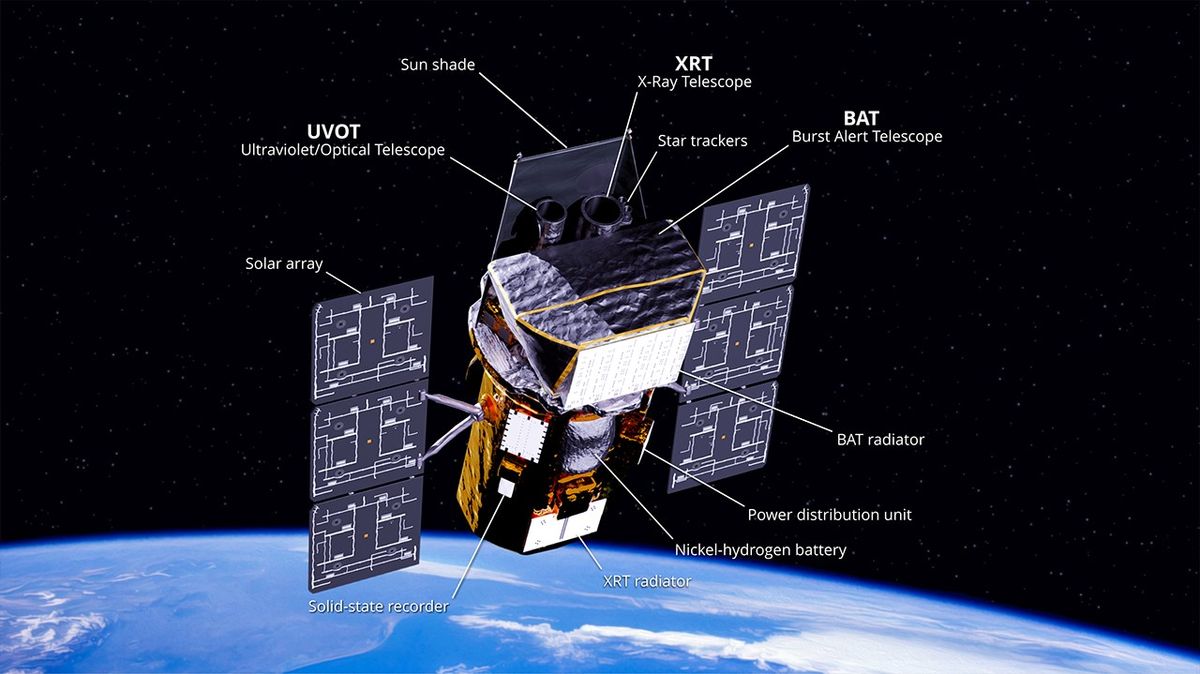
Image (Credit): Artist rendering of the Neil Gehrels Swift Observatory in orbit with parts of spacecraft highlighted. (NASA’s Goddard Space Flight Center Conceptual Image Lab)
NASA will soon attempt something it’s never done before: Save a space telescope from falling back to Earth using a servicing robot. It sounds like something right out of a sci-fi film, but NASA is hoping it might be enough to keep its sinking Neil Gehrels Swift Observatory in action a little longer. According to the US space agency, the mission could launch as soon as this Tuesday 30 June, 6:17 am EDT (10:17 UTC), and we’ll be keeping you updated on the progress. If this mission works, the much-beloved Hubble Space Telescope is one of the next targets to have its life extended.
Saudi Arabia has announced plans for AlUla Manara, a major astronomical observatory and research centre in the kingdom’s north-west…AlUla Manara is planned to include large telescopes, observation platforms, exhibitions, interactive experiences, a planetarium, a restaurant and a visitor and research centre. The project is intended to support scientific research as well as public astronomy experiences. No opening date has been announced.
Ukraine’s General Staff confirmed its forces struck the Vladimir Space Communications Center near Gus-Khrustalny on 22 June, destroying the main 25‑metre parabolic antenna, damaging satellite modem halls, multiplexers, and cooling systems. Additional damage to the Main Hardware and Software Complex and a key technical building severely degraded Russia’s satellite operations…The Vladimir facility plays a central role in Russia’s satellite communications, and its loss comes amid accusations that Moscow has manoeuvred satellites near European systems used by Ukraine, causing GPS disruption across Europe, Greenland, and Canada.
While most of the attention regarding the space race with China revolves around the Moon at the moment, another space race is brewing that will become a big problem for astronomers if the race is successful. This second race is one to place data centers into orbit.
We are fast-tracking ourselves towards the world of Disney’s WALL-E where we have polluted the night sky beyond recognition. Is this really necessary? Do we have other options?
Fortunately, we do, including Google’s planned data center in Texas, which will power itself from renewable energy. Another example is China’s efforts to put data centers in the ocean. Like the night sky, the ocean is a big place with a lot of possibilities if done right.
AI has already brought up enough concerns pertaining to childhood health, jobs for new graduates, and even a real armed Skynet determining its own targets. Do we really need to also surround the planet with more than a million satellites feeding into this questionable new world?
It may be time to take some of these decisions away from the stock market and ponder them for a few a little longer. Even Elon Musk was expressing such concerns in 2023. He signed a letter from the Future of Humanity Institute that stated:
Should we let machines flood our information channels with propaganda and untruth? Should we automate away all the jobs, including the fulfilling ones? Should we develop nonhuman minds that might eventually outnumber, outsmart, obsolete and replace us? Should we risk loss of control of our civilization?Such decisions must not be delegated to unelected tech leaders.
That was a smart idea then, and it makes even more sense today before we go crazy spending billions, if not trillions, or dollars on a new space race that re-energizes a questionable technology while blotting out the night sky for those who are willing to look outside of our planetary bubble to learn from the universe.
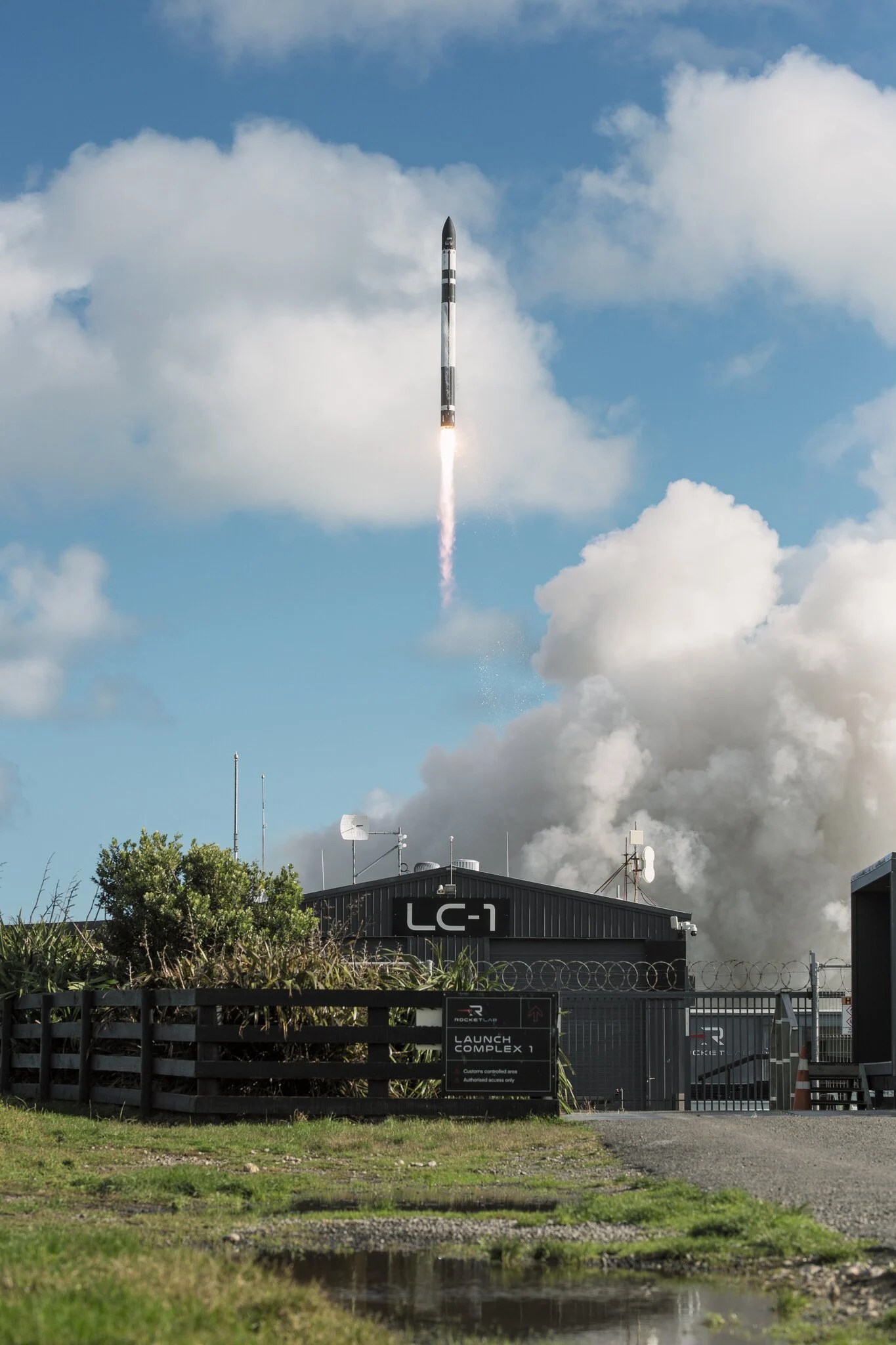
The “Kakushin Rising” mission lifted off from Rocket Lab Launch Complex 1 in New Zealand at 3:09 p.m. NZT to successfully deploy eight spacecraft for JAXA’s Innovative Satellite Technology Demonstration Program that included educational small sats, an ocean-monitoring satellite, a demonstration satellite for ultra-small multispectral cameras, and a deployable antenna packed tightly using origami folding techniques that can unfurl up to 25 times its size. “Kakushin Rising” builds on the success of Rocket Lab’s first dedicated launch for JAXA that took place in December 2025, which saw Electron deploy the RAISE-4 spacecraft that demonstrated new aerospace technologies developed by several companies, universities, and research institutions throughout Japan.
The uncrewed Roscosmos Progress 95 spacecraft docked to the aft port of the International Space Station’s Zvezda module at 8 p.m. EDT Monday. The spacecraft is delivering about three tons of food, fuel, and supplies for the Expedition 74 crew. It will remain docked to the orbiting laboratory for about six months before departing for a planned destructive re-entry into Earth’s atmosphere to dispose of trash loaded by the crew.
New observations of the interstellar comet 3I/ATLAS include the first measurement of the abundance of deuterated water relative to ordinary water in an interstellar object. Astronomers using the Atacama Large Millimeter/submillimeter Array (ALMA) discovered that the interstellar comet 3I/ATLAS is made of an astonishingly high ratio of semi-heavy water relative to water, indicating that its system of origin likely formed under conditions far colder than our own.
Rocket Company Issues: Blue Origin’s New Glenn rocket will be grounded while the Federal Aviation Administration investigates the matter.
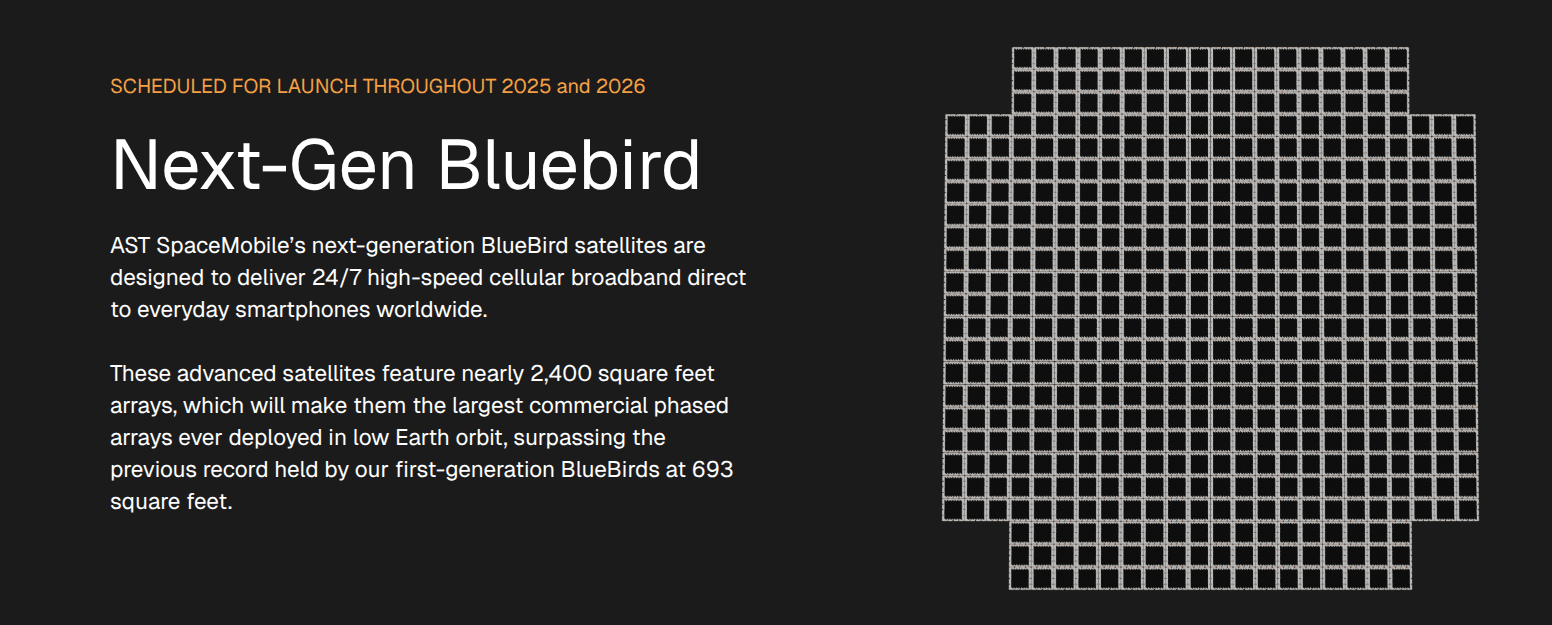
Satellite Company Issues: AST, the owner of the Bluebird 7 satellite placed in the wrong orbit, will now need to “de-orbit” its satellite. This means the satellite will be burned up in the Earth’s atmosphere. It also means that the roll out of AST SpaceMobile will be delayed, which has impacted the company’s stock.
Artemis Issues: The timeline for Artemis III, where NASA tests the lunar landers, may need to be delayed, at least for Blue Origin. Of course, SpaceX is having its own problems getting its Starship ready.
Astronomy Issues: The Bluebird satellites have been controversial because of their large size. This will only add to the growing light pollution from orbiting satellites that impact ground-based astronomers. So, in this case, with the loss of Bluebird 7 the astronomers get a reprieve for now.
So, three negative outcomes and one position outcome. A turnaround on all of these issues will take time, including the design of the satellite itself. While it appears each generation of the Bluebird satellite is getting larger, this could be a fixable problem given that AST stated it is willing to work with the National Science Foundation to limit the damage to the night sky.