Image (Credit): Artist’s rendering of a Starship human lander to the Moon’s surface. (SpaceX)
On Tuesday, Starlink finally launched its 10th test flight after a rough patch of three bad launches. Regarding this tenth test, SpaceX stated:
Every major objective was met, providing critical data to inform designs of the next generation Starship and Super Heavy.
Everything from the booster splash landing in the Gulf of Mexico shortly after ascending from Starbase, Texas, to the rocket itself splash landing in the Indian Ocean was a positive sign that things are back on track for the company and its rocket.
Now maybe talk can begin again about NASA’s Artemis program and the role of the Starship to bring humans back to the Moon. It is not clear how many tests will be required before the rocket is ready, but the Artemis program is already suffering from delays.
Hopefully, this successful test is a sign that things are getting back on track.
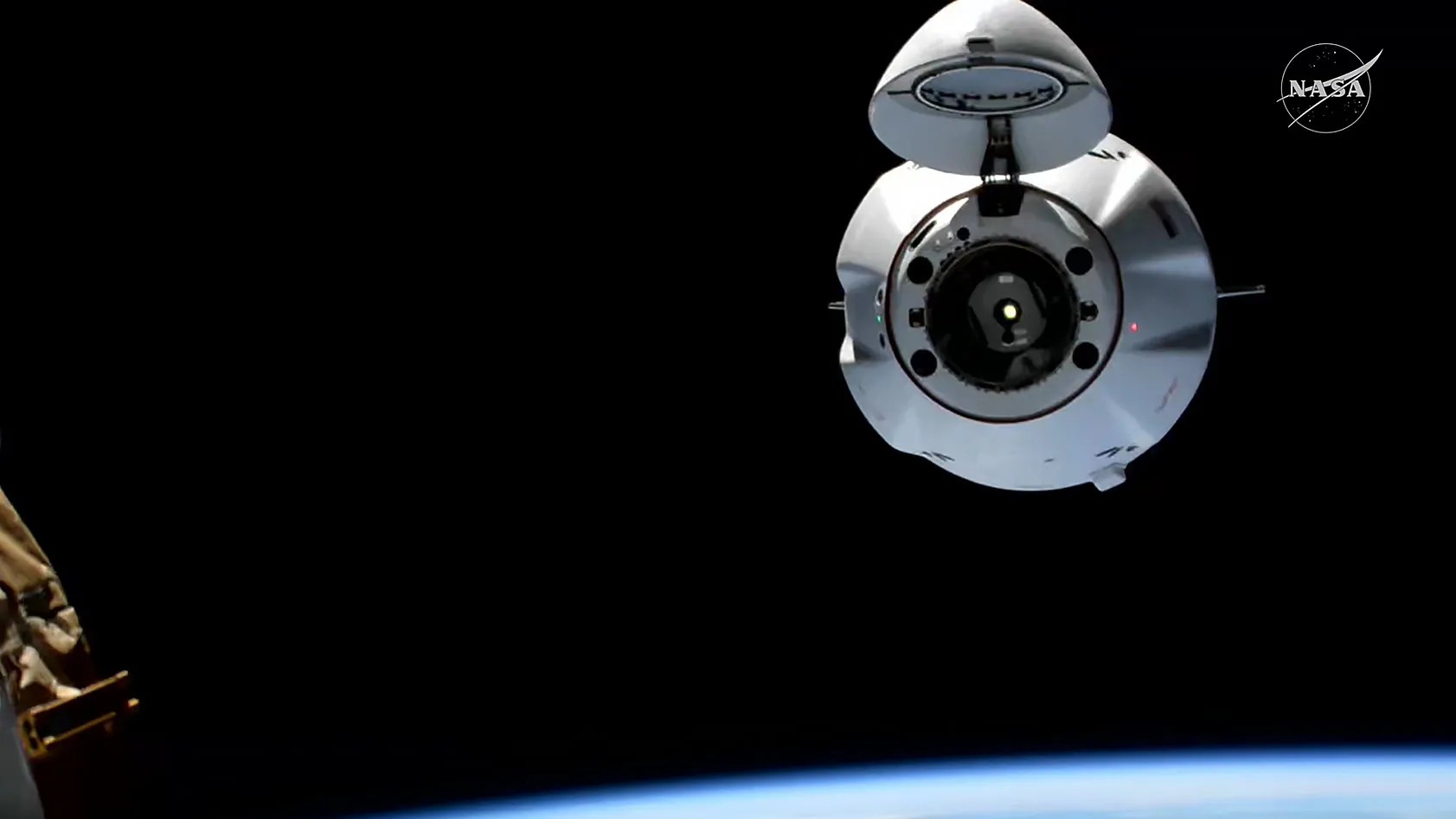
At 7:05 a.m. EDT, the SpaceX Dragon spacecraft docked to the forward port of the International Space Station’s Harmony module. The spacecraft carried over 5,000 pounds of scientific investigations and cargo to the orbiting laboratory on SpaceX’s 33rd commercial resupply services mission for NASA. The mission launched at 2:45 a.m. on Aug. 24 atop a SpaceX Falcon 9 rocket from Space Launch Complex 40 at Cape Canaveral Space Force Station in Florida.
Longtime readers will recognize the name Dean Regas, astronomy contributor to The Enquirer and former cohost of the PBS series “Star Gazers,” but they may not know that Regas is also the author of seven books about astronomy. His latest foray into the world of writing, “All About Orion,” is a children’s book focused on its namesake, Orion, with a twist: the book features braille writing and textile constellations as well as large print for blind and visually impaired children.
The JWST’s latest exoplanet atmosphere target is GJ 3929 b. Astronomers discovered it in TESS data in 2022. “Our analysis confirms the planetary nature of the transiting planet GJ 3929 b,” the authors of the 2022 paper wrote. “Its mass and radius (~ 0.43 Earth masses and ~1.15 Earth radii) put it into the regime of small Earth-sized planets.” Earth-like planets attract attention for obvious reasons. Now the JWST’s results are in, and the once-promising planet appears to be barren.
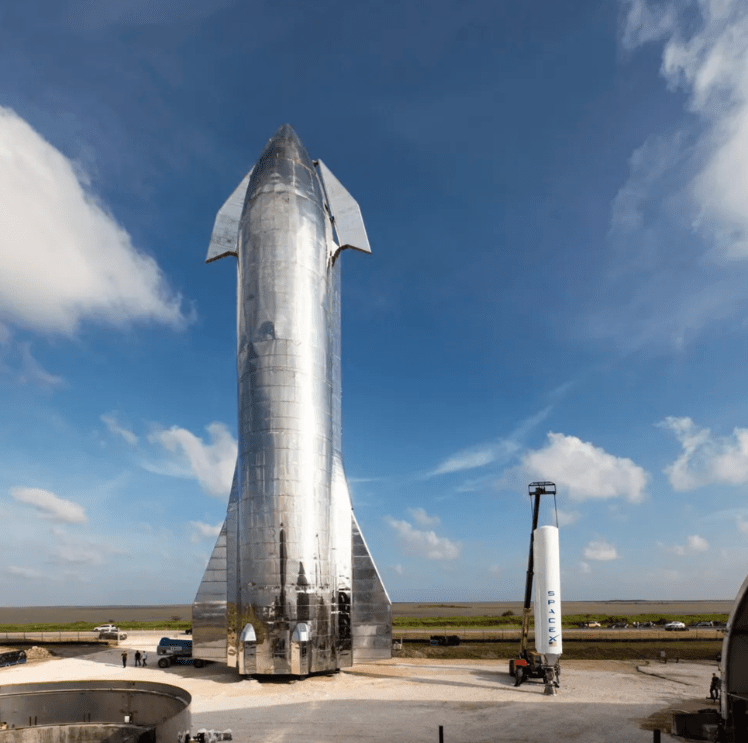
Image (Credit): Image from 2019 showing the SpaceX’s Starship prototype (left) next to a Falcon 1 rocket. (SpaceX)
Elon Musk is eager to get his Starship launches back on track, but the 10th launch scheduled for yesterday had to be scrubbed due to “ground system” issues. The launched was pushed by a day or two.
The most recent reminder of the difficulties getting this rocket into orbit came in June, when a pre-flight engine test ended in an explosion.
Even with all of the acrimony between Musk and President Trump, NASA and the White House are depending on the Starship rocket to make the Artemis program a reality.
Like him or not, the US space program’s success is locked in with Musk’s company at the moment.
We can only hope for a successful test.
Update: The launch was scheduled for late Monday, August 25th, but cancelled again, this time due to the weather.
Image (Credit): The Telsa Diner in Hollywood, CA. (Tesla)
So, what is the next step for Elon Musk now that he decimated NASA and the federal government in general? A trip to the Moon? A trip to Mars?
No, his next goal is serving burgers and fries. That’s right, Mr. Musk is now proudly selling diner food at his Tesla Diner in Hollywood where you can charge your Tesla (if you have not given it away), talk with a robot (because employees are expensive), and get your food served to you by someone on roller skates (most likely these employees will also replaced with robots to eliminate any lawsuits).
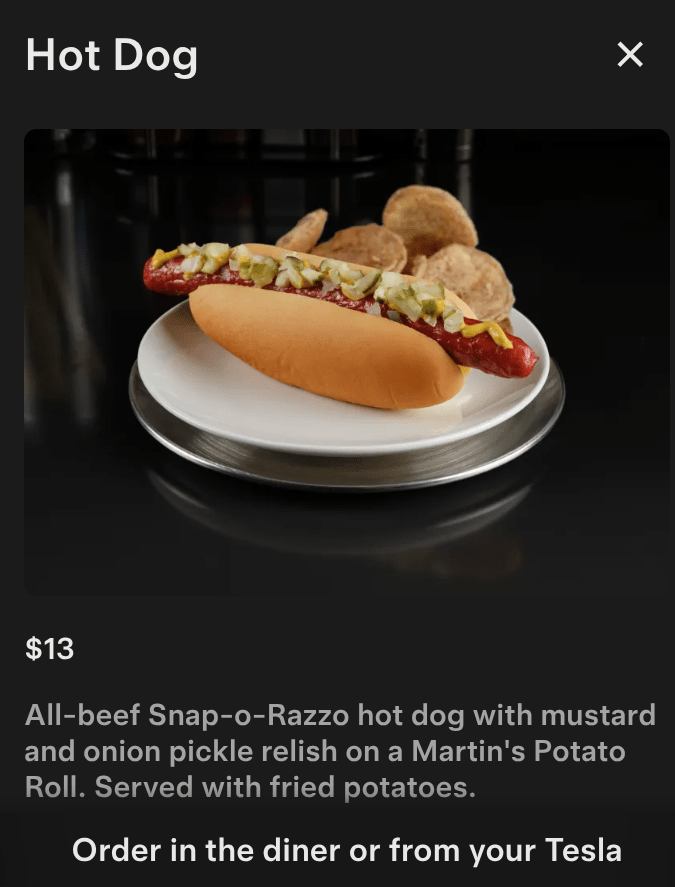
For $13 you can get an All-beef Snap-o-Razzo hot dog and fries. None of that freeze-dried food they would be serving on a trip to Moon should that ever happen.
I just hope that Mr. Musk is still working on his space-related projects in addition to all of his other companies, his new political party, and now his restaurant chain. Otherwise one might start to think this guy is starting to loose his focus.
Now hand me one of those fried chicken and waffle thingies, please.
Image (Credit): Menu item from the Tesla Diner. (Tesla)
Image (Credit): The Starliner capsule outside the ISS in July 2024. (Boeing)
The good news is that Boeing’s CST-100 Starliner spacecraft will be returning to the International Space Station (ISS). However, the not so good news is that NASA may not trust it enough to carry humans – what it was designed to do – so it will probably be carrying cargo on its next mission instead.
Overall, this is good news in that Boeing is not throwing in the towel. We need a backup to SpaceX’s Dragon, and Boeing’s spacecraft is the best bet at the moment.
The Starliner is designed to carry seven crew members or a mix of crew and cargo. That means it can carry quite a bit of cargo if that is all it is doing on its next trip.
NASA is still sorting things out, but this cargo mission, if it occurs, is expected to take place next year.