Image (Credit): Gypsum dunes on Mars. (NASA, Univ. of Arizona’s Lunar & Planetary Laboratory)
This week’s amazing image was taken by the High Resolution Imaging Science Experiment (HiRISE) camera onboard NASA’s Mars Reconnaissance Orbiter launched in 2005. The University of Arizona’s Lunar & Planetary Laboratory, which operates HiRISE, described the image in this way:
This image suggestion outlines a contact between gypsum-rich dunes in Olympia Undae and flat-lying layers of the basal (or bottom) unit. Our goal is to look for a stratigraphic and compositional comparison between the dunes and the basal unit.
Olympia Undae, the largest continuous dune field on Mars, is in the northern polar region of Mars.
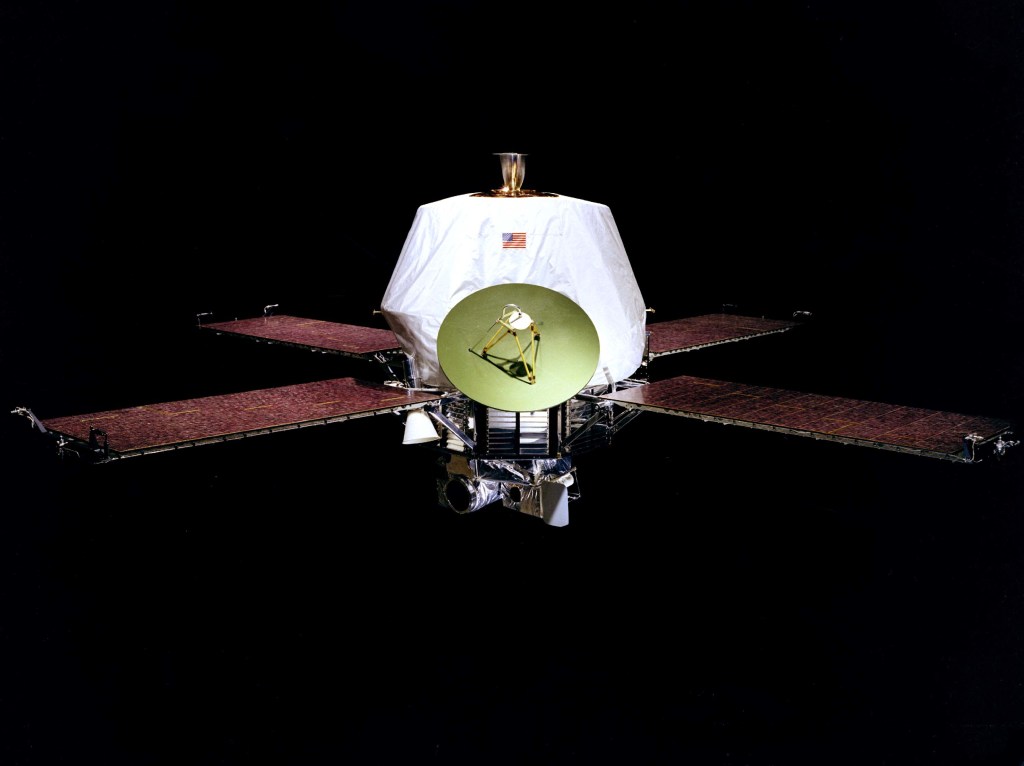
An earlier post noted the anniversary of NASA’s Mariner 9 spacecraft to Mars, launched on May 30, 1971, but what about Mariner 8? What happened to that Mars bound spacecraft?
Both Mariner 8 and 9 we developed together so one could replace the other if needed, which was pretty smart. The Russians did the same thing with their first trip to Mars in 1971, successfully sending Mars 2 (launched May 19) and Mars 3 (launched May 28).
Mariner 8 was supposed to be the first U.S. spacecraft to orbit Mars. It was launched on May 8, 1971 but never achieved Earth orbit due to a launch vehicle failure. Instead, it fell into the Atlantic Ocean.
Of the 10 Mariner missions, 7 were successfully took space craft to Mars, Venus, and Mercury. Unfortunately, like Mariner 8, Mariner 1 failed after launch. Fortunately, like Mariner 9, Mariner 2 was a back up spacecraft that ensure mission success. Mariner 3 failed after launch because of a battery issue, but its double Mariner 4 was successful. Here are the 10 missions (you can find more about them here):
Mariner 1: Venus mission launched on July 22, 1962. — Failed
Mariner 2: Venus mission launched on August 27, 1962. — Success
Mariner 3: Mars mission launched on November 5, 1964. — Failed
Mariner 4: Mars mission launched on November 28, 1964. — Success
Mariner 5: Venus mission launched on June 14, 1967. — Success
Mariner 6: Mars mission launched on February 25, 1969. — Success
Mariner 7: Mars mission launched on February 25, 1969. — Success
Mariner 8: Mars mission launched on May 8, 1971. — Failed
Mariner 9: Mars mission launched on May 30, 1971. — Success
Mariner 10: Mercury and Venue mission launched on November 3, 1973. — Success
While three spacecraft failed, all of the missions were successful because of the redundancy built into the system. We do not seem to have such luxuries anymore, though NASA’s Mars Exploration Rover (MER) mission had two Mars rovers, Spirit and Opportunity, to increase the chances of success.
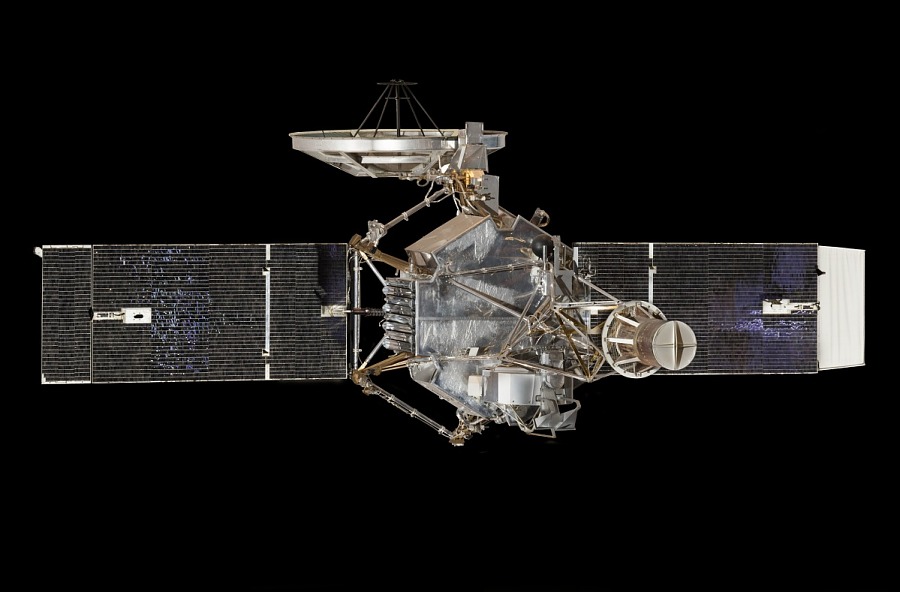
Image (Credit): Mariner 2 spacecraft. (Smithsonian National Air and Space Museum)
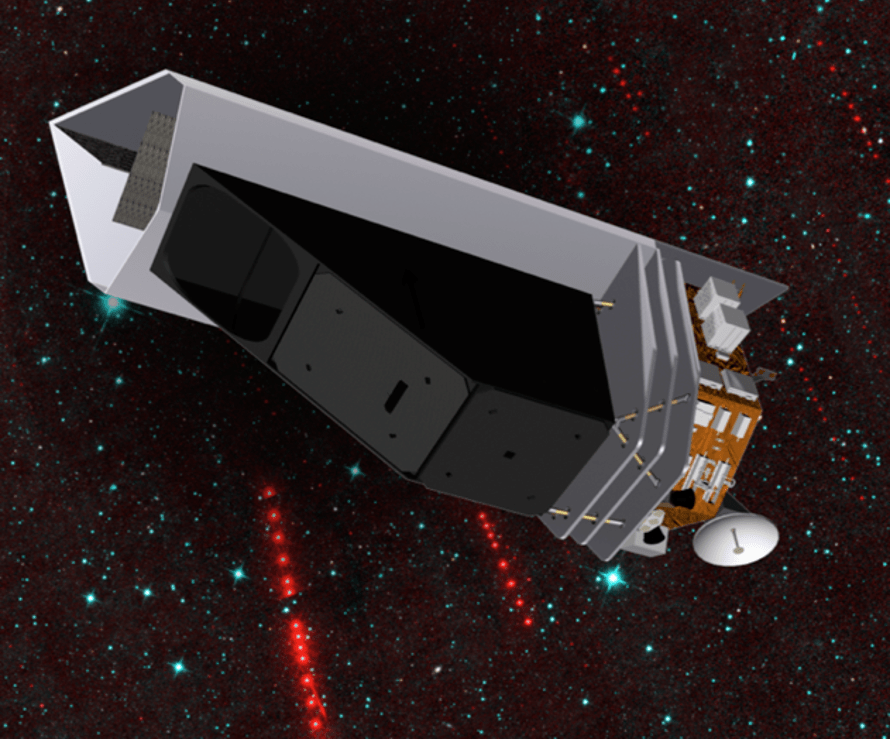
Image (Credit): he NEO Surveyor infrared space telescope is optimized for finding, tracking and characterizing potentially hazardous asteroids and comets. (NASA/JPL)
Members of the House Science Committee used a hearing about the planetary science decadal survey to criticize a proposal in NASA’s budget request to delay work on a space telescope to track near Earth objects (NEOs).
The Ingenuity Mars Helicopter’s black-and-white navigation camera has provided dramatic video of its record-breaking 25th flight, which took place on April 8. Covering a distance of 2,310 feet (704 meters) at a speed of 12 mph (5.5 meters per second), it was the Red Planet rotorcraft’s longest and fastest flight to date. (Ingenuity is currently preparing for its 29th flight.)
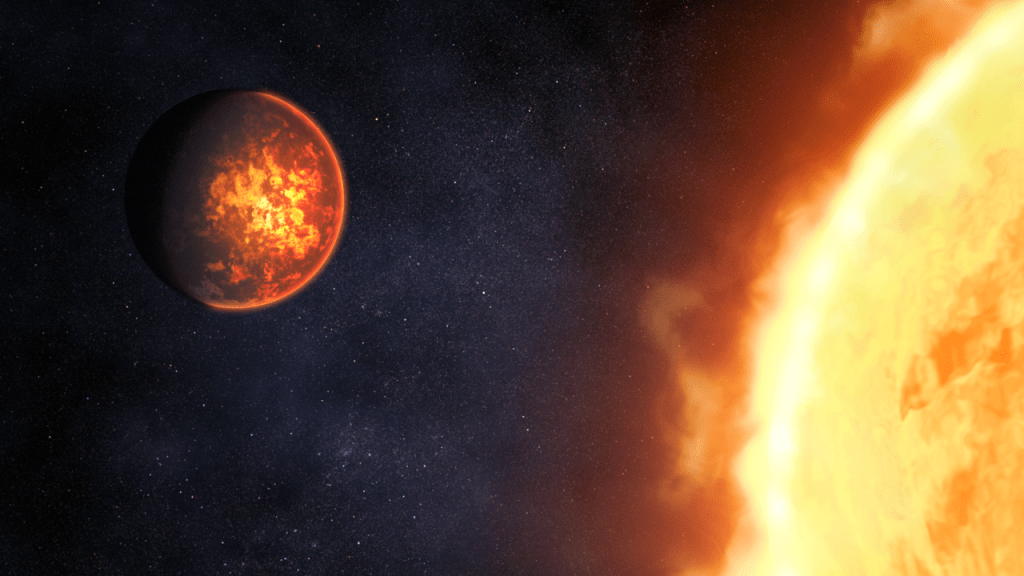
The James Webb Space Telescope plans to explore strange, new rocky worlds in unprecedented detail...Rocky planets are more difficult to sight than gas giants in current telescope technology, due to the smaller planets’ relative brightness next to a star, and their relatively tiny size. But Webb’s powerful mirror and deep-space location should allow it to examine two planets slightly larger than Earth, known as “super-Earths.”
Image (Credit): Illustration showing what exoplanet 55 Cancri e could look like, based on current understanding of the planet. (webbtelescope.org)
On this day in 1971, the Mariner 9 spacecraft was launched from Cape Canaveral Air Force Station, Florida. It would become the first spacecraft from Earth to orbit Mars (or any other planet). It arrived at Mars on November 14, 1971. The Soviets were also working on their own program, launching their two Mars-bound spacecraft even earlier in May, but both arrived at Mars after Mariner 9.
The Mariner 9 spacecraft successfully mapped 85 percent of the Martian surface and also sent back thousands of images detailing the Martian surface as well as the two Martian moon, Deimos and Phobos. NASA’s last contact with the spacecraft was on October 27, 1972. The spacecraft was expected to remain in orbit until 2020, when it would crash onto the Martian surface.
You can read more about the Mariner 9 mission here.
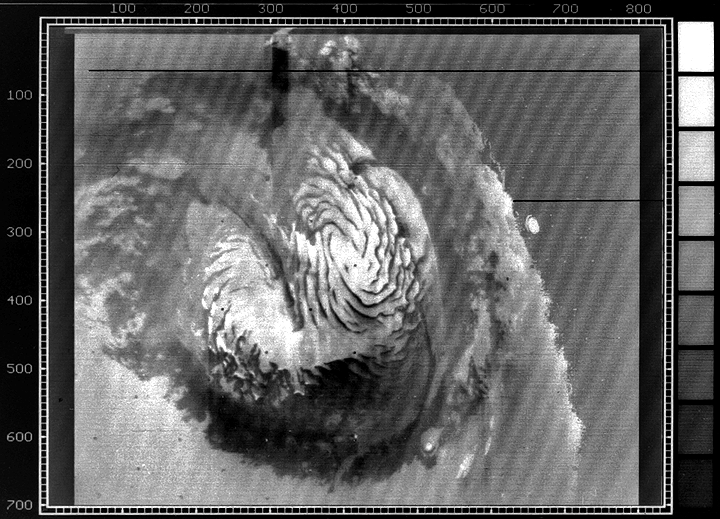
Image (Credit): Mariner 9 image of the north polar cap of Mars. The image was taken on 12 October 1972, about one-half Martian month after summer solstice, at which time the cap had reached its minimal extent. The cap is about 1000 kilometers across. (NASA)
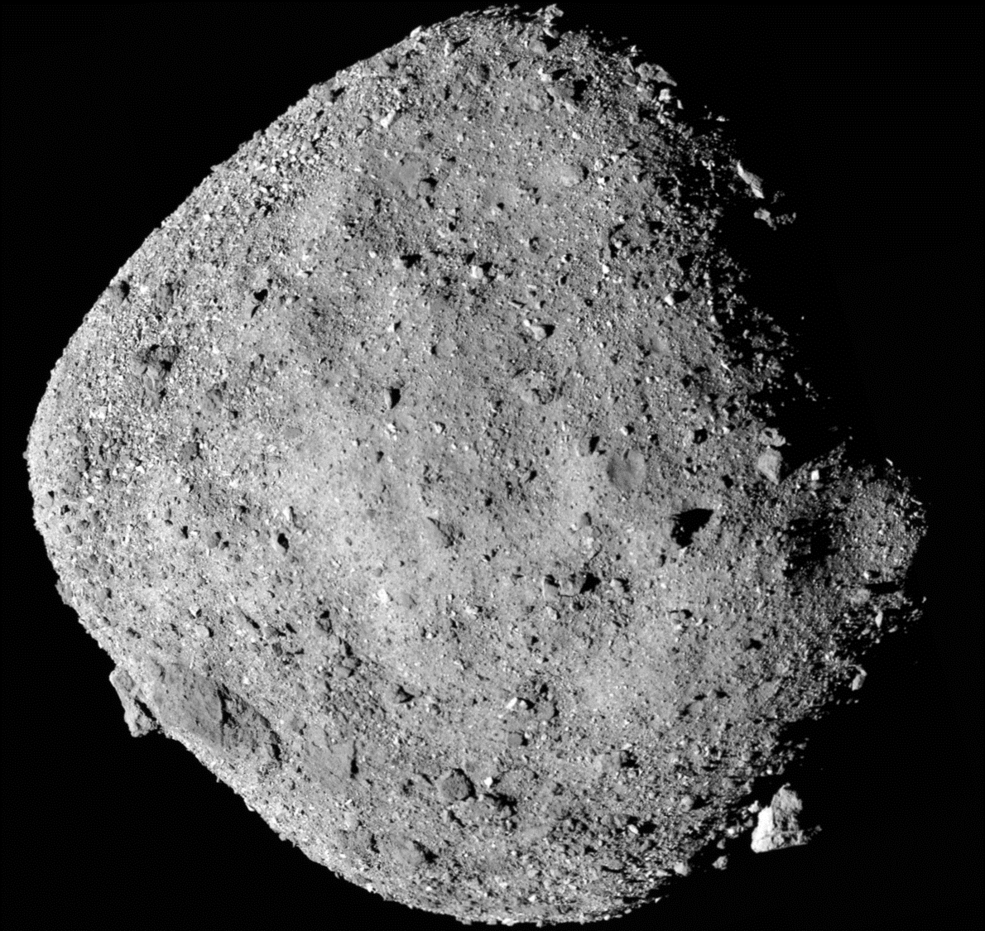
Image (Credit): Mosaic image of asteroid Bennu composed of 12 PolyCam images collected on Dec. 2, 2018 by the OSIRIS-REx spacecraft from a range of 15 miles. (NASA/Goddard/University of Arizona)
Back in 2020, NASA’s OSIRIS-REx spacecraft collected samples from asteroid Bennu, named after the ancient Egyptian mythological bird associated with the Sun, creation, and rebirth. These samples are scheduled to return to Earth until next year, but in the meantime there is already a lot that NASA knows about this asteroid. Some of the key points are listed below:
Bennu is over 4.5 billion years old.
Bennu is a “rubble-pile” asteroid, meaning it is rocky debris compressed by gravity.
Bennu is likely to be rich in platinum and gold compared to the average crust on Earth.
Between the years 2175 and 2199, the chance that Bennu will impact Earth is only 1-in-2,700.
You can tour the surface of Bennu by viewing a video produced by NASA’s Goddard Space Flight Center in Greenbelt, Maryland. Titled “Tour of Asteroid Bennu,” the film was featured in the SIGGRAPH Computer Animation Festival Electronic Theater. While it did not win any awards, it was still a great opportunity to share the mission with a wider audience.
Missions to planets and moons tend to get most of the attention, but asteroids can reveal plenty about the origins of our solar system. You can learn more about the OSIRIS-REx mission to Bennu here.
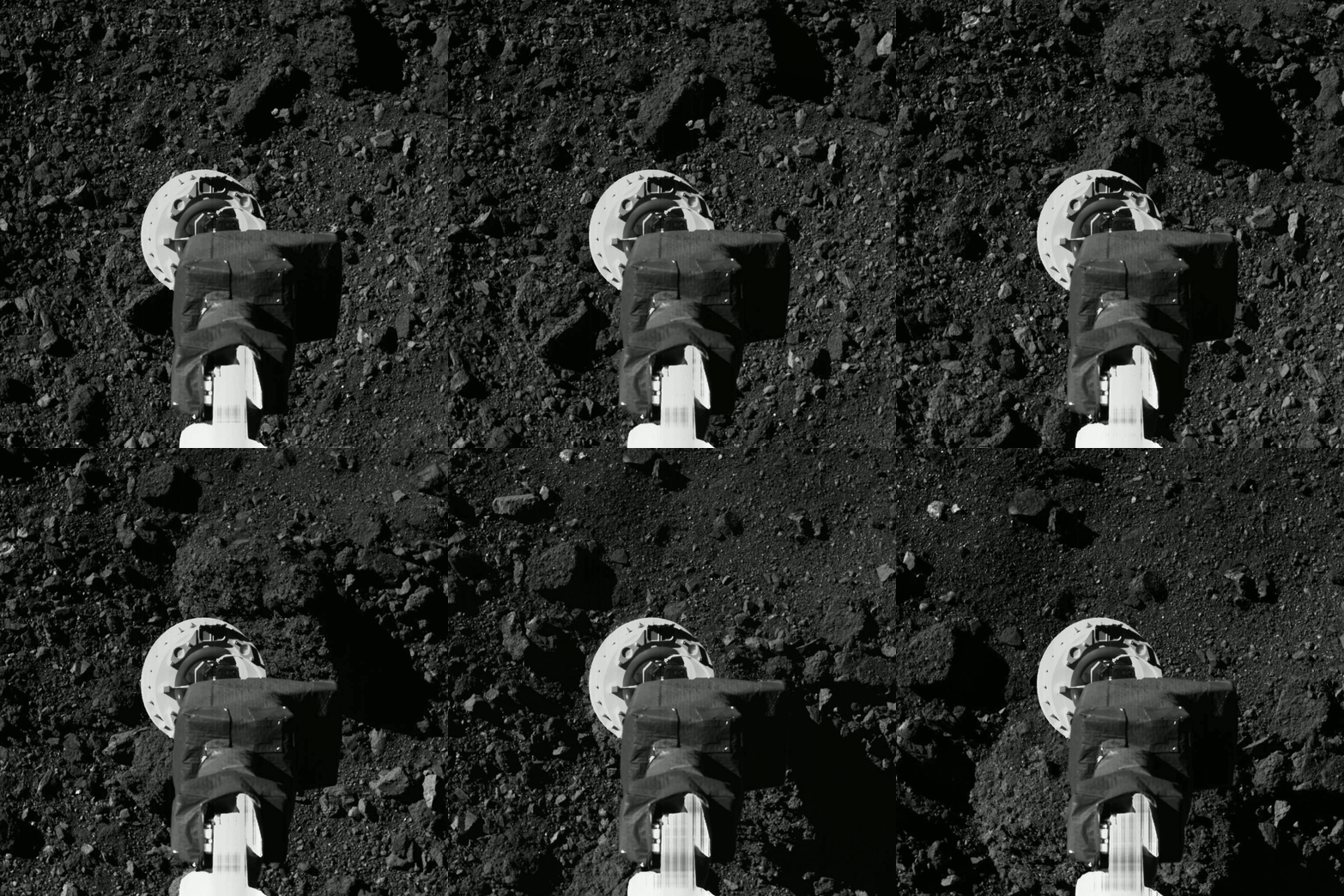
Image (Credit): Captured on Aug. 11, 2020 during the second rehearsal of the OSIRIS-REx mission’s sample collection event, this series of images shows the SamCam imager’s field of view as the NASA spacecraft approaches asteroid Bennu’s surface. (NASA/Goddard/University of Arizona)