Artemis III Has a Crew

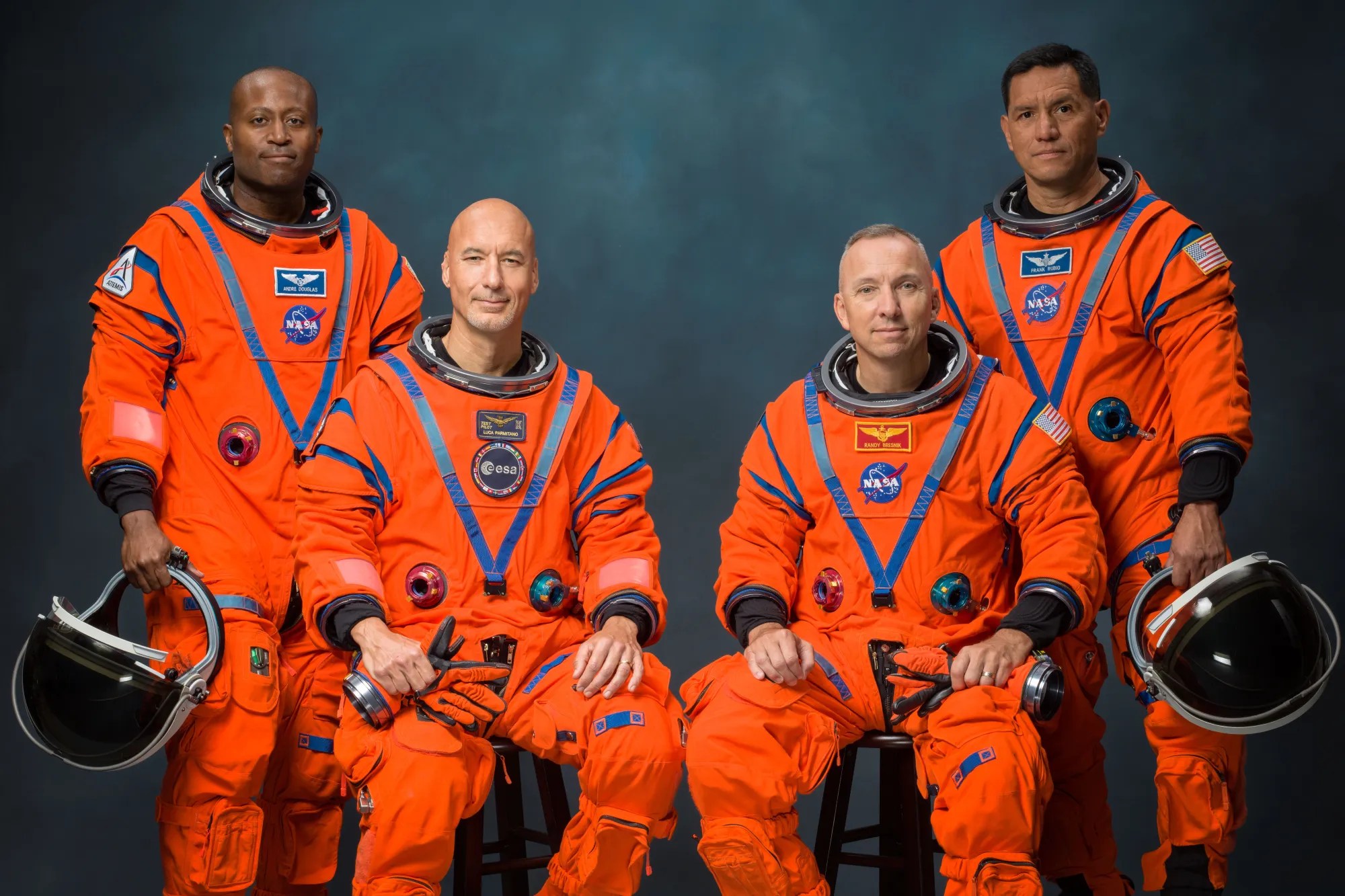
Image (Credit): The Artemis III crew members (from left: Andre Douglas, Luca Parmitano, Randy Bresnik, Frank Rubio). (NASA/Bill Stafford)

Earlier today NASA announced its new four-member crew for the next set of Artemis tests. The two week long Artemis III mission will test spacecraft in low Earth orbit in preparation for Artemis IV, which will entail an actual crewed mission to the surface of the Moon.

The new crew are three NASA astronauts and one European Space Agency (ESA) astronaut from Italy. NASA has a full profile of each crew member, but here are the basics:

NASA may have a crew, but does it have any partners that are really ready for a lunar landing?

To date, the only fully operational spacecraft is the Orion capsule, which will be sent aloft via the Space Launch System. Both SpaceX and Blue Origin plan to send up demonstration lunar landers that will not contain all of the necessary components for humans preparing for a Moon landing. This sounds a little dangerous given that the real reason for Artemis III is a dry-run in space. It sounds more like a dry-run for a dry-run, but NASA may not have time to complete a true test.

In additon to lunar lander delays, SpaceX is busy trying to make a fortune with its IPO, while Blue Origin is still licking its wounds after the recent explosion at Cape Canaveral.

These four astronauts may be the best news out of NASA for some time to come, so it may be best to raise a toast to the four of them and then simply hope for the best.

Space Stories: Nancy Roman Ahead of Schedule, ISS Leak Still a Problem, and US Grant Process Worries Space Scientists

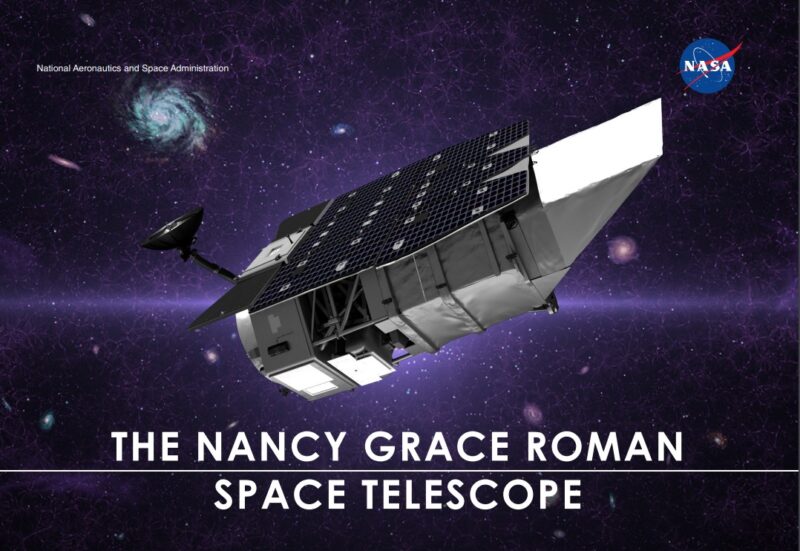
Image (Credit): Artist’s rendering of the Nancy Grace Roman Space Telescope. (NASA)

Here are some recent space-related stories.

—Techspot: “NASA’s Roman Space Telescope is Launching August 30, Eight Months Ahead of Schedule“

NASA is planning to launch its Nancy Grace Roman Space Telescope on August 30, a full eight months ahead of schedule and even earlier than the space agency’s previous target of September. Engineers at NASA’s Goddard Space Flight Center in Greenbelt, Maryland, are in the process of packing the telescope for its journey to Kennedy Space Center in Florida later this month. Upon arrival, it’ll go to the Payload Hazardous Servicing Facility to undergo a full post-travel inspection.

—Space News: “Astronauts Briefly Shelter in Dragon During ISS Leak Repair“

NASA instructed astronauts on the International Space Station to briefly shelter in a Dragon spacecraft June 5 as cosmonauts attempted to repair an air leak in a Russian module. Shortly after 9 a.m. Eastern, NASA Mission Control in Houston instructed the four members of Crew-12, the Crew Dragon mission that has been at the station since February, to shelter in that spacecraft. Joining them was NASA astronaut Chris Williams, who flew to the ISS last November on a Soyuz spacecraft.The move was prompted by a decision by Roscosmos to have cosmonauts Sergey Kud-Sverchkov and Sergei Mikaev attempt to repair an air leak in a portion of the Zvezda service module known as PrK. That is a vestibule that links a docking port with the rest of the module and has had a long-running, but small, air leak.

—Sky & Telescope: “Proposed U.S. Grant Funding Rules Spark Worry, Backlash in Astronomy“

On Friday, May 29th, the United States Office of Management and Budget (OMB) released a 412-page document rewriting how federal grants should be issued and overseen across all agencies. The changes to the procedures, which were previously altered in 2024 to make the grants process clearer, were sweeping, touching on areas from international collaboration to academic publication costs. But the through line is made explicit: to align federal grant-making with “administration policies and priorities set by the President.” Immediately, it has sparked backlash from astronomers and planetary scientists, who see grave challenges for science if the rules come to fruition.

Note: Here is the podcast version of this post.

The Next Space Race May Blind Astronomers and the Rest of Us

Credit: Pixabay

While most of the attention regarding the space race with China revolves around the Moon at the moment, another space race is brewing that will become a big problem for astronomers if the race is successful. This second race is one to place data centers into orbit.

Over the years, astronomers have been expressing concerns about the impact that thousands of satellites on ground-based telescope. However, that is nothing compared to the number of data center satellites being planned for the future. SpaceX has already requested permission from the Federal Communications Commission for at least one million data center satellites. And other US companies such as Google with its Project Suncatcher, as well as the Chinese with similar investments, have their own plans to toss data centers into orbit.

We are fast-tracking ourselves towards the world of Disney’s WALL-E where we have polluted the night sky beyond recognition. Is this really necessary? Do we have other options?

Fortunately, we do, including Google’s planned data center in Texas, which will power itself from renewable energy. Another example is China’s efforts to put data centers in the ocean. Like the night sky, the ocean is a big place with a lot of possibilities if done right.

AI has already brought up enough concerns pertaining to childhood health, jobs for new graduates, and even a real armed Skynet determining its own targets. Do we really need to also surround the planet with more than a million satellites feeding into this questionable new world?

It may be time to take some of these decisions away from the stock market and ponder them for a few a little longer. Even Elon Musk was expressing such concerns in 2023. He signed a letter from the Future of Humanity Institute that stated:

Should we let machines flood our information channels with propaganda and untruth? Should we automate away all the jobs, including the fulfilling ones? Should we develop nonhuman minds that might eventually outnumber, outsmart, obsolete and replace us? Should we risk loss of control of our civilization? Such decisions must not be delegated to unelected tech leaders.

That was a smart idea then, and it makes even more sense today before we go crazy spending billions, if not trillions, or dollars on a new space race that re-energizes a questionable technology while blotting out the night sky for those who are willing to look outside of our planetary bubble to learn from the universe.

It was B. F. Skinner who said:

The real problem is not whether machines think but whether men do.

Sci-Fi Stories: Grogu Goes Down, Spielberg’s Summer of Nonfiction Science Fiction, and Star City Shines

Credit: Lucasfilm Ltd.

Here are a few sci-fi stories of interest.

—Forbes: “‘Mandalorian And Grogu’ Tumbles Out Of Top 5 After 61% Drop At Box Office“

Star Wars: The Mandalorian and Grogu” is struggling at the box office, dropping 61% in its third weekend and falling out of the domestic top five. The Jon Favreau-directed film had a soft opening, earning $98 million over Memorial Day, less than 2018’s Solo, and suffered a 69% second-weekend drop. Now projected for $9.5 million, its domestic total nears $155.3 million against a $165 million production budget. It faces stiff competition from new releases like “Scary Movie” and “Masters of the Universe.” Furthermore, low-budget indie hits like A24’s “Backrooms” and Focus Features’ “Obsession” are outperforming it, alongside a strong $22.1 million debut from YouTube’s “The Amazing Digital Circus.”

—Associated Press: “Steven Spielberg on His Faith in Alien Life, the Future of the Movies and the Power of Empathy“

“It’s my first film that will be considered science fiction that I do not consider to be science fiction,” Spielberg said in a recent interview. “It’s much more reflective of the world as it is evolving and discoveries that are being made as we speak.” Spielberg, at 79, is trying to revive and reconsider the alien wonder that’s long lingered in his mind, from “E.T.” to “War of the Worlds.” “Disclosure Day,” Spielberg’s first summer movie in a decade, is already being hailed as one of his best in years. But this time, Spielberg is testing whether he can conjure some of his trademark movie magic less with imagination than with conviction.

—Variety: “Apple TV’s ‘For All Mankind’ Spinoff ‘Star City’ Is a Flawless Alt-History Thriller: TV Review“

While the talk of space, science and ships orbits surround the narrative, “Star City” is riveting because of its characters. For fear of sabotage, death or something even worse, no one in Star City can reveal who they truly are. Instead, the audience is offered glimmers of the truth here and there, which act as puzzle pieces throughout the eight-episode first season. (Critics received five for review.) Cloaked in a gloomy gray tone coloring for a prison-like setting, “Star City” creators unveil not simply a stifling world, but one on the verge of consuming itself and its genius with tyranny and ghastly rigidity.

Space Quote: One Less Sentry Watching Mars

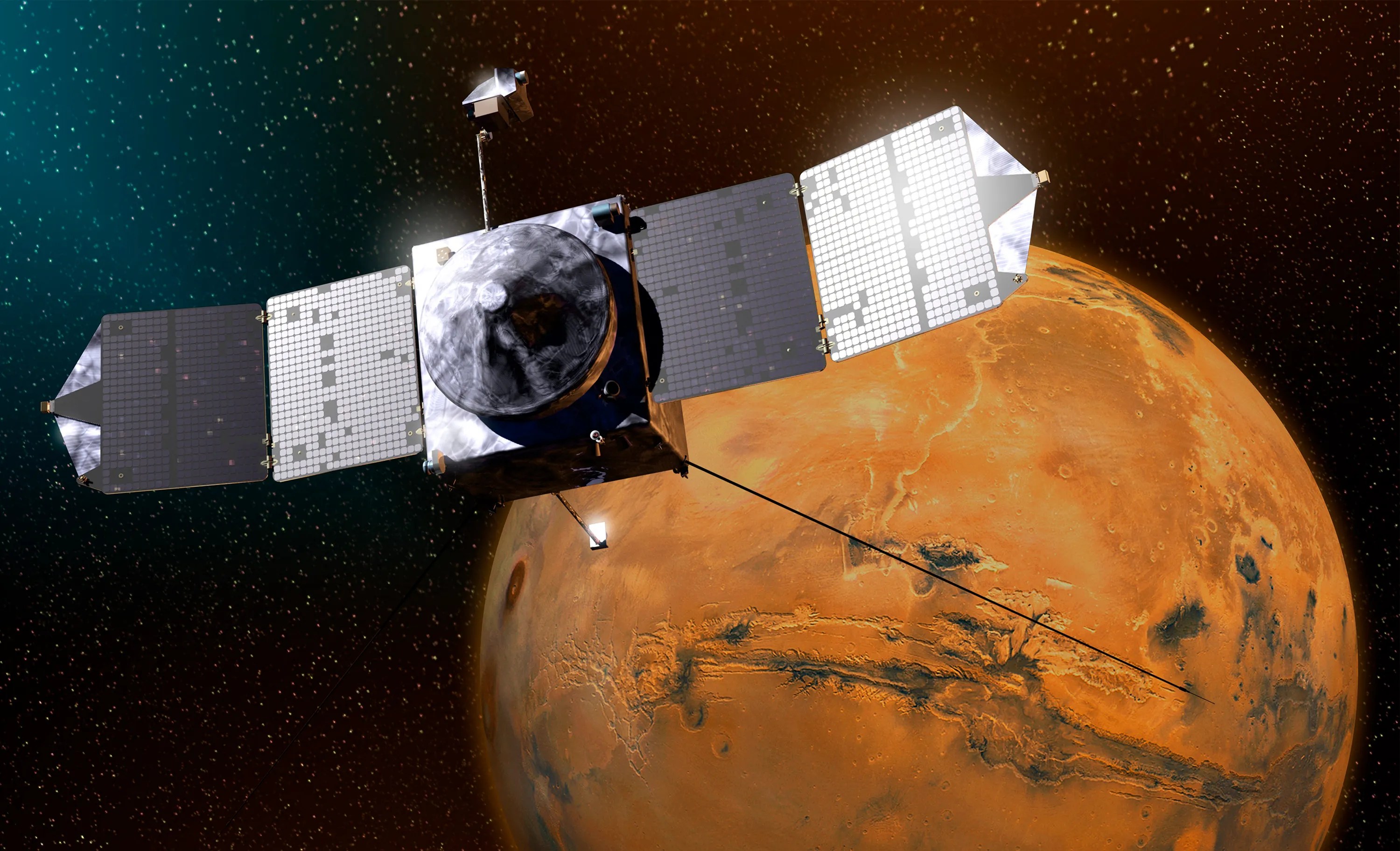
Image (Credit): Artist’s rendering of the MAVEN spacecraft orbiting Mars. (NASA/Goddard/University of Colorado/Laboratory for Atmospheric and Space Physics)

“The MAVEN mission has truly advanced our understanding of the Martian atmosphere and evolution. This dataset has had a tremendous impact on the field…Our science team is exceptionally proud of all of these amazing discoveries.”

–Comment by Shannon Curry, MAVEN’s principal investigator and a researcher at the Laboratory for Atmospheric and Space Physics at the University of Colorado Boulder, regarding the official end of the Mars Atmosphere and Volatile Evolution’s (MAVEN) 11-year mission. NASA lost contact with the spacecraft last December. You can read more about MAVEN’s accomplishments over the years at this NASA site.