
Geophysical Research Letters abstract of pre-print study findings:
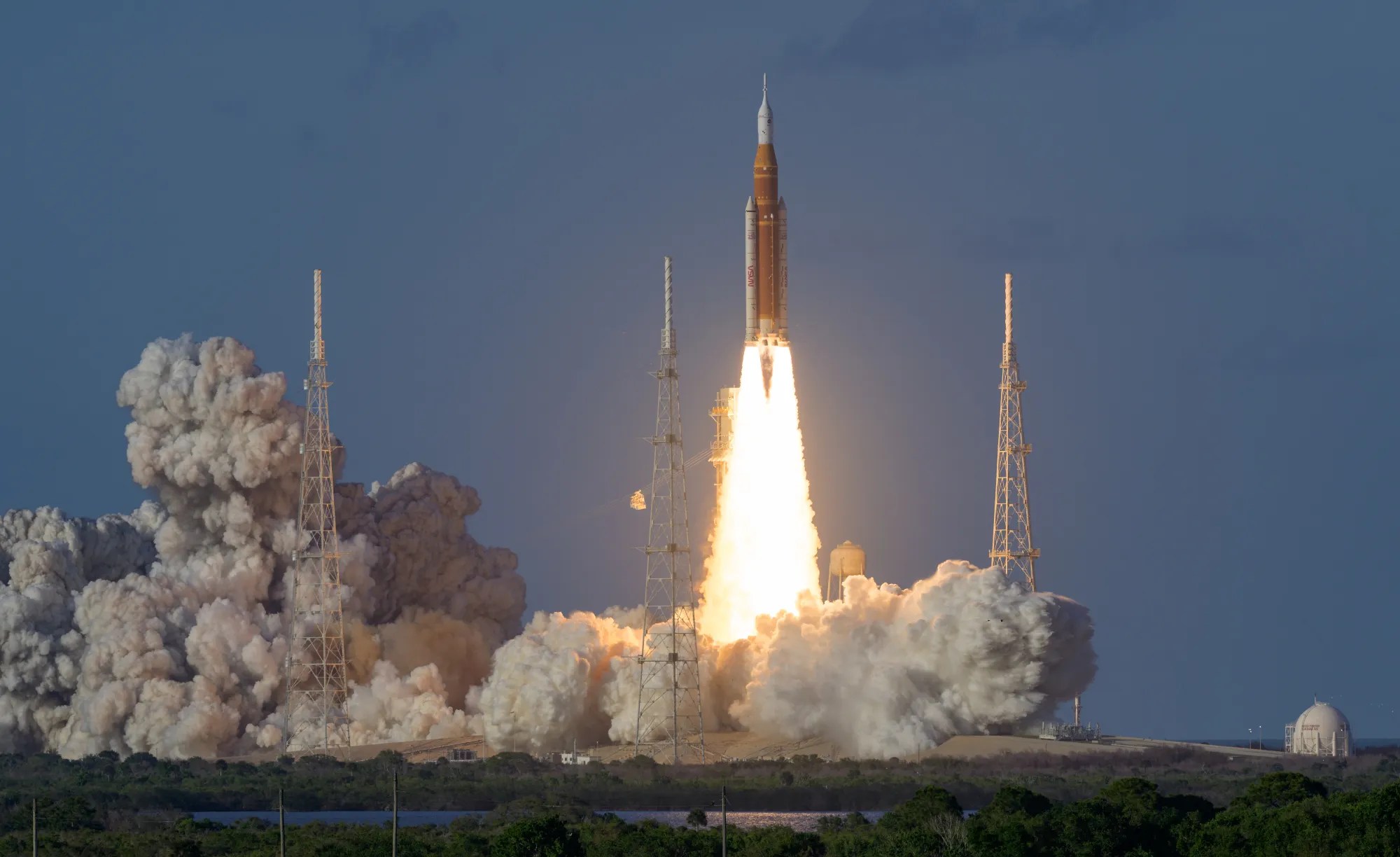
The total electron content observations during the Artemis-II Lunar mission revealed rare reoccurring ionospheric perturbations at three different occasions. The launch at 2235 UT on 1 April 2026 from Kennedy Space Center, USA, induced shock-acoustic and gravity wave modulations. Subsequent Apogee Raise Burn performed at 0023 UT on 2 April triggered shock waves and unprecedented large-scale disturbances that elongated ~50° longitude across North America. The third orbital maneuver conducted as part of trans-Lunar injection burn at 2349 UT on 2 April, about 25 hours after liftoff, again yielded similar, but weaker large-scale ionospheric perturbations. This is the first time a single space mission produced three instances of ionospheric disturbances over the same region during successive orbit maneuvers. The estimated spacecraft trajectory shows that the two orbit maneuvers were initiated at the perigee altitude of 185 km over the longitudes of 120°W-105°W, directly depositing exhaust burn energy within the ionosphere.
Citation: Choi, J., Lin, C., Chou, M. et al. Rare reoccurring ionosphere disturbances observed during the Artemis-II Lunar flyby voyage. Geophys. Res. Lett..
DOI: https://essopenarchive.org/doi/full/10.22541/essoar.15006449/v1
Study-related stories:
Space.com – “NASA’s Artemis II Moon Launch Tore a Hole in Earth’s Upper Atmosphere So Huge It Disrupted GPS Signals”
USA Today – “Artemis II Moon Launch Was So Powerful It Punched a Hole in Atmosphere”
Sacramento Bee – “Lunar Rocket Launch Tore ‘Hole’ in Earth’s Atmosphere, Disrupted GPS, Study Finds”

