Television: Star Trek’s Starfleet Academy is a Solid Addition to the Franchise

Credit: Paramount+

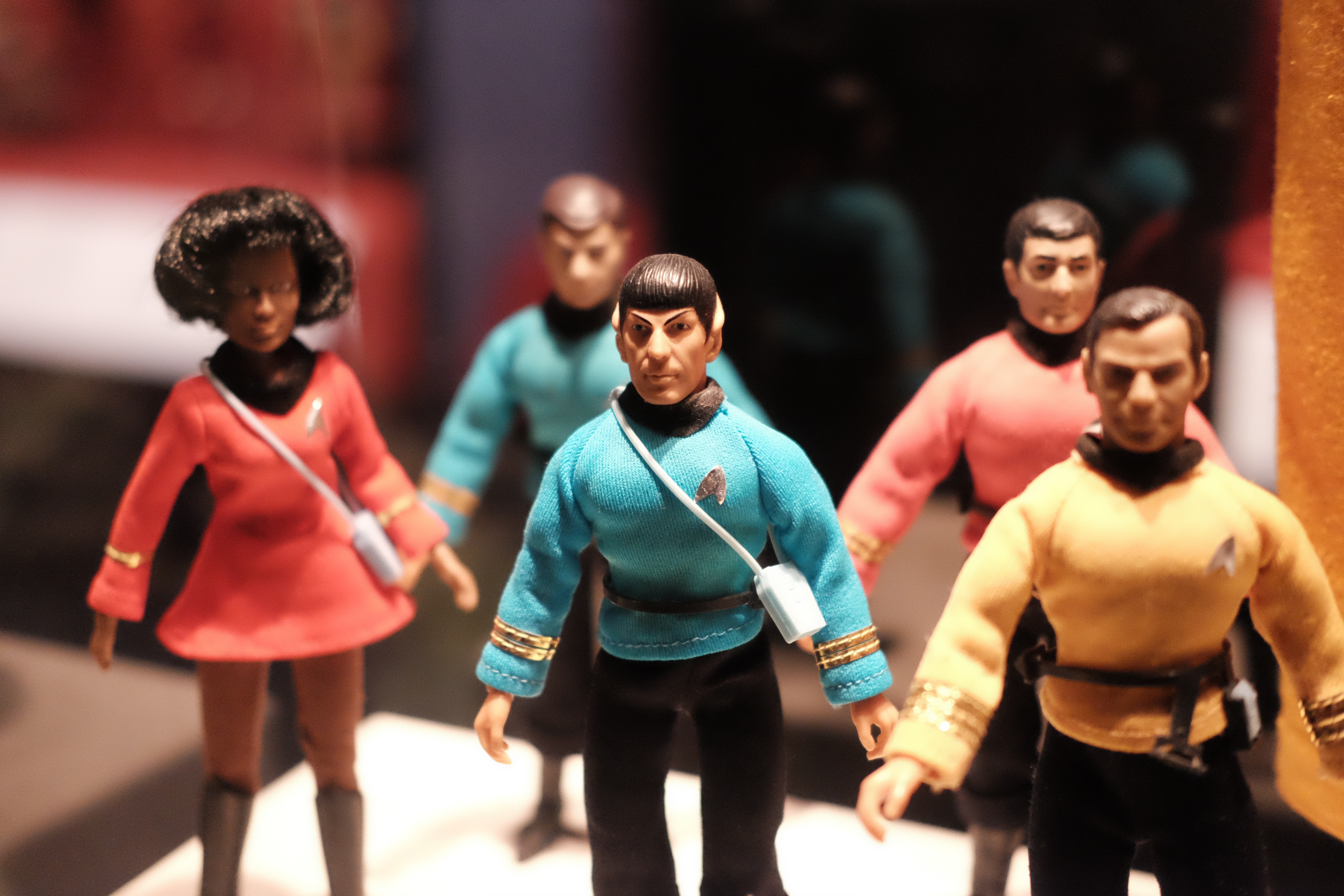
I am happy to say that the creators of Star Trek have done it again with the latest series Star Trek: Starfleet Academy. It is a worthy addition to that ongoing saga.

The first six episodes of the first season form a good story arc that starts with Nahla Ake (Holly Hunter) and Nus Braka (Paul Giamatti) coming together in the initial episode, then leaves aside their drama for four episodes, and finally brings them back together for a memorable sixth episode. In the meantime, we watch the new cadets grow together at the academy under the tutelage of Nahla Ake, chancellor of Starfleet Academy.

In terms of what works versus what needs more work, let’s start with the positives:

  • Nahla Ake is a very likable and long-living character (half-Lanthanite) who becomes the mother-like figure overseeing cadet Caleb Mir. She has a cat-like way of sitting and a dog-like loyalty to the academy mission that make her the glue of the show.
  • The mix of instructors and cadets keep the show interesting, be it our well known Doctor from Star Trek: Voyager or the transformative Khionian cadet Darem Reymi. We have time to learn many of the character’s origin stories, including why a holographic doctor ages. This gives the show greater depth as we uncover the diversity of the academy.
  • The show has a light touch with plenty of humor. My favorite character is probably Lura Thok, who is a Klingon/Jem’Hadar serving as first officer of the starship Athena. She is married to Tig Notaro’s Jett Reno. Lura Thok is that ever-present drill sergeant who seems to terrorize the cadets while amusing the chancellor. She adds the perfect amount of levity to the show.

In terms of the negatives, there are quite a few, but none of them permanently hurt my overall impression of the show:

  • In the first episode, Paul Giamatti’s Nus Braka, part-Klingon and part-Tellarite, was a little over the top. I know the first episode has to capture the viewer’s attention, but Giamatti was chewing the scenery with his performance. He may have been having fun, but he was channeling Jack Nicholson from The Shining. It was good that he disappeared for a while to let the other characters shine.
  • Starfleet Academy looks more like a Miami mall than a Federation facility. And when you add in the annoying robots scurrying around the corridors as well as the floating traffic jams that reminded me of the Star Wars planet of Coruscant, it was all a little overwhelming as well as silly.
  • The fact that language has not changed in 1,000 years is odd. The cadets still say “bite me” while Nus Braka is stating “payback is a bitch.” Maybe this is how you attract new viewers, but does Star Trek really need to sound like every other teenage show?

Overall, it is a well done and expensive-appearing television series that breathes life back into Star Trek, thereby hopefully creating new Trekkies. This is something that the Star Wars franchise has tried as well, but almost all of the spin-offs leaned too heavily on key characters from the past or did a horrible job representing teens of the future (think of that Boba Fett series). That may be why Star Trek has two strong television series on the air this year and Star Wars apparently has only the second season of Ahsoka, which is a weak imitation of the original movies, and that’s saying a lot given that the last three Star Wars movies were a weak imitation of the first three movies.

I am glad we have at least one more season of Starfleet Academy ahead of us, and I expect many more it the creators can maintain the quality (and resolve some of the bumps) that we see in the first six episodes.

Space Quote: New Artemis Mission Added Before Moon Landing

“You don’t go from one uncrewed launch of SLS [Artemis I], wait three years, go around the Moon [Artemis II], wait three years and land on it…I would certainly much rather have the astronauts testing out the integrated systems of the lander and Orion in low-Earth orbit than on the Moon.”

-Statement by NASA Administrator Jared Isaacman regarding the addition of one more Artemis mission – let’s call it Artemis III-A – to test out the lunar lander before the crew actually heads to the Moon – or Artemis III-B. The Moon landing itself is still planned for 2028, but we know how these dates continue to slip. SpaceX with its Starship issues is not making it any easier. Just like SpaceX saved the Starliner crew from a problem Boeing capsule, Blue Origin may eventually save the Artemis astronauts from a problem SpaceX rocket.

Note: Actually, I think it will just be an uncrewed Artemis III mission followed by the first Moon landing as Artemis IV, but for some reason I think we will be adding even more Roman numerals before we hit the Moon. Maybe we will get to X, Musk’s favorite letter, before we approach the Moon.

Astronomy Question: Operation Morning Light

Credit: Image by Luca Finardi from Pixabay

Multiple Choice: In terms of space history, what was Operation Morning Light?

A. An incident involving a failed rocket motor on the Soviet Union’s Mir space station.
B. The first commercial aircraft to communicate with a NASA satellite.
C. A commercial effort to build a suborbital reusable manned spacecraft.
D. A falling Soviet satellite that almost created a nuclear crisis.

Take a guess and then check your answer by going to the “Astronomy Question Answer Sheet” page.

Pic of the Week: Annular Solar Eclipse Over Antarctica

Image (Credit): The’ solar eclipse as seen from the Concordia research station in Antarctica on February 17, 2026. (ESA/IPEV/PNRA-A. Traverso)

This week’s image comes from the European Space Agency (ESA). It shows the “Ring of Fire” solar eclipse earlier this month from Antarctica. It was captured over the French and Italian Concordia research station.

Here is more from ESA on this image and the Concordia research station:

Peaking at 19:47 local time (12:47 CET), the Moon passed directly in front of the Sun’s centre, leaving only a thin, glowing annulus of sunlight visible. Astronomers call this moment annularity, and it lasted just two minutes, though the full partial eclipse spanned around two hours…Concordia sits 1100 km inland at an altitude of 3200 m. It is currently summer at the station: today, the Sun stayed above the horizon for nearly 20 hours, with temperatures reaching a comparatively mild –29 °C. But soon the light will fade: from May to August, the Sun will not rise at all, plunging the station into four months of continuous darkness where temperatures can fall below –80 °C. During this polar winter, the crew must live in complete isolation and full autonomy.

Now We Know the Rest of the Story about that ISS Medical Emergency

Image (Credit): An earlier photo of NASA astronaut Edward Michael “Mike” Fincke. (European Space Agency)

While NASA had kept it quiet for a while, we now know that the medical evacuation of Crew-11 from the International Space Station (ISS) last month related to NASA astronaut Mike Fincke (age 58).

While we still do not know the underlying medical condition, and maybe never will, it appears Fincke is still recovering given that he has stated:

I’m doing very well and continuing standard post-flight reconditioning at NASA’s Johnson Space Center in Houston. Spaceflight is an incredible privilege, and sometimes it reminds us just how human we are…Thank you all for your support.

It is good that he reminds us of human frailty as we send manned spacecraft to the Moon again, while also contemplating the daunting task of sending humans to Mars.

We were reminded of human frailty again this past weekend when a US Navy sub had to resurface near Greenland because of crew member’s medical condition. A submarine submerged for months at a time is probably as close as you will get to the conditions and isolation of a spacecraft going to Mars.

Note: An interesting fact about Mike Fincke is that he appeared as a guest star on the last episode of Star Trek: Enterprise in 2025. He played the part of Lt. M. Fincke.