Mission Possible, But Not Yet

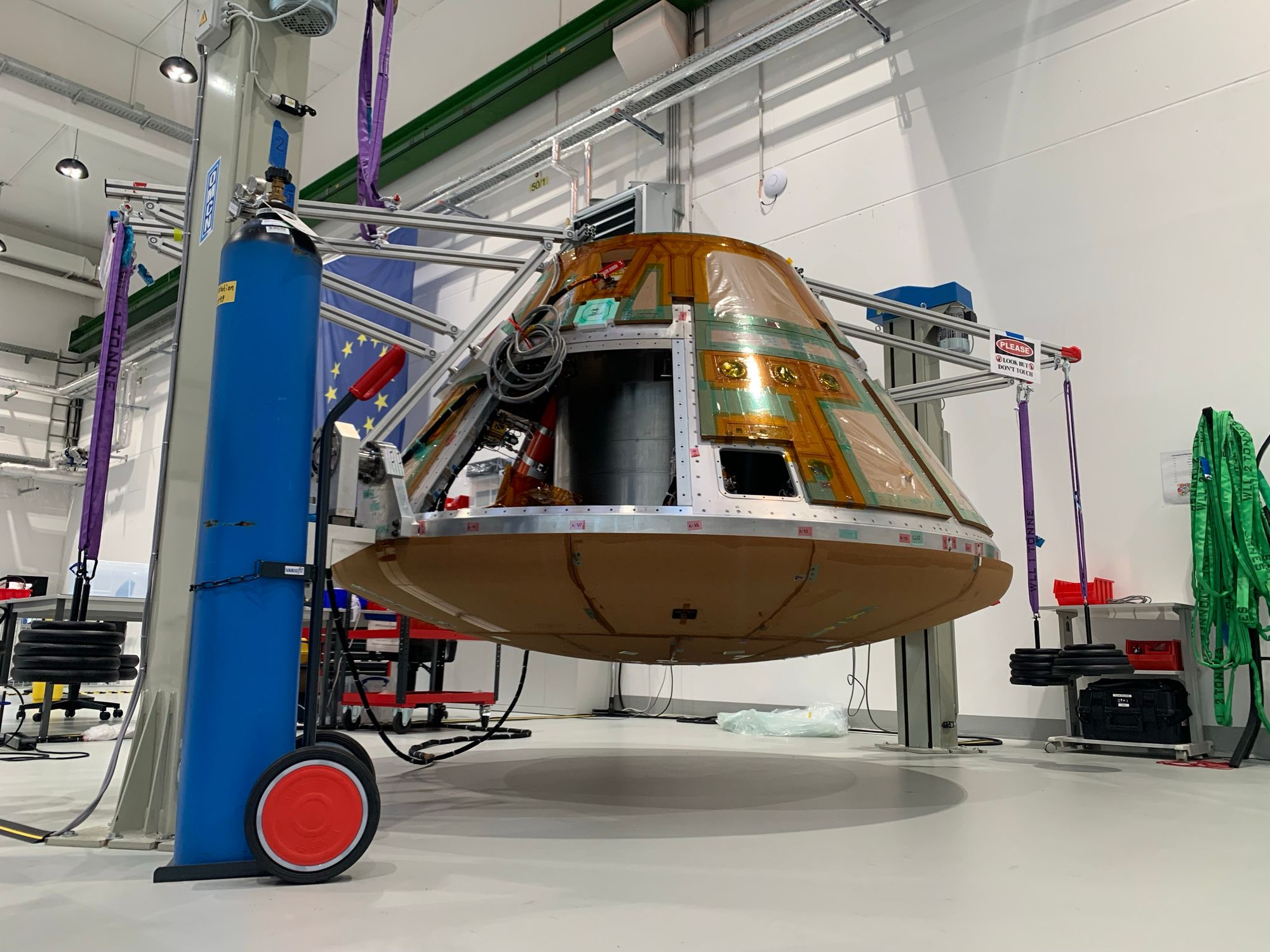
Image (Credit): The Mission Possible vehicle during construction. (The Exploration Company)

A new European space company came close to success with its space capsule early this week until it had problems with reentry. The Exploration Company, discussing its Mission Possible vehicle, had this to say:

The capsule was launched successfully, powered the payloads nominally in-orbit, stabilized itself after separation with the launcher, reentered and reestablished communication after black out…We are still investigating the root causes and will share more information soon. We apologize to all our clients who entrusted us with their payloads.

The Mission Possible capsule was expected to complete the following tasks:

  • Phase 1: Separation from the Launcher
  • Phase 2: Stabilizing the Capsule and Putting its Heatshield Forward
  • Phase 3: Atmospheric Re-entry
  • Phase 4: Parachute Deployment and Descent
  • Phase 5: Splashdown and Recovery

The problem appears to be related to the parachute deployment in Phase 4.

Launched into space aboard a SpaceX Falcon 9 rocket, the European company was preparing the way for its planned Nyx capsule. With the Nyx capsule, the company hopes to carve out a place for itself in the space cargo business – first in low-Earth orbit and later between the Earth and the Moon.

In an earlier press release, the company outlined its European roots:

Germany, Munich:Core of spacecraft avionics, power systems, and flight software. Also, a leader in additive manufacturing.
France, Bordeaux: Specializing in propulsion systems, reentry phase, thermal engineering, system engineering, and mission safety, also hosts the main control center.
Italy, Turin: Home to the babckup control center, docking and other complex mechanisms, life support system and high-thrust engine turbomachinery.
Luxembourg, opening in 2025: Dedicated to cryogenic refuelling, a critical development for deep-space missions.

This bold European company’s partial success should pave the way for more attempts and contribute to a greater European presence in the space industry.

The Recently Created iSpace Crater Has Been Spotted

Image (Credit): The arrow indicates the impact site for ispace’s Resilience lunar lander, as seen by the Lunar Reconnaissance Orbiter Camera on June 11, 2025. (NASA/Goddard/Arizona State University)

It doesn’t look like much, but NASA’s Lunar Reconnaissance Orbiter recently spotted the small crater made by the crashed ispace lunar lander named Resilience. The Japanese lander crashed on the Moon’s surface earlier this month after the company’s second try at a lunar landing.

The Moon is littered with debris and pockmarks from various successful and failed missions. The Apollo crew alone left enormous amounts of trash, debris, and space equipment scattered around the Moon. The Russians also left quite a bit of space equipment on the Moon many years ago, as well as its most recent Luna-25 mission, which crash-landed.

We can only hope that the Artemis mission will soon enough be adding to the equipment on the Moon without the drama of crash landings.

Pic of the Week: Mars or Bust?

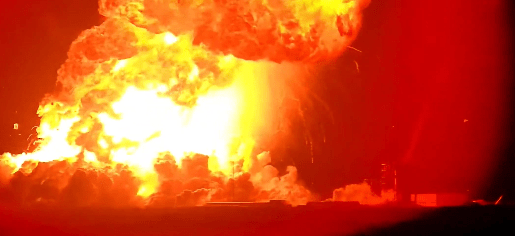
Image (Credit): The explosion of a Starship rocket during testing at the Brownsville, Texas Starbase on June 18, 2025. (LabPadre Space)

As shown in the image above, SpaceX lost one of its Starships yesterday in a massive explosion at the Brownsville, Texas Starbase, making the Moon and Mars seem even farther away. Fortunately, no one was injured during this failed test firing of the Starship 36 rocket engines.

We should expect some problems along the way, but the trend is going backwards for Mr. Musk.

In a press release, SpaceX stated:

Engineering teams are actively investigating the incident and will follow established procedures to determine root cause. Initial analysis indicates the potential failure of a pressurized tank known as a COPV, or composite overwrapped pressure vessel, containing gaseous nitrogen in Starship’s nosecone area, but the full data review is ongoing. There is no commonality between the COPVs used on Starship and SpaceX’s Falcon rockets.

In separate comments, Mr. Musk initially stated:

Just a scratch.

Yes, the scratch heard round the world.

Space Quote: ISS is Closed to Visitors at the Moment

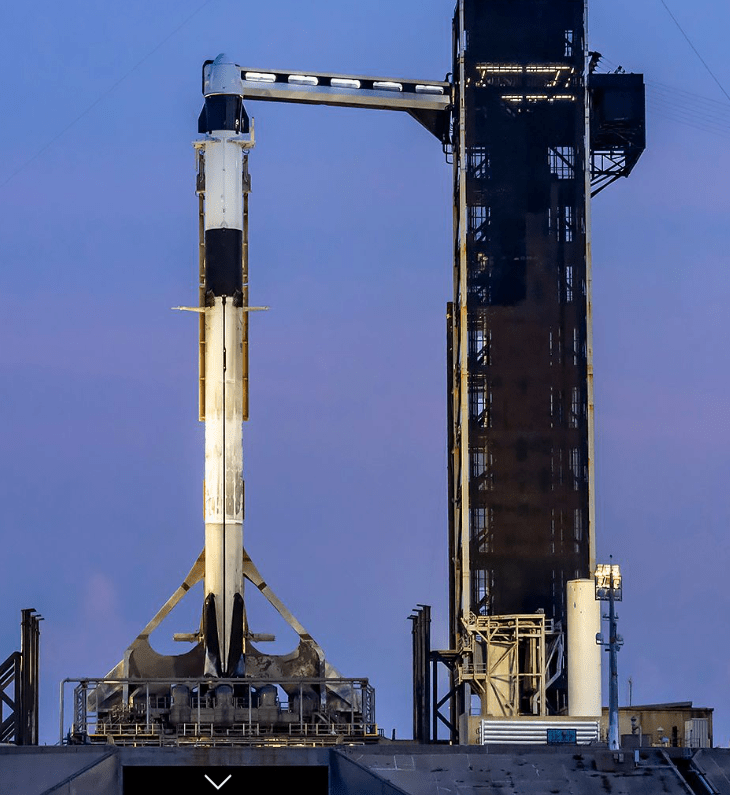
Image (Credit): Falcon 9 rocket on the lauch pad with Axiom Space’s Axiom Mission 4. (SpaceX)

“NASA and Axiom Space are postponing the launch of Axiom Mission 4 to the International Space Station. As part of an ongoing investigation, NASA is working with Roscosmos to understand a new pressure signature, after the recent post-repair effort in the aft most segment of the International Space Station’s Zvezda service module.”

–Statement by NASA regarding an leak in the Russian section of the International Space Station (ISS) that has yet to be resolved. This may slow down some of the space tourism to the site, such as the already delayed Axiom Mission, but it is more important to get this right rather than risk additional lives on the station. Axiom Space stated that the launch of the mission will be no earlier than June 19.

What are NASA’s Plans for Starliner?

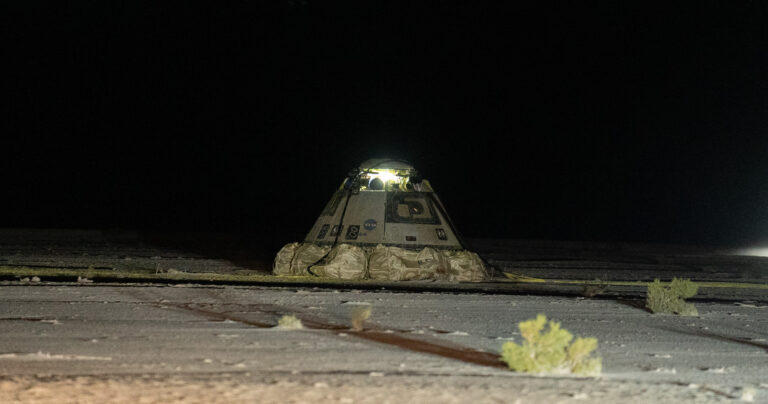
Image (Credit): Boeing’s Starliner safely on the ground last September after returning from the ISS without its crew. (Boeing)

It was this time last year – June 5th to be exact – that Boeing’s Starliner spacecraft was launched aboard a United Launch Alliance Atlas V rocket towards the International Space Station (ISS). Hopes were high, but then things started to unravel.

So where do things stand now, particularly with the new concerns about SpaceX?

NASA is saying very little. A USA Today story from last week stated the newspaper was told that NASA

…is assessing the earliest potential for a Starliner flight to the International Space Station in early 2026.

Boeing is staying pretty quiet on its Starliner mission update website. It has not posted anything on this page since September 7, 2024.

NASA was a little more open about events back in March, posting that the crew certification of the Starliner system was still underway, and stating:

Our investment in commercial crew transportation capabilities is providing the needed flexibility to operate in space as safely as possible and respond to changes quickly when they arise. NASA is seeing the commitment from Boeing to adding the Starliner system to the nation’s crew transportation base.

We may need a few more statements from NASA addressing this “needed flexibility,” while also offering up alternatives to the SpaceX monopoly. That is, an alternative that does not include the Russians saving us, though it could come to that in an emergency.