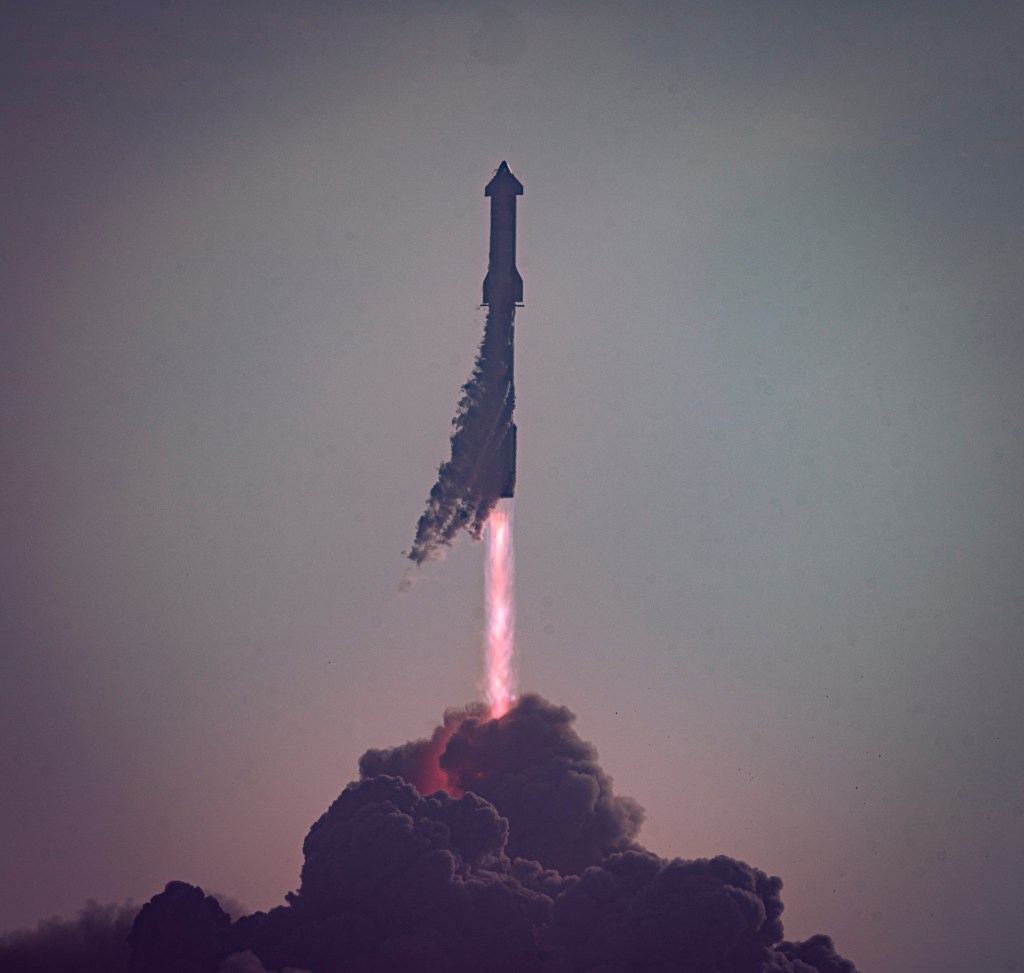
Image (Credit): The Starship before the “rapid unscheduled disassembly.” (SpaceX)
“As if the flight test was not exciting enough, Starship experienced a rapid unscheduled disassembly before stage separation.”
-Statement by SpaceX following the self-destruct of the Starship rocket after it started to spin out of control. What a way to put a spin on a malfunction. I am sensing the rapid unscheduled disassembly of the English language.
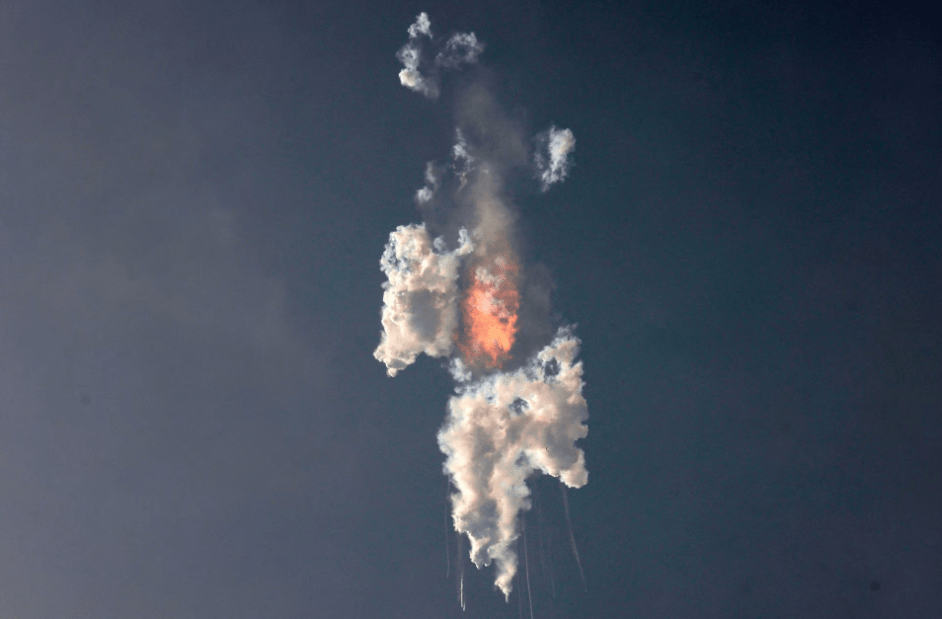
Image (Credit): Starship explosion after launch on April 20, 2023. (Rueters)
This week’s image is from today’s launch of the SpaceX Starship. The rocket experienced engine troubles and exploded about four minutes following the launch after reaching a height of 25 miles. The goal of this mission was to reach at least 90 miles.
At 8:33 a.m. CT, Starship successfully lifted off from the orbital launch pad for the first time. The vehicle cleared the pad and beach as Starship climbed to an apogee of ~39 km over the Gulf of Mexico – the highest of any Starship to-date. The vehicle experienced multiple engines out during the flight test, lost altitude, and began to tumble. The flight termination system was commanded on both the booster and ship. As is standard procedure, the pad and surrounding area was cleared well in advance of the test, and we expect the road and beach near the pad to remain closed until tomorrow.
With a test like this, success comes from what we learn, and we learned a tremendous amount about the vehicle and ground systems today that will help us improve on future flights of Starship.
Image (Credit): The SpaceX Starship at the launch pad. (SpaceX)
Today was supposed to be the day SpaceX flight tested the Starship from its facility in Texas, but less than 10 minutes before the launch a problem with the Super Heavy booster put everything on hold.
The Starship is a key part of NASA’s Artemis III mission to place astronauts on the Moon, so the tests are crucial to move that project forward.
SpaceX will need to wait at least 48 hours before attempting another launch.
Space company Virgin Orbit, owned by Richard Branson, has filed for bankruptcy after failing to raise sufficient funds to stay afloat. All of this follows a failed rocket launch back in January that set the company back.
Dan Hart, CEO of Virgin Orbit, stated in a company press release:
The team at Virgin Orbit has developed and brought into operation a new and innovative method of launching satellites into orbit, introducing new technology and managing great challenges and great risks along the way as we proved the system and performed several successful space flights – including successfully launching 33 satellites into their precise orbit. While we have taken great efforts to address our financial position and secure additional financing, we ultimately must do what is best for the business. We believe that the cutting-edge launch technology that this team has created will have wide appeal to buyers as we continue in the process to sell the Company. At this stage, we believe that the Chapter 11 process represents the best path forward to identify and finalize an efficient and value-maximizing sale.
It’s the sad end of a company that hoped to launch a “space revolution.” That task will now need to be taken up by others.