Another Delay, But Boeing Aims for Crewed Launch to ISS

Image (Credit): Artist’s rendering of Boeing’s Starliner capsule. (Boeing)

So what is the status of Boeing’s Starliner? Last May, an uncrewed Starliner capsule safely arrived at the International Space Station (ISS). So when will we see a crewed mission? The latest plan was for an April launch after some technical issues back in February.

However, in a tweet on Thursday, Kathy Lueders, who serves as NASA’s human spaceflight chief, stated:

Boeing We’re adjusting the @Space_Station schedule including the launch date for our Boeing Crew Flight Test as teams assess readiness and complete verification work. CFT now will launch following Axiom Mission 2 for optimized station operations…Target launch dates for Ax-2, still planned in early May, and Starliner will be shared soon. We’ll plan a media update after we have the space station schedule set. As always, we will fly when we are ready.

So first the private Ax-2 mission (also called space tourism) needs to occur, and then NASA can fit in another Starliner mission in May or later so that we have greater redundancy in our travel to the ISS, which was the purpose of NASA’s Commercial Crew Program. Given the issues with recent Russian Soyuz mission, this extra capacity cannot come soon enough. I just hope Starliner “technical issues” and not space tourism is responsible for this latest delay.

The Test of a 3D Rocket in Florida

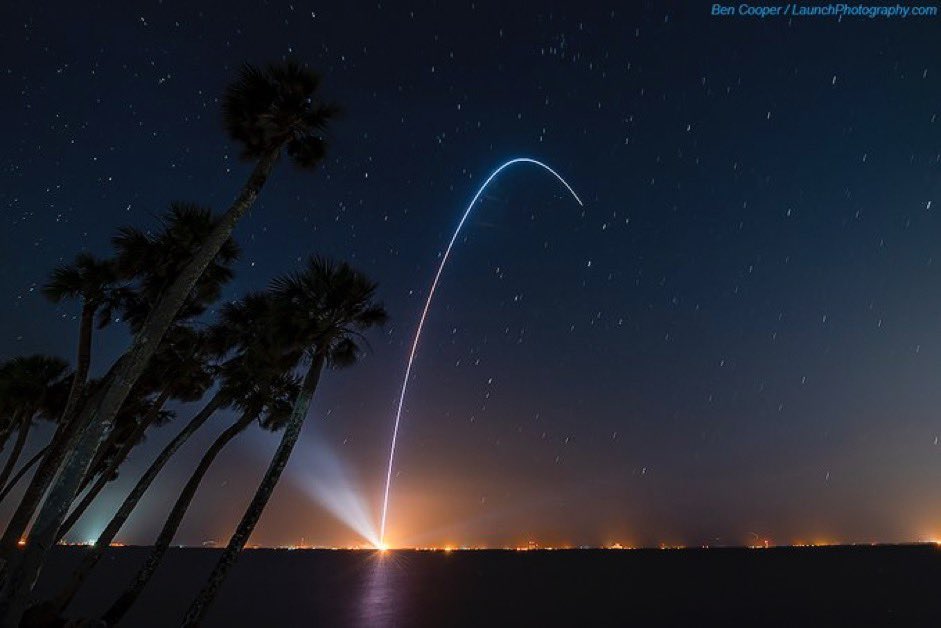
Image (Credit): Launch of the Terran-1 rocket launch from Cape Canaveral in Florida. (Relativity Space)

We have heard about the possibility of 3D printing on the Moon and even Mars someday to build habitats, but what about 3D rockets to get us there as well? That is also a possibility, but not just yet.

This past Wednesday, the US private company Relativity Space tested its 3D-printed rocket. However, the Terran-1 rocket lasted for only a few minutes before falling back to Earth. It appeared to be an issue with the second stage of the rocket. You can watch a video of the entire launch and flight here.

In a tweet, Relativity Space still called it a win:

Today’s launch proved Relativity’s 3D-printed rocket technologies that will enable our next vehicle, Terran R. We successfully made it through Max-Q, the highest stress state on our printed structures. This is the biggest proof point for our novel additive manufacturing approach. Today is a huge win, with many historic firsts. We also progressed through Main Engine Cutoff and Stage Separation. We will assess flight data and provide public updates over the coming days.

This was a test flight, so no real payloads were were lost due to the second stage issue. This was smart, unlike some earlier initial rocket flights that lost important payloads.

Kudos to Relativity Space for trying something new and demonstrating some initial successes. This is a good first step for the entire space industry.

Space Quote: Firefly is Going to the Far Side of the Moon

“We look forward to Firefly providing this [Commercial Lunar Payload Services] delivery… This lunar landing should enable new scientific discoveries from the far side of the Moon during the lunar night. This particular group of payloads should not only generate new science but should be a pathfinder for future investigations exploiting this unique vantage point in our solar system.”

–Statement by Joel Kearns, Deputy Associate Administrator for exploration in NASA’s Science Mission Directorate, regarding the $112 million contract award to Firefly for a commercial lunar delivery targeted to launch in 2026 through NASA’s CLPS initiative that support the Agency’s Artemis program. NASA noted that the three payloads are (1) the Lunar Surface Electromagnetics Experiment-Night (LuSEE-Night), (2) Lunar Pathfinder, and (3) User Terminal. You can read more about the Firefly mission here. Firefly also issued its own press release.

Prototype of the New NASA Space Suits

Image (Credit): New Axiom Extravehicular Mobility Unit spacesuit. (NASA)

It is called the Axiom Extravehicular Mobility Unit, or AxEMU, but you can call it a lunar spacesuit. The newly designed spacesuit was on display today at the Space Center Houston’s Moon 2 Mars Festival. While the final suit will be in white, you get the idea with the prototype on display.

Axiom Space, the maker of the spacesuit, noted:

Since a spacesuit worn on the Moon must be white to reflect heat and protect astronauts from extreme high temperatures, a cover layer is currently being used for display purposes only to conceal the suit’s proprietary design. Axiom Space collaborated with costume designer Esther Marquis from the Apple TV+ series, “For All Mankind” to create this custom cover layer using the Axiom Space logo and brand colors.

It makes it sound like something being designed for Hollywood fans rather than a NASA-procurement contract. Is Axiom Space competing with Elon Musk on his design (see below)? Or maybe the company is trying to match the spacesuits from Lost in Space (also below)?

Whatever the case, NASA hopes to use these new suits for the lunar exploration under Artemis III. Moreover, NASA states these suits can fit “…at least 90 percent of the US male and female population.” I think they mean 90 percent of the population qualifying for such a mission. We cannot even fit the average American into train seats made for Europeans, so either the qualifying population is limited or these suits have a LOT of stretch-room.

Image (Credit): SpaceX astronaut spacesuits for the Dragon capsule. (SpaceX)
Image (Credit): Spacesuits on Lost in Space. (Netflix)

One More Rocket Mishap, This Time in Japan

Image (Credit): Japan’s Advanced Land Observing Satellite-3, which was lost in the latest rocket failure. (JAXA)

The string of rocket failures continues. I had earlier mentioned the UK and Alaskan mishaps, while an Arianespace Vega C rocket launch from French Guiana when awry last December, and now Japan has suffered its own failure this week. Tuesday’s failed launch of the Japan Aerospace Exploration Agency’s (JAXA) H3 rocket is a setback for this new rocket. When the second stage of the rocket failed to ignite, the rocket self-destructed. The destruction included the rocket’s payload – the Advanced Land Observing Satellite-3.

In additional to assisting with key Japanese defense and research satellite payloads, the H-3 rocket is part of Japan’s plan to assist with cargo to the International Space Station (ISS) as well as future Artemis missions. Japan will need to figure out what happened here and get back into the game as soon as possible.

Following the recent failure of two Russian capsules at the ISS, this latest mishap demonstrates that both new and well-tested government-run space missions are subject to failure and delays. Redundancy within the commercial space industry will be critical as a backstop to these government-run programs.